


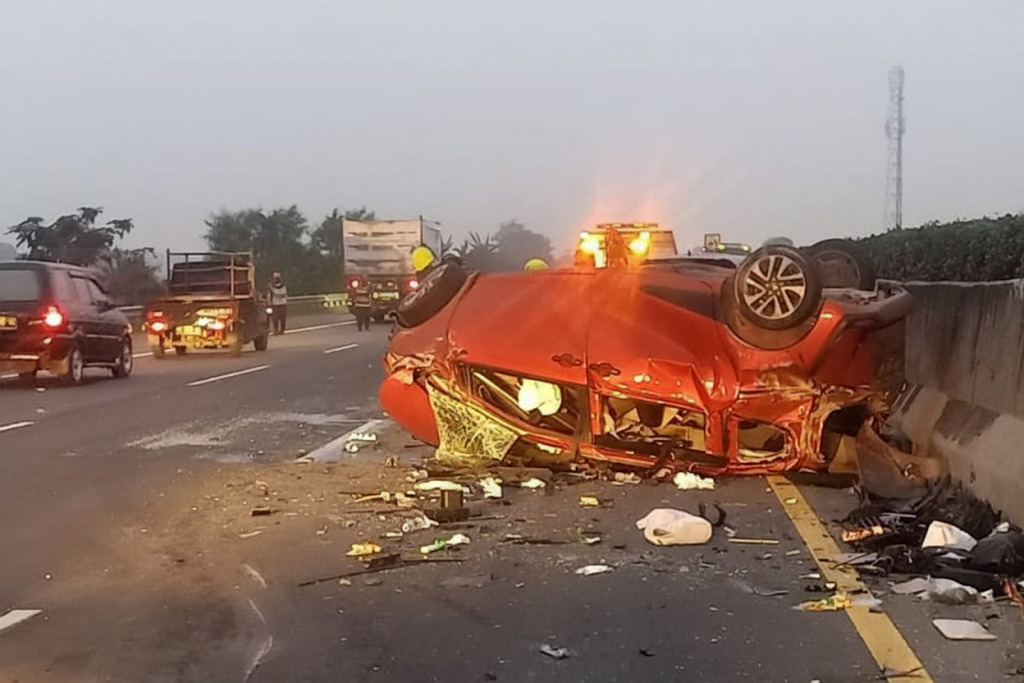
MAKONDE — The narrow, winding asphalt of the Harare-Chirundu Road has long been whispered about in hushed tones by those who traverse it daily. It is a route where the margin for error is razor-thin, and where a single moment of misjudgement can transform a routine journey into a scene of utter devastation. This week, that grim reality was laid bare once again as two separate accidents in the Makonde District claimed four lives, leaving families shattered and a community grappling with the recurring nightmare of road carnage.
The tragedies, which occurred on Tuesday, have been officially attributed to a familiar and preventable culprit: overtaking errors. According to police reports, both incidents involved drivers encroaching into oncoming lanes, a desperate gamble for time that ultimately cost them everything.
The first collision occurred at the 133-kilometre peg along the Harare-Chirundu Highway at approximately 8:56 am. It was a clear morning, the kind that usually promises safe passage, but for Stephen Gadzikwa, a 55-year-old resident of Chinhoyi, it was to be his final drive. Gadzikwa, a respected overseer at the Apostolic Faith Mission (AFM) in Zimbabwe’s Bread of Life Assembly, was travelling towards Karoi in a Toyota Progress.
Witnesses and police sources suggest that Gadzikwa attempted to overtake another vehicle, but in doing so, he veered directly into the path of an oncoming Toyota Hilux. The resulting head-on collision was catastrophic. Gadzikwa perished on the spot, his life cut short by severe head injuries sustained in the impact.
The driver of the Hilux, 36-year-old Gerald Gavanga of Mhangura, survived the initial crash but was left fighting for his life. He was rushed to Chinhoyi Provincial Hospital with a deep laceration to his forehead and remains in a serious condition. His passenger, 18-year-old Clementine Mbaya, was more fortunate, escaping with minor injuries and listed as stable.
However, the day’s toll was far from over. As the sun began to set over the Mashonaland West landscape, another tragedy was brewing just a few dozen kilometres away. At around 6:45 pm, at the 43-kilometre peg along the Lion’s Den-Mhangura Road, the scene was repeated with even more lethal consequences.
A Nissan AD Van, driven by 35-year-old Jeremiah Dzaruma, collided head-on with a Toyota Regius driven by Kudakwashe Dube. Once again, the cause was a fatal attempt to overtake. Dzaruma and two of his passengers died from the injuries they sustained in the crash. Two other passengers were seriously injured and were joined by the survivors of the morning’s accident at Chinhoyi Provincial Hospital.
“The accident occurred when the Nissan AD Van driver attempted to overtake and encroached into the lane of an oncoming vehicle, resulting in a head-on collision,” a police source confirmed, echoing the findings of the earlier incident.
These latest fatalities are not isolated events but rather part of a burgeoning crisis on Zimbabwe’s roads. Recent statistics released by the Zimbabwe Republic Police (ZRP) paint a sobering picture of a nation under siege by its own traffic. During the 2026 Easter holiday alone, 30 people lost their lives in 337 recorded accidents. While the number of accidents showed a slight decrease compared to previous years, the lethality of these crashes has increased, with 22 fatal accidents recorded this year compared to 21 in 2025.
The Harare-Chirundu Highway, in particular, has earned a reputation as one of the country’s most treacherous stretches. Serving as a vital artery for the North-South Corridor, it is perpetually clogged with heavy haulage trucks, cross-border buses, and private vehicles, all vying for space on a road surface that has struggled to keep pace with the volume of traffic.
While the government has recently mobilised funding for the rehabilitation of this key highway—allocating 90 million ZiG for 2026—the progress has been slow. Contractors resumed work in June after a six-month hiatus, focusing on widening and resurfacing critical sections. Yet, for many, these improvements come too late.
Transport Minister Felix Mhona recently addressed the Senate, stating that over 90 per cent of road accidents in the country are attributable to human error. This includes speeding, driving under the influence, and the kind of reckless overtaking seen this week in Makonde.
“Our roads have become death traps, but the trap is often set by the drivers themselves,” noted a road safety advocate from the Traffic Safety Council of Zimbabwe (TSCZ). “We see an average of five people dying every day on our roads. That is nearly 2,000 deaths a year. Behind every one of those numbers is a family like the Gadzikwas or the Dzarumas, whose lives will never be the same.”
The loss of Stephen Gadzikwa has been felt particularly deeply in Chinhoyi. As an overseer in the AFM church, he was a pillar of his congregation, known for his spiritual guidance and community service. His sudden death has left a void in the Bread of Life Assembly that many say will be impossible to fill.
“He was a man of peace and a man of God,” said one congregant who wished to remain unnamed. “To think that he is gone because of a split-second decision on the road is heart-breaking. It reminds us all of how fragile life is.”
The situation in Makonde highlights a broader systemic issue. The Lion’s Den-Mhangura Road, where the second accident occurred, is often used as a shortcut or a secondary route, yet it lacks the safety features and enforcement seen on major highways. The prevalence of “pirate taxis” or informal transport like the Nissan AD Van involved in the second crash further complicates the safety landscape. These vehicles are often overloaded and driven by individuals under immense pressure to make as many trips as possible, leading to risky manoeuvres.
Investigative efforts into Zimbabwe’s driving crisis suggest that the problem is three-fold: infrastructure, enforcement, and education. While the rehabilitation of the Harare-Chirundu Road is a step in the right direction, it must be coupled with rigorous police presence and a shift in the national driving culture.
The ZRP has frequently called on motorists to exercise patience, especially during peak hours and on known danger zones. “We urge drivers to value life over time,” a police spokesperson stated following the Makonde accidents. “There is no destination so important that it justifies risking your life and the lives of others.”
As the bodies of the four deceased lay in the Chinhoyi Provincial Hospital mortuary awaiting post-mortem, the survivors face a long road to recovery, both physically and psychologically. For Gerald Gavanga, the deep cut on his forehead will eventually heal, but the memory of the Toyota Progress hurtling towards him in the morning light may never fade.
The Makonde accidents serve as a grim reminder that the rules of the road are written in blood. Every overtaking manoeuvre is a calculation of risk, and when that calculation is flawed, the price is paid in human lives. Until there is a fundamental change in how Zimbabweans approach the steering wheel, the Harare-Chirundu Road will continue to claim its toll, one overtaking error at a time.
For now, the community of Makonde mourns. They mourn a church leader, a driver, and passengers whose journeys ended far too soon. And as the heavy trucks continue to thunder down the highway towards the Zambian border, the dust settles on another two patches of asphalt where life was traded for a few seconds of saved time.
Road Safety in Zimbabwe: A Statistical Overview (2025-2026)
|
Period
|
Total Accidents
|
Fatal Accidents
|
Total Deaths
|
Key Causes Identified
|
|
Easter 2025
|
350+
|
21
|
24
|
Speeding, Human Error
|
|
Festive Season 2025
|
1,500+
|
87
|
100
|
Fatigue, Overloading
|
|
Q1 2025
|
12,808
|
–
|
–
|
Infrastructure, Mechanical Failure
|
|
Easter 2026
|
337
|
22
|
30
|
Overtaking, Pedestrian Error
|
|
Jan-May 2024 (Ref)
|
21,183
|
860
|
860
|
Reckless Driving, Poor Roads
|