


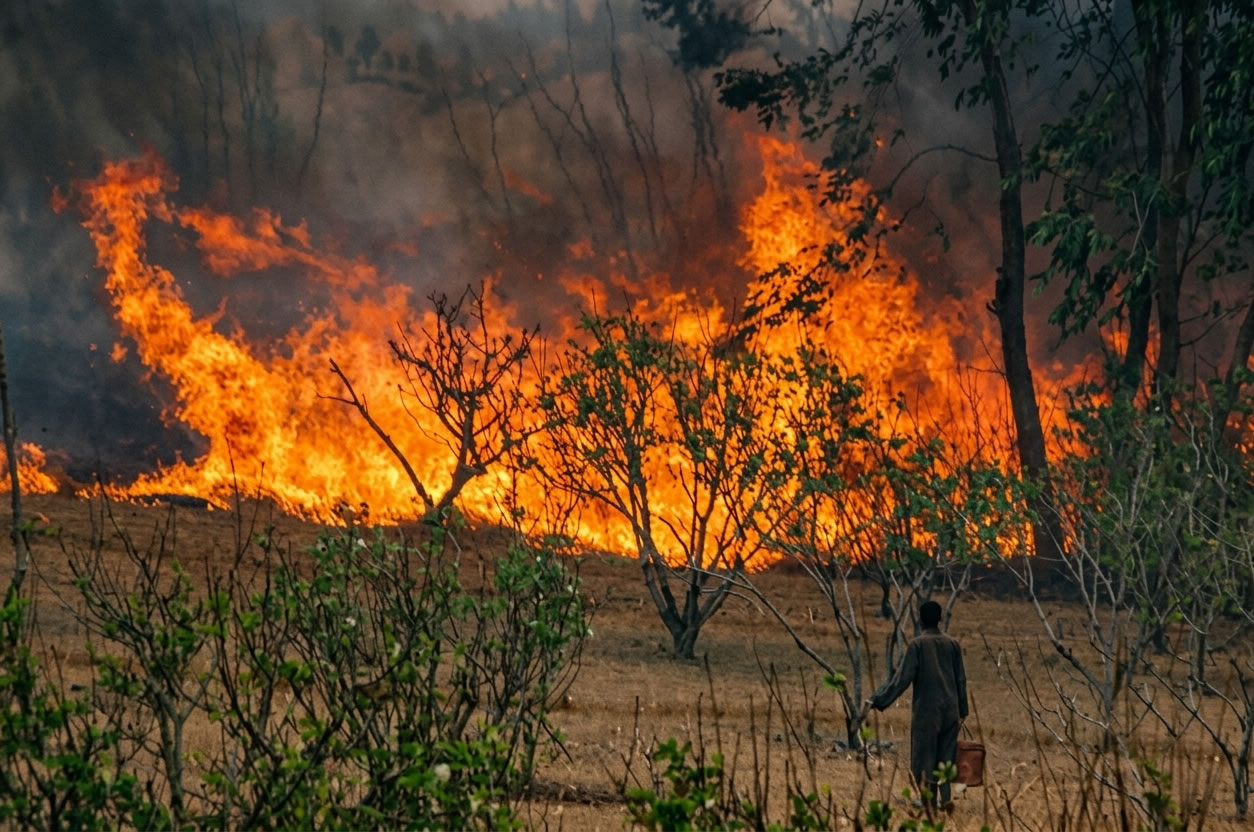
BUHERA – In a tragic incident that has left residents of Mupariri Village under Chief Nyashanu in Dorowa in Buhera, reeling, an 84-year-old man, Fibion Munjoma, was burnt to death after a controlled fire he had started to clear grass near his cattle pen took an unforeseen and deadly turn. The circumstances surrounding his demise have drawn chilling comparisons to scenes from the ‘Final Destination’ horror film franchise, highlighting the unpredictable and often cruel nature of accidents.
The incident, confirmed by Manicaland Acting Police Spokesperson Assistant Inspector Wiseman Chinyoka, occurred when Mr Munjoma was diligently creating fire guards by setting fire to dry grass. This common practice, intended to prevent the spread of uncontrolled veld fires, became a fatal trap when a sudden shift in wind direction blew the flames directly towards him. Despite his desperate attempts to flee the encroaching inferno, Mr Munjoma tragically tripped and fell, becoming engulfed by the fire. With no one nearby to render assistance, he perished in the blaze, and his body later discovered by 61-year-old Bodmas Mhurira, a fellow villager. The case has since been reported to ZRP Dorowa, with police attending the scene to conduct further investigations.
This heart-wrenching event in Buhera is but one of several devastating fire-related fatalities that have plagued Zimbabwe in recent months, underscoring a broader, alarming trend of lives lost to flames. These incidents range from domestic disputes escalating into deadly arson to tragic accidents involving public transport and the perennial threat of veld fires.
A Family Annihilated: The Harare Arson Tragedy
Just last week, the nation was gripped by the horrific details of a domestic dispute in Eastview in Harare, that culminated in the deaths of two young children. Gift Muyengwa, 24, stands accused of setting fire to a cabin cottage where his two daughters, Aldine Muyengwa, aged five, and Ropafadzo Muyengwa, aged two, were sleeping. The tragic incident unfolded after a midnight argument between Gift and his 22-year-old wife, Tsitsi Zuze.
According to reports, the dispute turned violent when Gift allegedly attacked Tsitsi with a knife, inflicting wounds to her head and neck. Tsitsi, managing to fight off her assailant, fled to a neighbour’s yard for safety. Her father, Mr Farai Zuze, 46, recounted the harrowing details, stating, “Tsitsi said she woke up being stabbed on the head and neck by her husband. She wrestled with him and fled, jumping into the neighbour’s yard naked. Her neighbour Loice Ndhlalambi gave her a cloth to wrap herself. After wrapping herself, she ran to my house and informed us about the incident. Gift stabbed the kids to death before turning to Tsitsi.” While Mr Zuze’s statement suggests the children were stabbed, the official police account indicates they died in the subsequent fire.
Upon Tsitsi’s return with help, the cabin cottage was already engulfed in flames. The bodies of Aldine and Ropafadzo were later recovered, burnt beyond recognition. Gift Muyengwa was found outside the burning structure with severe injuries, believed to be self-inflicted in a suicide attempt. He is currently receiving treatment at Parirenyatwa Group of Hospitals under police guard. Commissioner Paul Nyathi, the Zimbabwe Republic Police national spokesperson, issued a statement urging individuals to resolve domestic disputes peacefully, seeking assistance from relatives, community leaders, counsellors, or the police “before conflicts escalate into tragic loss of life.”
Public Transport Inferno: Minibus Tragedies on Zimbabwean Roads
Beyond domestic tragedies and accidental fires, Zimbabwe has also witnessed devastating incidents involving public transport. In April 2026, a minibus travelling along the Bulawayo-Beitbridge road burst into flames, claiming the lives of at least 18 people. The vehicle was reduced to a charred shell, a grim testament to the intensity of the blaze. The exact cause of this particular fire remains under investigation, but it highlighted the dangers associated with road travel in a country where infrastructure neglect has left many roads riddled with potholes, contributing to numerous accidents.
The Peril of Veld Fires: A Recurring National Crisis
Veld fires represent a persistent and deadly threat across Zimbabwe, particularly during the dry season. These uncontrolled blazes not only destroy vast tracts of land, vegetation, and wildlife but also frequently claim human lives. The Environmental Management Agency (EMA) has consistently warned of the increased risk of destructive veld fires, especially after periods of heavy rainfall which lead to an abundance of biomass that can easily ignite and spread rapidly. The 2026 veld fire restriction period, which commenced on 1st July, serves as a crucial reminder of this ongoing danger.
Tragically, a 55-year-old disabled man from Saint Faith’s area in Makoni district recently lost his life while attempting to fight a veld fire. This incident adds to a grim statistic: veld fires have been responsible for the deaths of at least 130 people in Zimbabwe over the past 13 years, with eight fatalities recorded in 2022 alone. The country loses approximately one million hectares of forest and grassland annually to these destructive fires, underscoring the immense environmental and human cost.
A Call for Vigilance and Prevention
The tragic death of Fibion Munjoma in Buhera, alongside the harrowing accounts of the Harare arson, the minibus infernos, and the ongoing toll of veld fires, paints a sobering picture of the fire safety challenges facing Zimbabwe. While some incidents are the result of unforeseen accidents, others stem from human actions, whether intentional or negligent. The comparisons to a ‘Final Destination’ scenario, while perhaps sensational, reflect a public grappling with the seemingly random and cruel nature of such deaths.
Authorities, including the Zimbabwe Republic Police and the Environmental Management Agency, continue to appeal to the public for heightened vigilance and adherence to safety protocols. The emphasis on peaceful conflict resolution in domestic settings, stricter enforcement of road safety regulations, and responsible land management practices are all critical components in mitigating these preventable tragedies. The collective effort of communities and individuals is paramount in safeguarding lives and property against the devastating power of fire.