


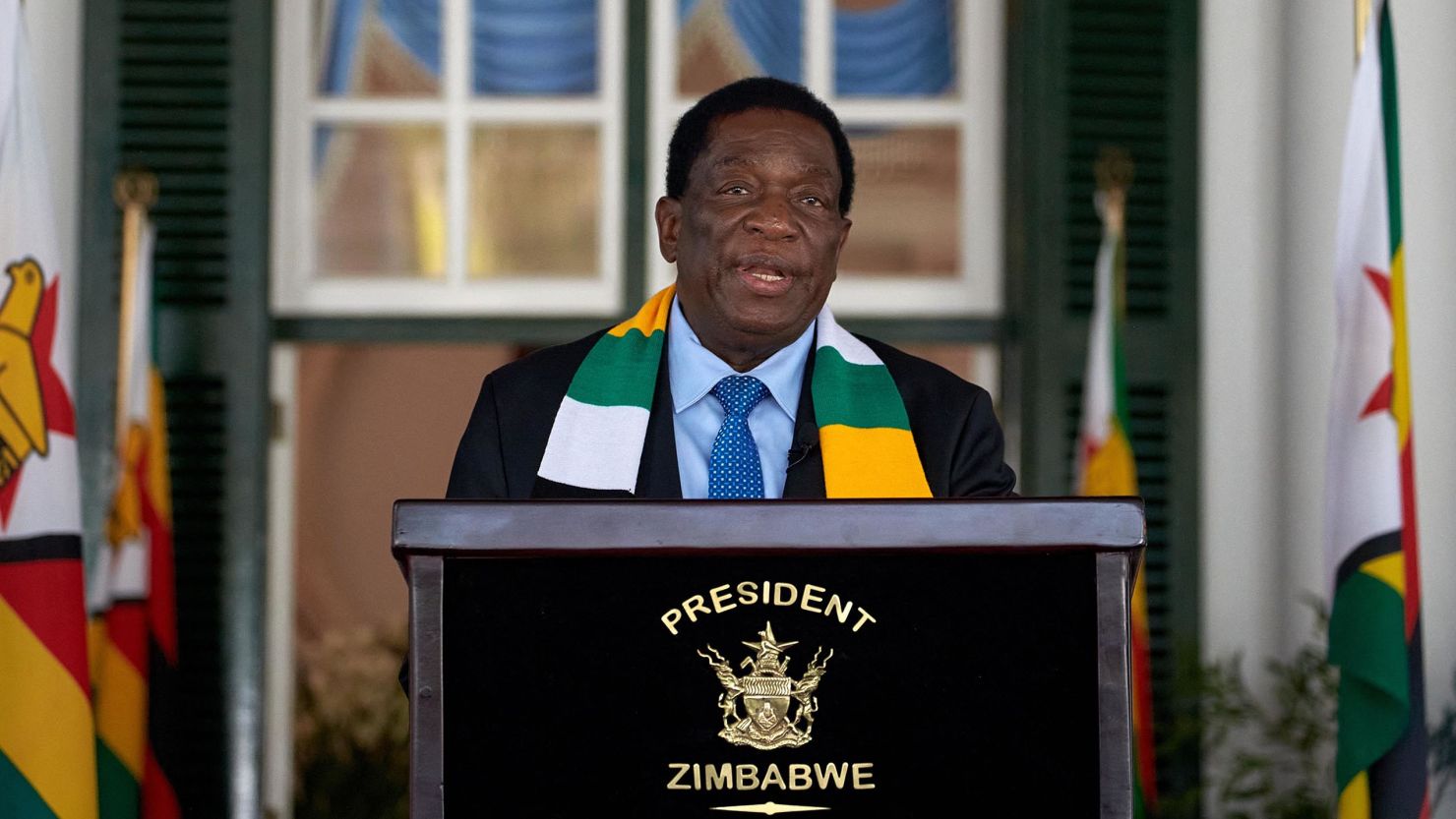
HARARE — A political purge is gathering pace inside Zimbabwe’s ruling Zanu PF after a group of MPs failed to support Constitutional Amendment Bill Number 3, known as CAB3, which was later signed into law as Constitutional Amendment Act Number 3, or CAA3. Ministers and lawmakers now face dismissal, disciplinary action and the loss of influential positions in government.
Constitutional Amendment No. 3 (CAB3) was signed into law by President Emmerson Mnangagwa on 7 July 2026 after the bill passed the final reading in Parliament on 30 June 2026.
President Mnangagwa is expected to use an impending Cabinet reshuffle to remove officials accused of disloyalty during the parliamentary process that changed how Zimbabwe’s president will be chosen. The pressure has intensified since Mnangagwa signed CAB3 into law as CAA3 and announced sweeping changes to senior government posts and constitutional commissions.
At the centre of the dispute are 14 Zanu PF MPs who did not vote for CAB3. Several of those named are serving ministers or deputy ministers, raising the prospect that the party’s internal battle will spill directly into the running of government.
Among the officials facing the firing line are Primary and Secondary Education deputy minister Angeline Gata, Mashonaland West Provincial Affairs minister Marian Chombo, Deputy Foreign Affairs minister Sheilla Chikomo, Skills Audit minister Jenifan Muswere and ICT minister Tatenda Mavetera.
Other MPs cited in the dispute include Joel Sithole, Rajesh Kumar Modi, Barbara Rwodzi, Tongai Mnangagwa, Dingumuzi Phuti and Ozias Bvute. Spare Sithole, the Insiza South MP, has already been targeted by party disciplinary structures after missing two votes on the constitutional changes. A provincial disciplinary committee recommended that he be suspended from Zanu PF for three years, subject to ratification by the national disciplinary committee and the politburo.
The disciplinary case has given a clear indication of the punishment that may await other lawmakers who failed to support the amendment. Sithole missed votes held on 18 June and 30 June. His absence became a matter of particular concern inside the party after officials questioned his explanation for missing one of the votes.
Mavetera, who represents Chikomba West, was also placed under scrutiny after missing the first vote. She later voted for the Bill at the second stage, but the incident has continued to feature in the party’s internal reckoning over loyalty and attendance. However, Mavetera is believed to be a strong and loyal member of President Mnangagwa’s faction as she reportedly often clashes with those perceived to be rallying behind Vice President General (Retired) Constantino Chiwenga. Mavetera is also the founding national chairperson and leader of the Young Women for Economic Development (Young Women for ED) movement which also rallies behind President Mnangagwa.
A senior party source said the Cabinet changes would be used to deal with ministers who had failed to support the President on an issue regarded as critical to Zanu PF’s future.
“The reshuffle is going to deal with all disloyal ministers. The President is expected to fire all rebels. This is not going to be business as usual because the issue of loyalty has now become very important within the party,” the source said.
The same source said the changes would separate officials considered loyal to Mnangagwa from those viewed as working against his political interests.
“The reshuffle is expected to weed out those who are working against the President. Those who are seen as working against the President cannot expect to continue enjoying positions of responsibility as if nothing happened. The President has to make sure that his government is made up of people who support his programme and decisions,” the source said.
Pressure is also building at provincial level, where party members are demanding action against the MPs. Petitions are expected to be directed to the party leadership and to Mnangagwa as officials seek a formal response to the vote.
“Party members are very angry in the provinces. The issue of MPs who failed to vote is not yet over. They want the party to take action against those MPs because they believe that the matter cannot simply be forgotten after such an important vote,” another source said.
The amendment has made loyalty a more immediate political calculation because it removes the direct presidential vote and gives Parliament the power to elect the head of state. Under the new law, members of the Senate and the National Assembly will meet in a joint sitting after a general election to choose the President. A candidate must receive more than half of the valid votes cast. If no candidate reaches that mark, a run-off will be held between the two candidates with the highest number of votes.
The change means that parliamentary numbers will become central to any future presidential contest. That is why the presence and conduct of every ruling-party MP has assumed greater importance within Zanu PF. The party’s concern is not limited to the vote that passed CAB3 before it became CAA3; it extends to the parliamentary arithmetic that will shape the next presidential election.
“As you know, the President will be elected in Parliament. It is now high time for the party to axe all disloyal MPs or the party President will fail to win Parliament. The party cannot afford to have MPs who do not support the President when critical votes come before Parliament,” the source said.
The law also extends presidential and parliamentary terms from five years to seven years. The next presidential election, previously due in 2028, has been moved to 2030. The Senate has been expanded from 80 to 90 members, with 10 additional senators to be appointed by the President for their professional skills and other competencies after consultation with the National Assembly.
The amendment changes more than the election timetable. It transfers responsibility for voter registration and the compilation and custody of voters’ rolls to the Registrar-General. It also creates a new Delimitation Commission to handle the drawing of electoral boundaries, replacing the previous constitutional arrangement under which the Zimbabwe Electoral Commission carried out that work.
The changes have been followed by a rapid reorganisation of senior state institutions. Tafadzwa Muguti has been moved from the Office of the President and Cabinet to become Permanent Secretary in the Ministry of Local Government and Public Works. He replaces John Basera, who has been redeployed to the Zimbabwe Land Commission as a commissioner.
The appointment was announced by Chief Secretary to the President and Cabinet Martin Rushwaya and took effect immediately.
“His Excellency the President, Cde Dr Emmerson Dambudzo Mnangagwa, acting in terms of Section 205(1) of the Constitution of Zimbabwe and in consultation with the Public Service Commission, has appointed Engineer Tafadzwa Muguti as Permanent Secretary in the Ministry of Local Government and Public Works,” Dr Rushwaya said.
The President also appointed former MP Anele Ndebele as chairperson of the Zimbabwe Human Rights Commission. Leslie Ncube was named chairperson of the Zimbabwe Gender Commission, while Sheuneni Kurasha was appointed a commissioner of the Zimbabwe Electoral Commission.
The Zimbabwe Land Commission received three new appointments. Mandivamba Rukuni was named deputy chairperson, while Mabel Ndakaripa-Hungwe and Basera joined the commission as members.
All the appointments were made with immediate effect, placing new officials in key institutions responsible for local government, elections, human rights, gender policy, land administration and electoral boundaries at a moment of intense political tension.
The government changes have not been formally described as part of the response to the CAB3 vote. However, they have come as Zanu PF is demanding discipline from its MPs and as Mnangagwa consolidates control over the structures that will administer the new CAA3 constitutional order.
The party’s immediate challenge is to prevent dissent over CAB3 from developing into a wider revolt among its legislators. Members who stayed away from the vote, refused to support the amendment or were accused of failing to follow the party line are now being measured against the President’s political programme.
“The party has to know who is with the President and who is not. When you have MPs who fail to vote on such an important piece of legislation, questions of loyalty naturally arise. That is why people are now saying action must be taken,” the source said.
For the ministers caught in the dispute, the coming reshuffle could determine whether they remain in Cabinet, move to less influential roles or lose government office altogether. For the MPs, the disciplinary proceedings against Sithole have demonstrated that a missed vote can carry consequences beyond a reprimand in Parliament.
With CAA3 now embedded in the Constitution, Zanu PF’s internal fight has moved from the parliamentary chamber into the party’s provincial structures, Cabinet and the state commissions responsible for implementing the new system. The next reshuffle will show how far Mnangagwa is prepared to go in enforcing loyalty after the vote that changed Zimbabwe’s political succession rules.
The message from the party leadership is direct: officials who want to retain power must demonstrate support for the President at every decisive stage. MPs and ministers who failed that test are now waiting to learn whether their careers will survive the purge.
“The reshuffle is expected to weed out those who are working against the President.”
That warning now hangs over the government as the President’s office prepares to complete the next phase of the post-CAA3 re-organisation.