


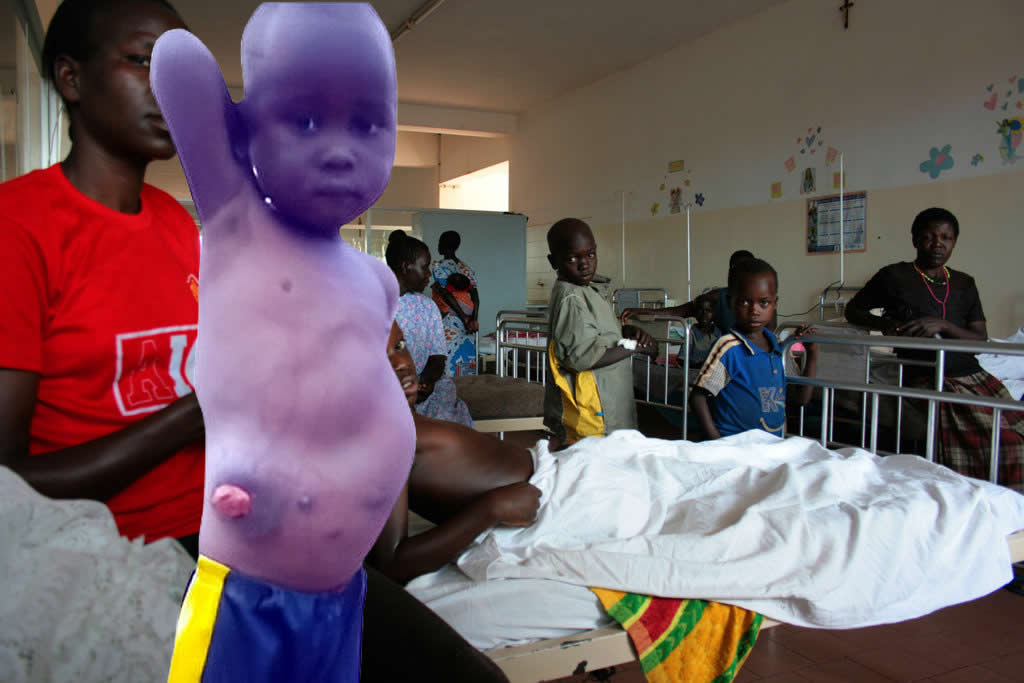
CHIREDZI – The parents of four-year-old Obey Chabata are making a heartfelt appeal to the public for assistance in raising US$210. This sum is urgently needed to facilitate crucial blood tests that will determine if young Obey is fit to undergo corrective surgery. Obey currently lives with the discomfort and indignity of relieving himself through an opening in his stomach, a situation his parents desperately hope to rectify.
Obey’s ordeal began some time ago, leading to an initial anoplasty surgery performed in August. Anoplasty, in essence, is a reconstructive surgical procedure designed to repair or reconstruct the anus. It is often necessary to correct congenital defects or conditions like anal stenosis, which involves the narrowing of the anal opening.
Currently, Obey defecates through a temporary surgical opening, known as a stoma, which was created during the first anoplasty. This stoma allows waste to pass out of his body, bypassing the usual route. While the stoma serves a vital function, it is intended to be a temporary measure.
His father, Ask Chabata, explained the urgency of the situation. “We are appealing for financial assistance for my son to undergo tests to determine whether he is ready for the next surgery. I have exhausted my resources and need assistance,” he said, his voice heavy with concern.
The required tests are scheduled to take place at Mashoko Christian Hospital in Bikita. These tests are vital, acting as a crucial checkpoint to assess Obey’s blood level and overall health, ensuring he is strong enough to withstand another surgical procedure. Should Obey successfully pass these blood tests, he will then be eligible for a subsequent surgery aimed at fully restoring his anal function. However, this next stage will require further financial resources, adding to the family’s already considerable burden.
Ask Chabata revealed the extent of their financial struggles. “I have exhausted all my resources,” he confessed, highlighting the desperate situation the family faces.
Adding to their challenges, Obey is currently taking Orofer, a medication prescribed to improve his haemoglobin levels due to a low blood count. This medication, while essential for Obey’s well-being, costs US$5, a sum that the family is finding increasingly difficult to afford.
“We are appealing for financial assistance for my son to undergo tests to determine whether he is ready for the next surgery. I have exhausted my resources and need assistance,” said Chabata, his plea echoing the desperation of a parent facing insurmountable odds.
Obey’s mother, Moreblessing Ndava, and father, Ask Chabata, can be contacted on 0781 914 710 and 0783 163 227 respectively. Well-wishers can also contact Masvingo Mirror Helpline on 0716 895 703/ 0775 036 812.
Understanding Anorectal Malformations and Anoplasty
Obey’s condition highlights the challenges faced by children born with anorectal malformations. These malformations are birth defects that affect the development of the anus and rectum. The severity of these conditions can vary widely, ranging from minor imperfections to more complex situations where the anus is completely absent.
Causes and Prevalence:
The exact causes of anorectal malformations are not always known, but they are believed to arise from disruptions during the early stages of foetal development. Genetic factors may play a role in some cases, but often, there is no identifiable cause.
Anorectal malformations occur worldwide, but some studies suggest a slightly higher prevalence in certain geographic regions, possibly due to environmental or genetic factors within those populations. However, these conditions are not confined to any particular country or ethnicity.
Challenges Faced by Individuals:
Individuals with anorectal malformations face a range of challenges, depending on the severity of their condition. These can include:
- Incontinence: Difficulty controlling bowel movements is a common issue, leading to social and hygiene challenges.
- Constipation: Some individuals experience chronic constipation due to abnormalities in the rectum or anus.
- Urinary Tract Problems: In some cases, anorectal malformations can be associated with urinary tract abnormalities, leading to further complications.
- Psychological Impact: The physical challenges and social stigma associated with these conditions can have a significant psychological impact, leading to anxiety, depression, and low self-esteem.
Anoplasty: A Surgical Solution:
Anoplasty is a surgical procedure that aims to correct anorectal malformations and restore normal bowel function. The specific technique used depends on the type and severity of the malformation. In some cases, a single surgery may be sufficient, while in others, multiple procedures may be necessary.
During an anoplasty, the surgeon will reconstruct the anus and rectum, creating a functional passageway for stool to pass through. In some cases, a temporary colostomy or ileostomy (creating a stoma) may be necessary to allow the surgical site to heal properly. This involves diverting the bowel contents through an opening in the abdomen, which is then collected in a bag. Once the area has healed, the colostomy or ileostomy can be reversed.
Advances in Treatment:
Significant advances have been made in the treatment of anorectal malformations in recent years. These include:
- Improved Surgical Techniques: Minimally invasive surgical techniques, such as laparoscopy, are now being used more frequently, leading to smaller incisions, less pain, and faster recovery times.
- Specialized Care Teams: Many hospitals now have specialized teams of surgeons, nurses, and therapists who are experienced in treating anorectal malformations. These teams provide comprehensive care, addressing both the physical and psychological needs of patients.
- Bowel Management Programs: Bowel management programs can help individuals with incontinence to achieve better control over their bowel movements. These programs may involve dietary changes, medication, and bowel training techniques.
The Importance of Early Intervention:
Early diagnosis and treatment are crucial for individuals with anorectal malformations. The earlier the condition is addressed, the better the chances of achieving optimal bowel function and minimizing long-term complications. Regular follow-up care is also essential to monitor for any potential problems and provide ongoing support.