


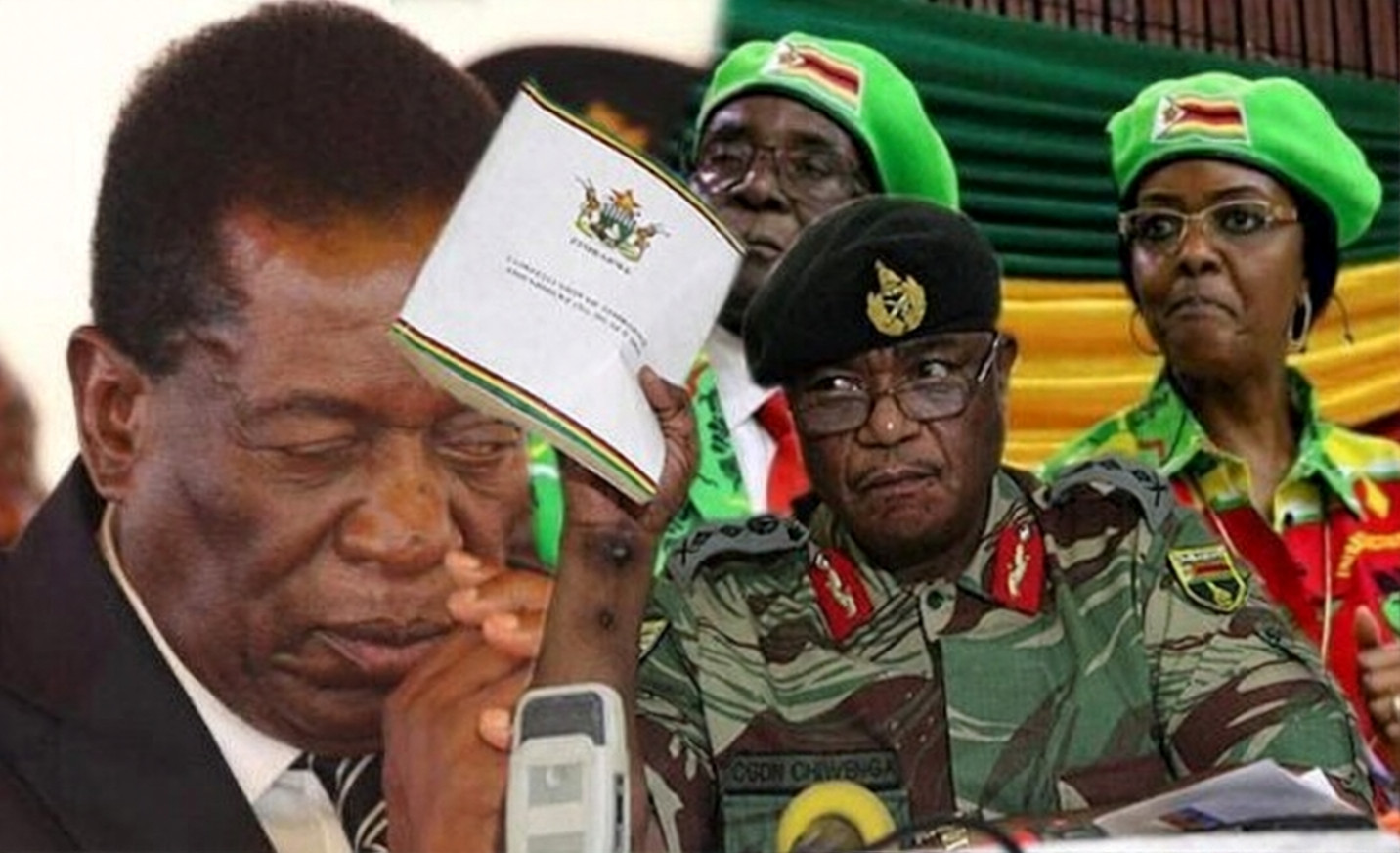
HARARE — In the sterile, high-security corridors of Zimbabwe’s New Parliament Building in Mt Hampden, a quiet but ruthless administrative manoeuvre has just been set in motion. On Tuesday, 10 February 2026, the Zimbabwean Cabinet officially threw its weight behind a draft piece of legislation that seeks to rewrite the nation’s fundamental law.
On the surface, the proposal—known as Constitutional Amendment Bill No. 3—is being framed as a necessary evolution for “continuity and stability.” However, beneath the veneer of bureaucratic jargon lies a calculated plot to ensure that President Emmerson Mnangagwa remains in power until at least 2030, shielding an elite inner circle from future prosecution and securing multi-billion-dollar deals that currently hang in the balance.
The move has ignited a firestorm of legal and political resistance, most notably from a group of six liberation war veterans who have taken the unprecedented step of suing the President. Filed on 16 February 2026, the lawsuit brought by Reuben Zulu, Godfrey Gurira, Shoorai Nyamangodo, Joseph Chinyangare, Digmore Knowledge Ndiya, and Joseph Chinguwa, alleges that Mnangagwa acted unconstitutionally by presiding over the very meetings that approved his own term extension. Their legal representative, the prominent constitutional law expert Professor Lovemore Madhuku, argues that the President’s conduct is a direct violation of his duty to uphold the law and avoid personal conflicts of interest.
This is not merely a debate over dates on a calendar; it is a defensive “insurance policy” for a ruling elite that has spent the last year purging internal rivals and consolidating control over the nation’s vast mineral wealth. By shifting the presidential term from five to seven years and replacing direct public elections with a system where Parliament selects the head of state, the Cabinet is attempting a constitutional “sleight of hand” that effectively bypasses the safeguards meant to prevent life-long rule.
The Cabinet Clash: “I Am the President!”
The path to this draft bill was anything but smooth. Investigative sources have revealed that the Cabinet meeting on 10 February was one of the most hostile in recent memory, exposing deep fractures within the ZANU-PF presidium. The tension boiled over when Attorney-General Virginia Mabhiza began outlining the legal framework for the amendments, suggesting that Zimbabwe’s move to a parliamentary election model was inspired by the systems in South Africa and Botswana.
Chiwenga’s tirade, supported by his ally and recently retired Zimbabwe National Army commander Anselem Sanyatwe, was a direct challenge to the legal justification of the bill. The Vice President insisted that South Africa “has no independence day” and was “no example at all” for Zimbabwe. The atmosphere became so toxic that President Mnangagwa was forced to intervene personally to reassert his authority.
“Mnangagwa told Chiwenga to calm down, saying ‘we all must be honest about the ethos of the liberation struggle,’” a source revealed. When Chiwenga attempted to continue his prepared remarks, Mnangagwa reportedly barked back: “I’m the president!”
This internal fracturing suggests that the “2030 vision” is less about national development and more about a desperate struggle for survival within the party’s top brass. Defence Minister Oppah Muchinguri-Kashiri is said to have pushed back against the military faction, further highlighting the divide between the civilian and military wings of the party.
The Sleight of Hand: How the Bill Works
To the average citizen, constitutional law can seem like a dense forest of technicalities. However, the “secret” of the 2030 plan is surprisingly simple once the legal jargon is stripped away. Under the current 2013 Constitution, Section 328(7) explicitly states that any amendment extending a term limit cannot benefit the person who held the office before the amendment. This was supposed to be the ultimate “poison pill” to prevent another Mugabe-style era.
The legal architects behind Amendment Bill No. 3 are attempting to circumvent this by changing the nature of the presidency itself. By converting the office from one decided by the people to one decided by Parliament, and by resetting the term length to seven years, they argue that the “new” office is not subject to the “old” limitations. It is a cynical rebranding exercise designed to reset the clock for an 83-year-old leader whose current mandate is set to expire in 2028.
|
Feature
|
Current Constitution (2013)
|
Proposed Amendment (2026)
|
|
Term Length
|
5 Years
|
7 Years
|
|
Election Method
|
Direct Universal Suffrage (The People Vote)
|
Election by Parliament
|
|
Term Limits
|
Two-term limit (10 years total)
|
Effectively reset by the “new” framework
|
|
Public Role
|
Citizens choose their leader directly
|
Citizens are sidelined; MPs decide
|
Legal scholar and advocate Thabani Mpofu has been scathing in his assessment of this manoeuvre. “It is fraudulent for ZANU-PF to convert a five-year mandate into seven years,” Mpofu stated. “The power to amend the constitution cannot reasonably be read to authorise such a subversion. The real issue is the scope of parliament’s amendment powers: they do not extend to undermining the text and spirit of the constitution. Parliament is not parliament Almighty!”
The Multi-Billion-Dollar “Insurance Policy”
While the political theatre plays out in courtrooms and Cabinet chambers, the true motivation for the 2030 extension can be found in the ledger books of Zimbabwe’s mining sector. Our investigation has uncovered that several multi-billion-dollar deals—particularly in lithium, gold, and platinum—are currently in “limbo,” awaiting the long-term stability that only a guaranteed Mnangagwa tenure can provide to nervous investors.
Central to this economic web is the Mutapa Investment Fund, the country’s sovereign wealth fund, which recently underwent a massive restructuring in early February 2026. The fund has unbundled Kuvimba Mining House into five specialised entities, a move that critics say is designed to further obscure the ownership of the nation’s most valuable assets. These deals are the lifeblood of the elite inner circle, providing the financial resources necessary to maintain their grip on power.
For these individuals, the 2030 extension is a literal “insurance policy.” They are acutely aware of the fate that befell former leaders in the region who lost power without securing immunity. By keeping Mnangagwa in office until 2030, they buy themselves another four years to cement these deals and ensure that any future transition happens on their terms, with their wealth and freedom protected.
The War Veterans’ Stand
The lawsuit filed by the six war veterans represents a significant shift in the political landscape. For decades, the veterans of the liberation struggle have been the backbone of ZANU-PF’s power. Their decision to sue the President over an “unconstitutional power grab” suggests that the “2030 vision” has alienated even those who were once the party’s most loyal defenders.
In their court papers, the veterans contend that by chairing the Cabinet deliberations on 10 February, Mnangagwa violated Section 90 of the Constitution, which obliges the President to “uphold, defend and respect this Constitution as the supreme law of the nation.” They argue that he cannot be both the architect and the beneficiary of a law that dismantles the very constitution he swore to protect.
“The applicants argue that by presiding over Cabinet deliberations and approving the bill, President Mnangagwa violated Sections 90(1), 90(2)(b), and 196(2),” the legal filing states. Section 196(2) specifically requires public officials to act in a way that “maintains public confidence” and “prevents abuse of office.” By pushing for a term extension that benefits him personally, the veterans argue, the President has failed this basic test of leadership.
A Dispensation Denied
For the average Zimbabwean, the promises of a “new dispensation” made during the 2017 transition now feel like a distant memory. The 2013 Constitution was the result of years of public consultation, a document that millions of citizens voted for in the hope of ending the era of “big man” politics. Today, that document is being systematically dismantled through what critics call “midnight clauses”—hidden provisions that give Parliament the power to bypass the people.
The irony is not lost on the public that while the Cabinet claims these changes are for “national development,” the country continues to struggle with a volatile currency and crumbling infrastructure. The “2030 vision” presented to the public is one of prosperity and upper-middle-income status; the “2030 secret” revealed by this investigation is one of elite survival and the preservation of a status quo that benefits the few at the expense of the many.
As the Speaker of Parliament, Jacob Mudenda, gazettes the bill and triggers a 90-day public consultation period, the nation watches with a mixture of fatigue and frustration. While ZANU-PF holds a two-thirds majority in Parliament, the legal challenges from the war veterans and the internal clashes within the Cabinet suggest that the road to 2030 will be far more treacherous than the President’s inner circle anticipated.
The struggle for Zimbabwe’s constitution is no longer just a legal battle; it is a fight for the soul of the nation. Whether the “sleight of hand” succeeds or the “insurance policy” is cancelled by the courts, the events of February 2026 have made one thing clear: the quest for absolute power always comes at a price, and in Zimbabwe, it is the people who are being asked to pay it.