


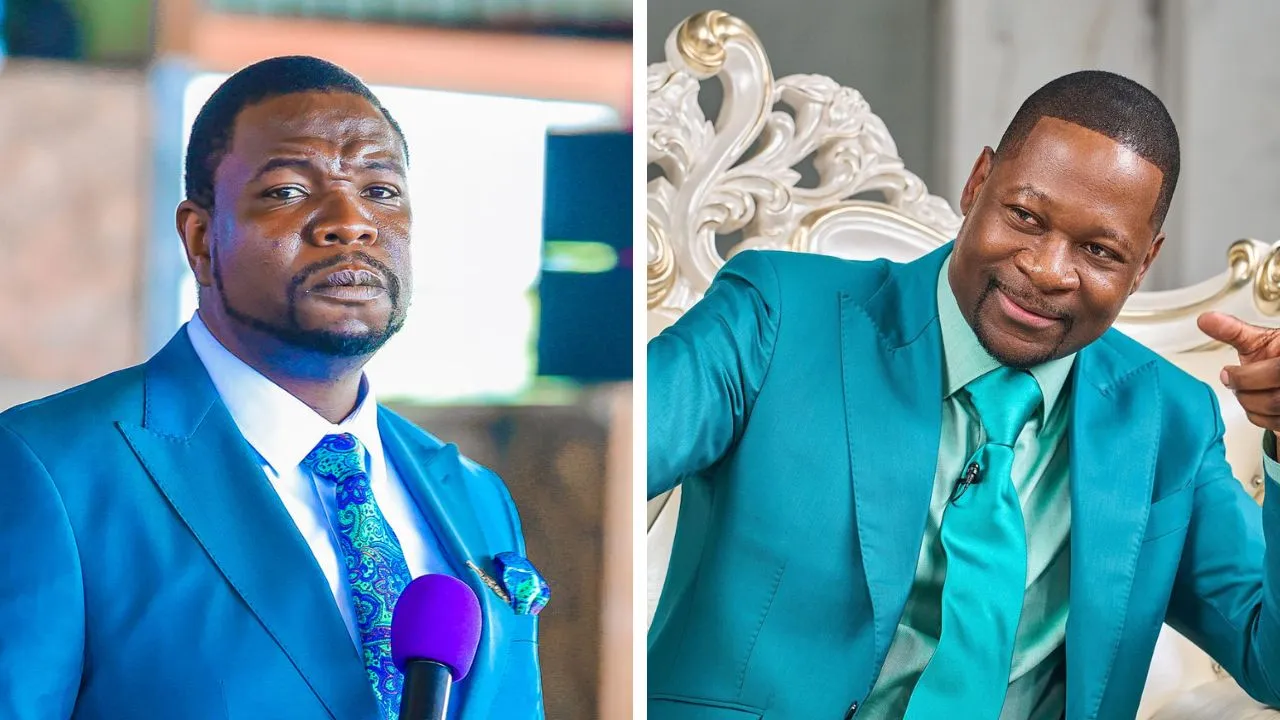
HARARE – In the opulent world of Zimbabwe’s charismatic pentecostalism, where faith and fortune often walk hand-in-hand, a legal storm of unprecedented proportions is currently unfolding. At the centre of this tempest is Prophet Walter Magaya, the founder of Prophetic Healing and Deliverance (PHD) Ministries. However, as his rape trial progresses through the Harare Magistrates Court, the narrative has shifted from the dock to a much larger, more spiritual battlefield. Magaya is now claiming that his legal woes are being orchestrated from the shadows by his long-time rival, Prophet Emmanuel Makandiwa of the United Family International Church (UFIC).
The dramatic twist occurred on February 17, 2026, when Magaya’s legal team, led by Messrs Admire Rubaya and Everson Chatambudza, launched a scathing attack on the National Prosecuting Authority (NPA). In an urgent letter addressed to the Prosecutor General, Magaya demanded the immediate recusal of senior prosecutor Tendayi Shonhayi. The reason? Shonhayi is a devoted member of Makandiwa’s UFIC, a fact Magaya’s lawyers argue makes her hopelessly conflicted.
“It is our client’s contention that Ms Shonhayi is not impartial in this matter as required by the law for a prosecutor,” the lawyers wrote, accusing her of pursuing a “personal agenda emanating from her personal hatred against both the accused person and his church.” They further suggested that if authorities wish to strengthen the prosecution team, another prosecutor “who does not have vested interests in the matter” should be appointed.
“Our client instructs, and has it on good authority, that Ms Tendayi Shonhayi is a member of a rival church known as United Family International Church (UFIC), which is considered by our client as a rival church to Magaya’s church, PHD Ministries, as well as to Magaya himself,” the letter stated. The document went further, accusing Shonhayi of being on a personal mission to “persecute” Magaya and destroy his ministry for the benefit of her own “Papa,” Prophet Makandiwa.
The allegations suggest a deep-seated animosity that transcends the courtroom. Magaya’s lawyers contend that Shonhayi is “doing the bidding for her own ‘Papa’ in circumstances where she should be detached from the case.” They argue that her involvement undermines the constitutional requirement for prosecutorial impartiality. This is not merely a legal dispute; it is being framed as a holy war, with the state’s machinery allegedly being used as a weapon in a denominational feud.
This latest confrontation is but one chapter in a decade-long saga of competition between the two most powerful religious figures in Zimbabwe. While both men have historically publicly denied any personal rift, the friction between their camps has been a matter of public record since at least 2014. The rivalry first reached a fever pitch in 2015 when Magaya was voted the most influential young Zimbabwean, narrowly beating Makandiwa to the top spot. Since then, the two have been locked in a silent but fierce competition for congregants, influence, and spiritual supremacy.
The history of their “sibling rivalry” is littered with incidents that suggest a less-than-brotherly relationship. In one particularly bizarre episode, Magaya admitted to sending his own “spies” to follow individuals who claimed to have participated in what he termed Makandiwa’s “fake prophecy” competitions. This admission laid bare the level of surveillance and suspicion existing between the two ministries. Furthermore, the two leaders have often clashed indirectly over theological doctrines, most notably the controversial practice of “seeding” or “sowing,” where congregants are encouraged to give large sums of money to the church to unlock financial blessings.
The current legal battle stems from four counts of rape involving adult congregants from Harare and Chegutu, with allegations spanning from 2016 to 2023. Magaya has consistently denied these charges, portraying himself as a victim of a coordinated smear campaign. His trial took a significant procedural turn when Magistrate Esthere Chivasa ruled that the proceedings should be heard in camera, within a Victim Friendly Court (VFC), to protect witnesses deemed “vulnerable.”
Magaya has reacted with fury to this ruling, which he is now seeking to challenge in the Constitutional Court. He argues that the decision to move the trial behind closed doors violates his right to a fair and public hearing. In his application for referral to the superior court, Magaya expressed his disbelief at how the magistrate arrived at her decision.
“I was taken aback by the fact that the court relied solely on the mere say so of the State counsel that the witnesses were vulnerable witnesses and where the judicial officer unsolicited confessed to have relied on the alleged outline of the State case which contains mere allegations from the State and which had not yet been placed on record,” Magaya stated in his application. He warned that “justice is now being sacrificed on the altar of expediency.”
The Prophet’s defence team further alleged that the prosecution “hid from the court” the fact that one of the key witnesses had already served them with a withdrawal affidavit. They claim that the police team is “feigning” the vulnerability of witnesses to prevent their “hostility” from being unmasked in an open court. According to Magaya, these witnesses are ordinary adults who have not claimed to be intimidated, and the court’s failure to conduct independent interviews with them before ruling is a breach of his constitutional rights.
Magistrate Chivasa, however, remained firm in her ruling. She stated that the law does not require medical proof or a specific age to deem a witness vulnerable. “Court believes a vulnerable witness is the one who needs protection. There is no need for clear evidence of emotional stress. There is no need for stress to be proved. There is no need for a medical affidavit for that,” she ruled. She added that in rape matters, all witnesses are inherently vulnerable due to the traumatic nature of facing an accused person.
The tension in the courtroom was palpable as Prosecutor Clemence Chimbari argued that the witnesses had “gone through a lot, mentally, emotionally” and that testifying in an open court would be detrimental to their mental health. He noted that some witnesses had expressed “reservations to be in direct contact with the accused.” Chimbari strongly objected to any further delays, lamenting that “a lot of time has already been lost” and that it would be a “great inconvenience” if witnesses were sent home without testifying.
Despite these objections, the magistrate allowed the defence time to prepare their written application for the Constitutional Court referral. Magaya’s lawyer, Admire Rubaya, insisted that “rushed justice is as good as no justice at all.”
The backdrop to this trial includes other high-profile legal challenges involving the two prophets. In 2018, Makandiwa himself was hit with a US$6.5 million lawsuit by a Harare couple, Upenyu and Blessing Mashangwa, who alleged they had lost their fortune after being misled by “fake prophecies.” While Makandiwa was eventually cleared of wrongdoing, the case highlighted the legal risks associated with the prophetic ministry. Magaya’s team has pointed to such incidents to suggest that the legal system is often used to target successful religious leaders.
Magaya’s accusations against Tendayi Shonhayi extend beyond her church membership. He claims she has exercised “undue influence” over the proceedings, despite not being the lead counsel, and has made “unilateral procedural decisions” to move the trial to the VFC before the magistrate had even ruled on the matter. His lawyers also alleged that she had previously prepared “defective charge sheets” that omitted the names of complainants, in violation of the Criminal Procedure and Evidence Act.
As the case moves towards the Constitutional Court, the stakes could not be higher. For Magaya, it is a battle for his freedom and the survival of PHD Ministries. For the Zimbabwean justice system, it is a test of its ability to remain impartial in the face of powerful religious influences. And for the millions of followers of both Magaya and Makandiwa, it is a distressing spectacle of two “men of God” locked in a bitter, public confrontation.
The trial is set to resume on March 2, when Magaya is expected to face additional rape charges. Until then, the focus remains on the Constitutional Court and whether it will uphold the Prophet’s demand for an open trial. In the court of public opinion, however, the verdict is already being debated in every street corner and church pew across Zimbabwe. The question remains: is this a genuine search for justice for victims of sexual assault, or is it, as Magaya claims, a “dramatic twist” in a long-running religious rivalry where the courtroom has become the latest altar of conflict?