


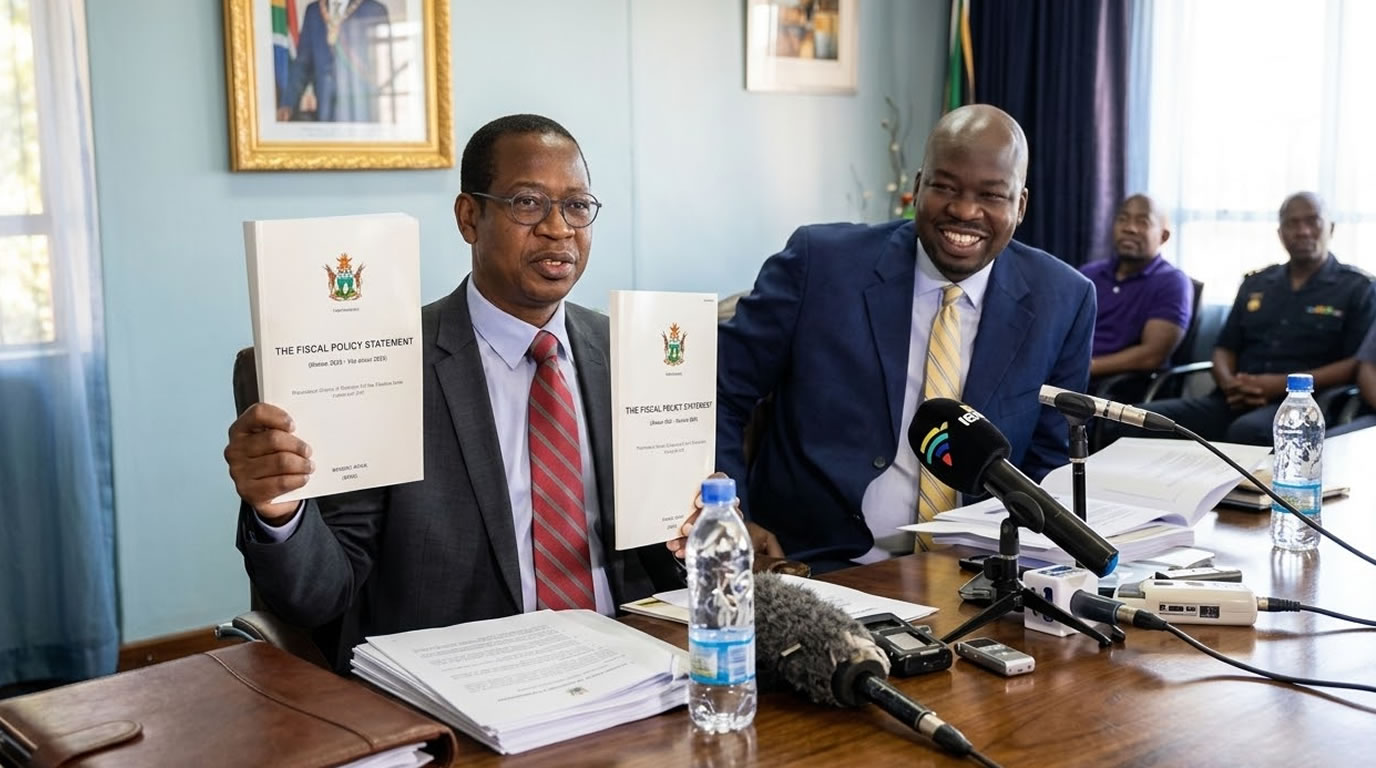
Harare – The announcement that the Zimbabwean government will begin re-grading the workforce and increasing pay this month was met with cautious optimism across the nation’s civil service. On the surface, the move appears to be a benevolent gesture from the Treasury, a long-overdue attempt to help workers cope with the relentless tide of inflation that has eroded the value of their earnings. However, a deeper investigation into the timing and the internal mechanics of this “pay hike” suggests a much more urgent and cynical motivation: the visceral fear of a “total shutdown” that would paralyse the state at its most vulnerable moment.
Behind the closed doors of government offices and within the hushed community halls where labour organisers meet, a different story is being told. For months, teachers’ unions and health workers have been mobilising for a massive, coordinated strike. This was not merely a threat of a few days off; it was a planned, systemic withdrawal of labour intended to bring the country to a standstill just as the high-stakes CAB3 public hearings were beginning. The government is, quite literally, in a race against time. They need a compliant civil service to ensure that the constitutional amendment process—a process designed to reshape the very foundations of the nation’s power structure—proceeds without the inconvenient distraction of empty classrooms and closed hospitals.
The Anatomy of a Panic
The timing of the salary adjustments, which officially took effect today, 1 April 2026, is no coincidence. Finance Minister Mthuli Ncube confirmed the move, stating, “Salary adjustments are going to take effect from April 1 (today) and this means these salaries will now be paid according to the job evaluation.” While the state media portrays this as a systematic “re-grading” aimed at aligning salaries with modern job descriptions, the reality on the ground is far more precarious. The government is desperate to de-escalate the tension before the scheduled nationwide strike on 15–17 April 2026, a deadline set by the Zimbabwe Nurses Association and supported by the Amalgamated Rural Teachers Union of Zimbabwe (ARTUZ).
This panic is rooted in a rare moment of unity among the country’s various labour unions. Historically, the government has been successful in playing one union against another, but the current economic climate has created a shared misery that transcends sectoral boundaries. In a recent statement that highlights the desperation of the workforce, ARTUZ noted: “Transport costs are skyrocketing, and civil service salaries remain stagnant. These pressures are making it increasingly difficult for teachers and other government workers to perform their duties effectively.” The union’s resolve was clear: “We have resolved to implement partial work stoppages for two days per week and withdraw from non-essential duties. If necessary, we will escalate to a full strike.” It is this looming “full strike” that has forced the Treasury’s hand, leading to a pay offer that, upon closer inspection, is more of a temporary bandage than a cure.
The “Divide and Rule” Strategy
When the “pay hike” figures are simplified and compared against the current economic data, the illusion of a significant raise quickly evaporates. Once the current rate of inflation is factored in, the “increase” is barely enough to cover the rise in transport costs for the average worker. A teacher living in the high-density suburbs of Harare, for instance, now spends more on a daily commute than the total value of the “adjustment” offered by the government. The Treasury is using a classic “divide and rule” tactic, offering slightly different packages to different sectors—health, education, and the security forces—in a calculated attempt to prevent a united front.
By offering the security forces a slightly higher percentage than the teachers or the general administrative staff, the government hopes to ensure the loyalty of those who might be called upon to enforce order should the strike proceed. Meanwhile, the offering to health workers is just enough to delay their immediate withdrawal of service, but not enough to address the chronic underfunding of the hospitals they work in. By pacifying one group while negotiating with another, the Treasury hopes to break the momentum of the coordinated shutdown.
The CAB3 Shadow
The stakes could not be higher for the administration. The Constitutional Amendment Bill No. 3 (CAB3) is currently the subject of intense public hearings across the country, from the Kwekwe Theatre to the Somabhula Community Hall. The bill proposes significant changes, including extending presidential and parliamentary terms from five to seven years. Critics have been vocal about the implications of such a move. David Coltart, a prominent legal mind and opposition figure, stated on social media that “CAB3 is the single most contemporary existential threat to the present and future of Zimbabwe and must be resisted by any means constitutionally.”
The government knows that if the civil service—the very backbone of the state’s administrative machinery—were to join the public in open defiance or even simple withdrawal of service, the CAB3 process would be dead in the water. The public hearings themselves have become flashpoints of state-sponsored intimidation and violence. In Kwekwe, the hearings descended into chaos after a former councillor, Melody Chingarande, was verbally and physically attacked for opposing the bill. Similar reports of intimidation have surfaced from Chitungwiza and Zaka, where a citizen was recorded saying, “No, to Smith Regime, one man one vote and none should remove this.”
The administration’s strategy is clear: keep the schools open and the hospitals running at all costs, even if it means printing more money or squeezing the poor for more taxes. If the teachers are in the classrooms and the nurses are in the wards, the narrative of “national stability” can be maintained, even as the constitutional foundations are being shifted. A strike during the CAB3 hearings would be more than a labour dispute; it would be a political catastrophe.
Squeezing the Poor to Pay the Workers
Where is the money for these sudden raises coming from? Our investigation into the budget figures reveals a troubling trend. The funds are not being generated from increased industrial production or a sudden boom in exports. Instead, the money is being squeezed from the public through more aggressive tax collection, primarily targeting the poor and the informal sector. The recent introduction of new levies on electronic transfers and the increased enforcement of vendor licensing fees are direct sources of this “new” revenue.
It is a redistribution of poverty: taxing the struggling street vendor to pay a slightly higher, yet still inadequate, wage to the struggling teacher. This cycle of extraction only serves to further destabilise the economy in the long run, even as it provides the government with the short-term leverage it needs to “negotiate.” The Treasury is essentially robbing Peter to pay Paul, hoping that Paul won’t notice that Peter is his own brother.
The Power Struggle in the Shadows
For every civil servant, from the nurse in a rural clinic to the clerk in a government ministry, this story reveals the hidden leverage they currently hold. The government is not negotiating out of a sense of fairness; it is negotiating out of fear. The “strike funds” being set up by workers and the secret meetings held in community halls across the country are proof that the workforce is beginning to understand its own power. They are the ones who keep the lights on, the schools open, and the hospitals running. Without them, the state is nothing more than a collection of empty offices and unenforceable decrees.
One such secret meeting, held in a dilapidated community hall on the outskirts of Bulawayo, revealed the depth of the organisation. Workers from three different unions sat together, sharing information about their respective “offers” from the Treasury. “They think we don’t talk to each other,” one health worker said. “They think the teachers don’t know what the nurses were offered. But we are one family now. We all buy from the same shops and pay the same bus fares.”
The Road Ahead
As the CAB3 hearings continue through the first week of April, the eyes of the nation remain fixed on the Treasury and the unions. Will the “pay hike” be enough to buy the government the silence it so desperately craves, or will the civil service see through the “divide and rule” tactics? The coordinated strike planned for mid-April remains the ultimate test of the government’s strategy. For now, the “Silent Strike” continues—not in the streets, but in the hearts and minds of workers who know that their labour is the only thing standing between the current administration and a total loss of control.
The government’s rush to hike salaries is a clear admission of vulnerability. It is a tactical retreat, a desperate attempt to shore up a crumbling foundation before the storm of public and labour unrest truly breaks. As one union organiser, speaking on condition of anonymity, put it: “They think they can buy our silence with a few extra dollars that inflation will eat by next week. They forget that we are the ones who see the reality of this country every single day. We are not just workers; we are citizens, and we are tired of being used as pawns in their political games.”
The struggle between the state and its employees is no longer just about wages; it is about the future of the nation itself. The outcome of this power struggle will determine not just the size of a civil servant’s paycheck, but the very nature of the Zimbabwean state for decades to come. Whether the government can maintain its “compliant” civil service remains to be seen, but the “Real Reason” for their sudden generosity is now clear for all to see.
The investigation into the Treasury’s accounts continues. We have seen how the money is moved, how the promises are made, and how the threats are issued. But the final chapter of this story has yet to be written. It will be written in the schools, the clinics, and the government offices where the real power lies.
Table 1: Civil Service Pay Hike vs. Cost of Living (April 2026 Estimates)
|
Item
|
Monthly Cost (March 2026)
|
Monthly Cost (April 2026)
|
% Increase
|
|
Transport (Average Commute)
|
$80.00
|
$110.00
|
37.5%
|
|
Basic Food Basket
|
$250.00
|
$290.00
|
16.0%
|
|
Rent (High-Density)
|
$150.00
|
$175.00
|
16.7%
|
|
Proposed Salary Increase
|
N/A
|
N/A
|
12.0% – 22.0%
|
Table 2: Comparison of Sectoral Offers and Strategic Importance
|
Sector
|
Proposed Increase (%)
|
Real Value (Adjusted for Inflation)
|
Strategic Importance to CAB3
|
|
Education
|
15%
|
-5% (Negative Growth)
|
High: Prevents “empty classrooms” narrative
|
|
Health
|
18%
|
-2% (Negative Growth)
|
Critical: Prevents “closed hospitals” crisis
|
|
Security Forces
|
22%
|
+2% (Marginal Gain)
|
Vital: Ensures enforcement of state order
|
|
General Service
|
12%
|
-8% (Negative Growth)
|
Medium: Maintains basic administration
|
Key Figures and Organisations in the Struggle
- Mthuli Ncube: Finance Minister, architect of the “re-grading” and “divide and rule” fiscal policy.
- ARTUZ (Amalgamated Rural Teachers Union of Zimbabwe): Lead union in the “Silent Strike” and coordinator of partial work stoppages.
- Zimbabwe Nurses Association: The first group to issue a 48-hour ultimatum, triggering the government’s panic.
- David Coltart: Legal critic of CAB3, framing the constitutional battle as an “existential threat.”
- Melody Chingarande: Former councillor and victim of violence at the Kwekwe CAB3 hearings, symbolising the stakes of the struggle.
The investigation continues as the 15 April deadline approaches. The government has played its first card; now, the civil service must decide how to play theirs. The “Silent Strike” is silent no more.