


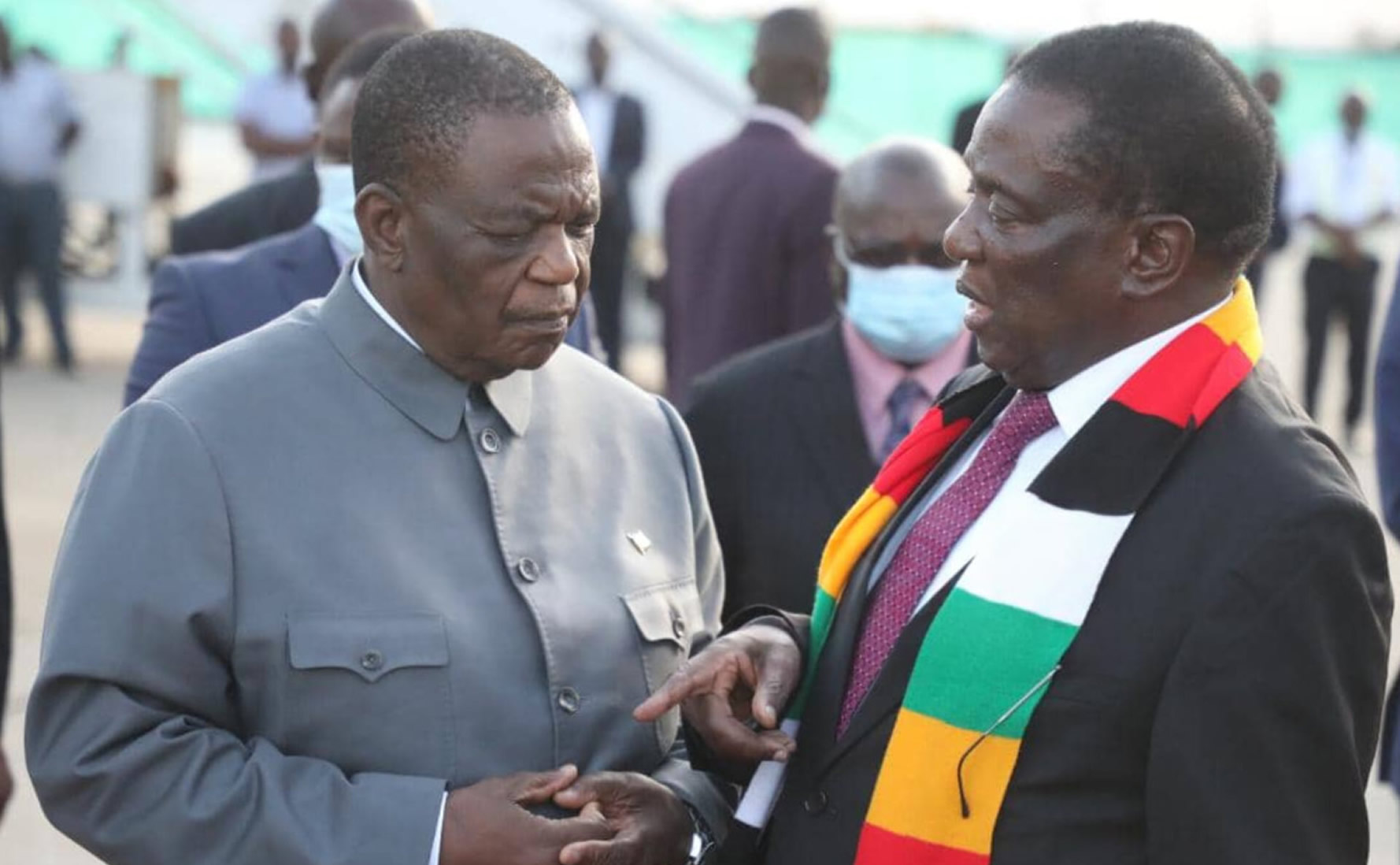
HARARE – When the sun dipped below the horizon on a humid February evening in 2026, the elite suburbs of Harare were quiet, but the political atmosphere was electric. In a private residence, Vice-President Constantino Chiwenga celebrated his 70th birthday. His wife, Minnie Baloyi, later shared glimpses of the event on social media, captioning a video with the words: “It was meant to be a small family birthday dinner to celebrate SOKO @70 but yooooh, fun was had. Did anyone see the kiss of being grateful Soko…”
To the casual observer, it was a heartwarming family milestone. To the seasoned political vultures circling the Munhumutapa Building, it was a declaration of war. The guest list was a masterclass in omission. While Chiwenga’s military allies and liberation-era stalwarts were present, the loyalists of President Emmerson Mnangagwa were conspicuously absent. The snub was so glaring that it overshadowed the public show of unity staged just hours earlier at a ZANU PF Central Committee meeting, where Mnangagwa had dutifully led the cheers for his deputy.
This public fracture has reignited the most persistent question in Zimbabwean politics: Why, despite the obvious betrayal and the growing threat of a rival power centre, does President Mnangagwa not simply fire his deputy? The answer lies in a complex “Masterclass in Constitutional Illusion” and a strategic game of high-stakes attrition that makes a simple dismissal letter a potential death warrant for the current administration.
The Ghost of November 2017
To understand the present, one must revisit the cold morning of November 2017. As tanks rolled down Samora Machel Avenue, the world witnessed a peculiar theatrical performance. Military spokesmen insisted on national television that what was unfolding was not a coup d’état, but merely a “targeted intervention” against “criminals surrounding President Robert Mugabe.” It was a performance designed to preserve the veneer of legality while fundamentally altering the state.
Constantino Chiwenga was the conductor of that orchestra. As the former Commander of the Zimbabwe Defence Forces, he is not merely an ambitious politician; he is the man who placed the crown on Mnangagwa’s head. Firing him is not like firing a cabinet minister; it is an act of political fratricide that risks alienating the very security apparatus that sustains the “Second Republic.”
Inside the executive, Chiwenga remains bound by cabinet secrecy and the watchful gaze of state intelligence. However, the “unguided missile” theory suggests that if he were expelled, he would become a martyr for disaffected war veterans and disgruntled security officers. As one senior party insider, speaking on condition of anonymity, put it: “Removing a rival from office is simple, but managing an externally mobilised challenger with military pedigree is an infinitely more dangerous enterprise.”
The Legal Architecture of Attrition
While the public focuses on the drama of birthday snubs, Mnangagwa has been quietly busy with the “Masterclass in Constitutional Illusion.” The passage of Constitutional Amendment Act No. 3 (CAA3) was the decisive blow that shifted the strategic landscape. By removing the requirement for running mates in presidential elections, Mnangagwa returned the power of appointing vice-presidents directly to the head of state.
This amendment decoupled executive succession from an automatic constitutional handoff. In simple terms, Mnangagwa no longer needs a dramatic showdown. The legal architecture now gives him the tools to render his rival politically peripheral without firing a single shot. Why risk a volatile showdown when you can simply wait for the clock to run out?
Time, unlocked by constitutional engineering, has become the ultimate political currency in Harare. By extending his political horizon toward 2030 through the “ED2030” campaign, Mnangagwa has dismantled the artificial urgency that once forced his opponents into aggressive manoeuvering. Time allows a leader to alter elite coalitions, redistribute state patronage, and restructure the security hierarchy while maintaining a superficial harmony.
The Leaked Memo and the Looting Scandal
The tension reached a boiling point in October 2025, when an explosive dossier allegedly written by Chiwenga was leaked to the public. In the memo, the Vice-President expressed “profound shock and a growing sense of humiliation” over what he described as the systematic plunder of state resources. He accused Mnangagwa’s allies of looting upwards of US$3.2 billion from party and state coffers, demanding immediate arrests.
More chillingly, the memo warned Mnangagwa that the “current conditions” mirrored those that “led to the November 2017 coup.” It was a direct shot across the bow, a reminder that the man who made the President could just as easily unmake him.
Mnangagwa’s response was characteristically patient. He did not fire Chiwenga. Instead, he allowed the scandal to simmer in the public domain while quietly removing key military figures sympathetic to the Vice-President. In March 2025, the removal of a high-ranking army chief was a clear signal that the President was systematically trimming Chiwenga’s wings.
The Grace Mugabe Precedent
Mnangagwa’s entire career demonstrates a preference for strategic caution over impetuousness. One need only look at how he handled Grace Mugabe. During the bitter internal warfare between the G40 and Lacoste factions, the former First Lady publicly humiliated Mnangagwa, urging her husband to “crush the snake’s head.”
When Mnangagwa assumed power, many expected total retribution. Instead, he allowed her political relevance to wither organically. Deprived of the state machinery, Grace Mugabe faded into obscurity. Mnangagwa understands that a publicly persecuted opponent becomes a rallying point for resistance, whereas an isolated opponent simply becomes yesterday’s news.
This logic applies even more strongly to Chiwenga. To publicly destroy the kingmaker of 2017 would be seen as an act of profound political ingratitude, troubling the conscience of ZANU PF’s liberation generation. The military establishment views Chiwenga as one of their own; a heavy-handed purge would risk a military backlash that Mnangagwa cannot afford.
The Informal Accommodation
Behind the closed doors of the Munhumutapa Building, a different kind of negotiation is taking place. Sources suggest that “informal accommodation” talks are ongoing, where Chiwenga’s personal security and dignity are being traded for a peaceful exit from succession politics.
The strategy is one of gradual neutralisation. Chiwenga may keep his title, his motorcade, and his ceremonial visibility, even as his actual sway over executive appointments and economic policy is systematically trimmed. Power in such systems flows not from titles, but from the ability to allocate resources and command personal loyalties.
Simultaneously, the President is reshaping ZANU PF’s internal structures. By ensuring that loyalists secure key positions within the Youth League and the Women’s League, the party’s centre of gravity shifts irrevocably. Outside the formal party, the management of the security establishment relies on the quiet rhythm of routine administration: scheduled retirements and strategic promotions. Over time, these subtle adjustments ensure that the security services become loyal to the sitting President rather than any individual former commander.
A Continental Pattern of Containment
This dynamic is not unique to Zimbabwe. Across Africa, resilient political systems show that dominant leaders prefer containment to confrontation. In Angola, President Joao Lourenco navigated the interests of the dos Santos family through institutional shifts rather than total warfare. In Uganda, Yoweri Museveni has managed powerful challengers like Amama Mbabazi by stripping them of their institutional bases while keeping them within the ruling movement. The fundamental law of survival is simple: make your rivals weak, but do not make them desperate.
Despite the “ED2030” posters appearing across the country, Mnangagwa has maintained a public stance of humility. In a 2026 interview, he stated: “Even if the people would love me to stay, I will still go away… Ten years is not a short period.” This statement, while appearing to respect the constitution, serves as a tactical smokescreen, keeping his rivals guessing while he solidifies his grip on the party machinery.
The Long Game
As the “Presidium Cold War” continues, the ultimate victory belongs to the leader who ensures that by the time a rival realises the game is over, an actual firing is no longer necessary. Chiwenga, for his part, is far from powerless, but his choices are constrained. He can exercise patience, build quiet alliances, or leverage his liberation credentials to negotiate a secure legacy.
His primary threat is not the prospect of being fired on the evening news, but the slow, imperceptible erosion of his operational influence. The birthday snub may have been a public scandal, but the real battle is being fought in the quiet reallocation of patronage and the subtle realignment of political coalitions.
In the high-stakes arena of Zimbabwean politics, the loudest move is seldom the smartest. As Mnangagwa continues his masterclass in political attrition, the ghost of 2017 continues to haunt the corridors of power, a reminder that in the struggle for survival, the most decisive shifts are those that happen in the shadows.
Additional reporting by Gabriel Manyati