


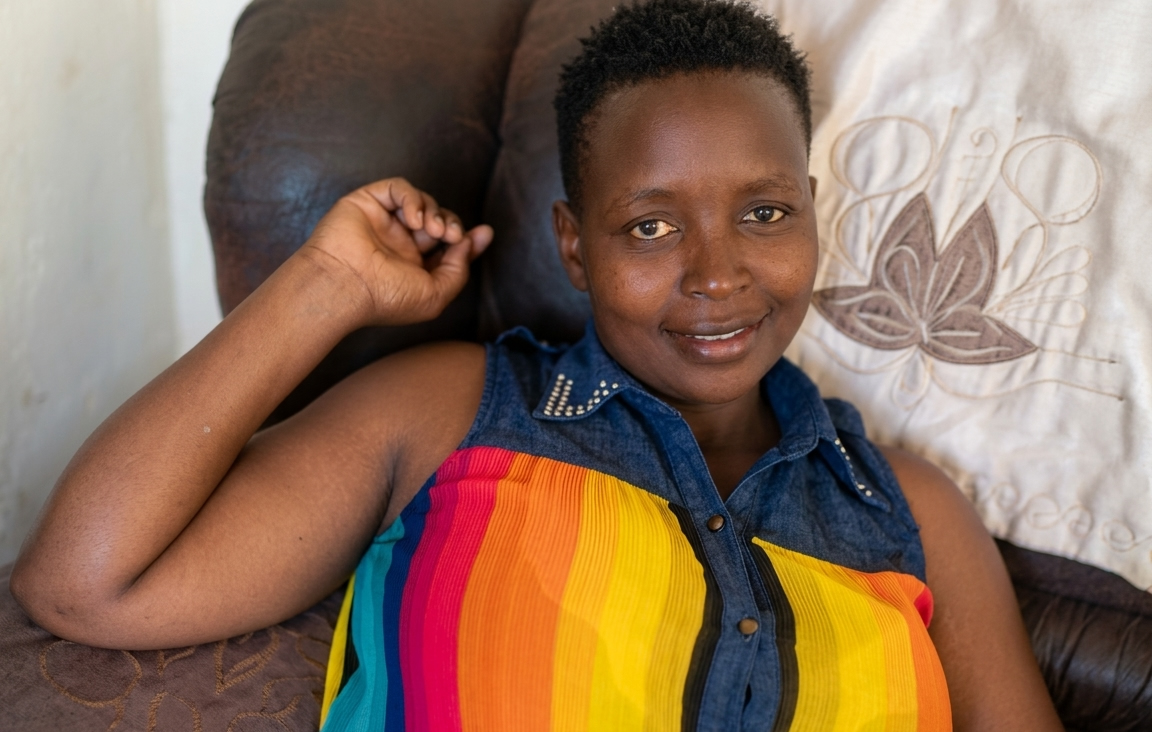
Police sergeant shot dead after confronting husband over alleged abuse of teenage stepdaughter
Pharaoh Dombodzvuku was found critically injured beside Sergeant Portia Dzanwa after two shots were heard at a house in Hopley Zone 5
HARARE — A police sergeant was shot dead in Harare on Sunday night after confronting her husband over allegations that he had sexually abused her 16-year-old daughter, in a case that police have classified as murder and attempted suicide.
Sergeant Portia Dzanwa, 36, who was stationed at ZRP Hatfield Traffic, was found lifeless inside a vehicle at a house in Hopley Zone 5 at about 9pm on 16 August. Her husband, Pharaoh Dombodzvuku, 52, was discovered unconscious and bleeding in the driver’s seat.
Dombodzvuku survived the shooting and was taken to Sally Mugabe Central Hospital in critical condition. He remained under armed police guard as detectives began investigating the death of Dzanwa and the events that led to the shooting.
The case began several hours earlier, when Dzanwa’s daughter disclosed the allegations to her mother. The girl is from a previous relationship and is being protected because she is a minor. Her name, school and other identifying details have been withheld.
The teenager told her mother at about 3pm that she had been involved in an intimate relationship with her stepfather, according to an internal police account of the incident. She alleged that, on one occasion, Dombodzvuku collected her from school and took her to a lodge in Waterfalls, where they had sexual intercourse.
Dzanwa confronted her husband after hearing the allegation. The family then agreed to travel to ZRP Southlea Park to make a police report, according to the police account. The plan was not completed.
Dombodzvuku drove his wife and stepdaughter from their home in Southlea Park towards the police station, but police said he decided to stop first at the home of his older brother, Trymore Dombodzvuku, in Hopley Zone 5. He reportedly said he wanted to discuss the matter with his brother before they went to the station.
The three arrived at the house at about 9pm. Police said Dombodzvuku asked his brother to take the teenager inside while he and Dzanwa remained in the vehicle to discuss the allegations.
The brother was inside the house when he heard gunfire from outside. “A short time later, the brother heard two gunshots,” police said.
He went to the vehicle and found the couple unconscious and bleeding in the front seats. Dzanwa was later confirmed dead at the scene. Dombodzvuku was still alive and was taken to hospital for emergency treatment.
A CZ pistol was found on Dombodzvuku’s lap. Police said the weapon had a magazine containing 12 rounds. His brother took possession of the firearm and went to ZRP Southlea Park to report the shooting. A night patrol was sent to the house, while CID Homicide detectives were called to begin the investigation.
Dombodzvuku was placed under armed guard in hospital. The police account described the case as murder and attempted suicide. The attempted-suicide classification reflects the fact that Dombodzvuku survived after being found with a gunshot wound, but investigators have not publicly released a detailed account of how the shots were fired or who pulled the trigger.
The allegations involving the teenager are also part of the investigation. They have not been tested in court, and Dombodzvuku has not yet had the opportunity to enter a plea. Police are expected to examine the family’s movements on Sunday, the firearm, the position of the couple in the vehicle and any other evidence that may establish what happened inside the car.
The teenager was inside the house when the shots were fired. Her welfare is now a central concern in the case, alongside the criminal investigation. Child-protection procedures are intended to prevent the repeated disclosure of traumatic allegations and to keep a child’s identity from becoming public.
Zimbabwe has systems intended to support survivors of gender-based violence and children facing sexual abuse. Services include medical care, psychosocial support and legal assistance, while victim-friendly court arrangements are designed to reduce the distress of giving evidence. The effectiveness of those protections will depend on the teenager receiving immediate safety, appropriate support and careful handling by investigators and other officials involved in the case.
The shooting follows another recent family killing involving Zimbabwean nationals, although the circumstances were different. In July, British police found the bodies of Zimbabwean-born mother Nothabo Zandile Tshuma, 42, and her daughters Natalie, 15, and Nala, five, at their home near Bedford in England. Relatives had raised the alarm after they could not reach the family.
An inquest found that the three died from head injuries. The children’s father, Ndodana Mkhanyisi Tshuma, 45, a British citizen of Zimbabwean origin, was arrested in Johannesburg after leaving Britain. He faced a firearm charge in South Africa, and authorities were considering proceedings linked to a possible extradition request to the United Kingdom.
The bodies of the mother and her daughters were later taken to Zimbabwe, where relatives and friends gathered for their funeral in Bulawayo. The case drew attention across Zimbabwe, Britain and South Africa because of the deaths of a mother and two children in their home and the arrest of the children’s father.
The Hopley shooting has again placed the danger faced by women and children within family settings in the public view. The immediate case, however, remains focused on the death of Sergeant Dzanwa, the condition of her husband and the allegations made by the teenager before the family travelled to the police station.
Figures published by the United Nations Population Fund show the scale of the wider problem in Zimbabwe. About one in three women aged between 15 and 49 has experienced physical violence, while about one in four has experienced sexual violence since the age of 15. The figures cover violence experienced over time and do not relate specifically to the Hopley case.
UNFPA works with the Ministry of Women Affairs, Gender and Community Development, other United Nations agencies and civil-society organisations to expand services for survivors. Those services include healthcare, psychological support, legal aid, community awareness and referral systems intended to connect victims with help.
For Dzanwa’s colleagues at Hatfield Traffic, the investigation concerns the death of one of their own officers. She was not killed while responding to a call or carrying out traffic duties, but at a private residence after a family dispute that had already prompted a plan to seek police help.
The sequence of events has left several questions for detectives. They must establish what happened during the conversation between Dzanwa and her husband, why the journey to Southlea Park was interrupted, how the firearm came to be in the vehicle and how the two gunshots caused the injuries found by the brother and the police patrol.
Investigators will also have to document the teenager’s allegation through the appropriate child-protection process. That work will need to proceed separately from public discussion of the shooting, with the girl’s privacy protected throughout.
Dzanwa’s death was confirmed at the scene. Her husband remained alive in hospital under police guard, and no court outcome had been recorded by the time of publication. CID Homicide detectives continued gathering evidence at the Hopley house and from the vehicle as the investigation moved forward.
The case began with a teenager telling her mother what she said had happened to her. Within hours, the planned report at Southlea Park had turned into a fatal shooting, a hospital guard and a homicide investigation.