


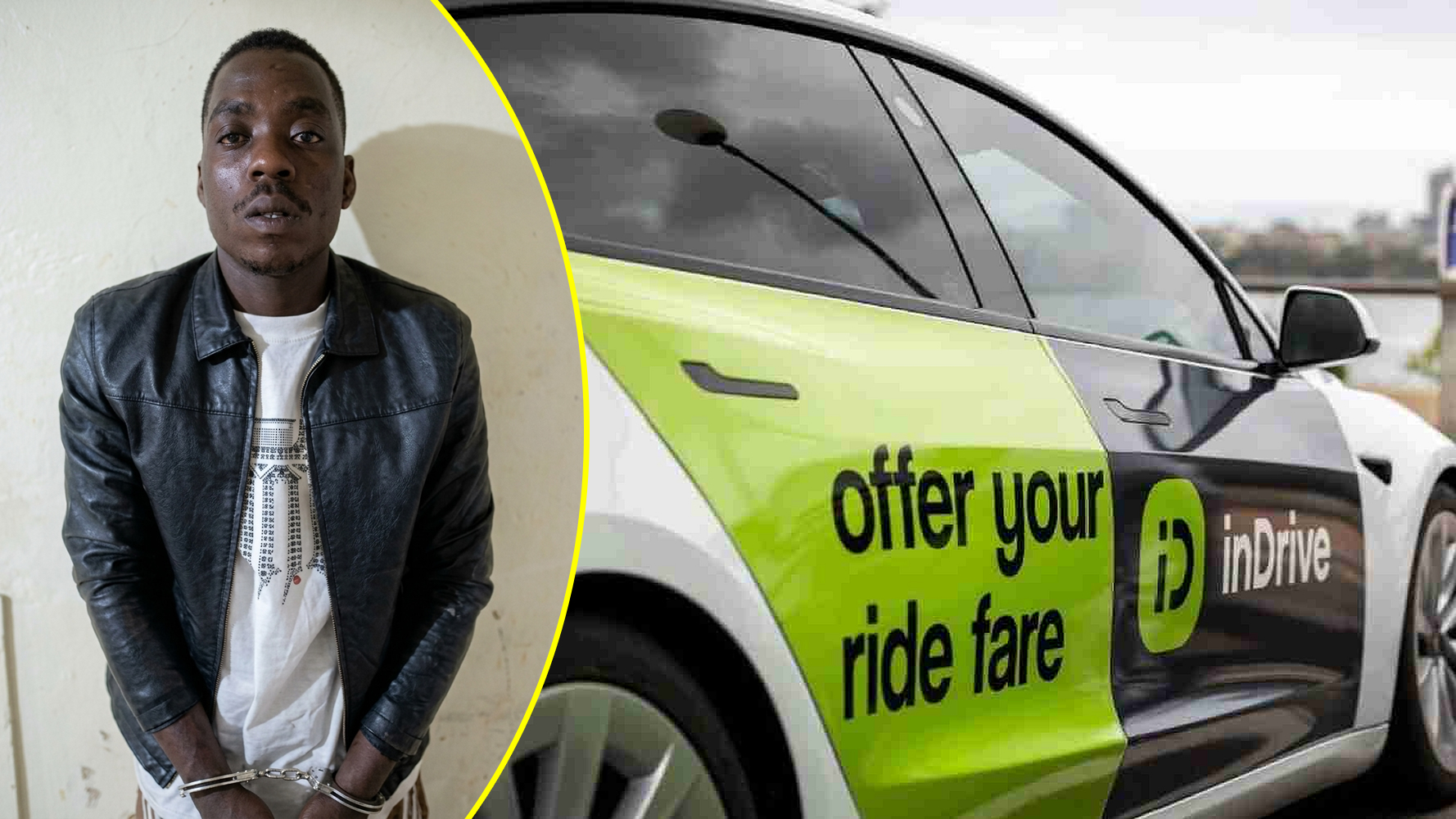
HARARE – A 23-year-old man from Crowborough has been arrested in connection with a series of alleged robberies targeting InDrive drivers in Harare, reopening questions about how much protection app-based transport really provides when strangers meet inside a moving car.
Tanaka Bright Murasi is accused of working with three accomplices, identified by police as Kedha, Slim Giant and Rasta. The three remain at large. Police say the group used InDrive to request rides before robbing drivers of cash and mobile phones during trips carried out between July and August 2026.
The reported breakthrough came from a stolen phone. Detectives from the Criminal Investigations Department’s Vehicle Theft Squad in Harare tracked one of the handsets on August 15 and followed its movements to Murasi, who was arrested. Detective Inspector Rachel Muteweri, the CID spokesperson, confirmed the arrest.
“On 15 August 2026, detectives from CID VTS Harare tracked one of the stolen cellphones which led to the arrest of the accused person who is implicating his accomplices,” Muteweri said.
The account places the case at the intersection of two vulnerabilities. Drivers carry cash, use valuable vehicles and often work alone for long hours. At the same time, the booking system can give passengers a way to summon a car, choose a pick-up point and enter a journey with a driver who may know little more than a name, a profile picture and a destination.
The available police account does not give a final number of incidents linked to Murasi, set out an itemised list of all property allegedly stolen, or disclose a completed charge sheet. It also does not include a statement from Murasi.
What is clear is that the reported method is not new. On April 15, 2025, police confirmed an armed robbery in which a Sunningdale InDrive driver, Mannex Nyengedza, was attacked after accepting a booking from Harare’s central business district. Four men were in the vehicle. One sat beside him in the front while three sat in the back. As the car approached Old Mazowe Road, the front passenger applied the handbrake and a man in the rear produced an unidentified pistol.
Nyengedza was dragged from the driver’s seat, searched and robbed of an Itel P36 mobile phone and US$380. He suffered a swollen forehead. The red Toyota Passo he had been driving, registration AGN 1950, was later found undamaged in a ditch along Lorraine Drive. Harare provincial police spokesperson Inspector Luckmore Chakanza said one of the attackers took control of the vehicle before the driver was dumped and later assisted by a passer-by.
The incident showed how quickly an ordinary booking can become a vehicle hijacking. It also exposed the particular risks faced by drivers: the person requesting the ride may not be alone, a passenger can conceal a weapon or another person, and a driver who is concentrating on the road may have little room to react when the car is stopped from inside.
InDrive said Nyamayaro’s death occurred outside the use of its app and urged users to accept only rides arranged through the platform. The company said its system securely captures and stores passenger and driver information, allowing it to assist investigators when required. That distinction is important, but it does not remove the wider concern: drivers can still be approached outside the app, pressured to accept informal trips or placed in danger after an app booking ends or changes.
A further case reported in May 2026 involved Brian Nandana, a 30-year-old InDrive driver who was reported missing while working. His blood-stained Toyota Aqua was found abandoned near Warren Hills Cemetery, and police later recovered his remains from a shallow grave in Warren Park Hills. Police arrested Shepherd Severa, 28, in connection with the death. The case was reported as a suspected homicide, rather than as a confirmed InDrive robbery, and the available report did not establish that a passenger booked through the app was responsible.
Taken together, the cases show why safety cannot be measured only by whether an app has a map and a digital receipt. The useful question is whether it safeguards work at the point of danger, whether complaints lead to swift action and whether police can obtain reliable records before evidence disappears.
InDrive says it offers identity and document checks, driver and passenger profiles, the ability to choose a driver or rider, in-app communication, ride history, location sharing, emergency contacts and 24-hour support. Its safety pages say drivers can use features including Choose Your Rider, Profile Verification and Safe Feed, while passengers can share ride details, call emergency services and contact trusted people from the app. The company also says that accounts involved in a reported incident may be temporarily frozen while it investigates and coordinates with authorities where necessary.
Those safeguards create a digital trail, but their value depends on accuracy and access. A verified profile is not the same as a guarantee that the person entering the car is the account holder. A vehicle registration recorded in the app is useful only if the passenger checks it and the platform can act when it does not match. A panic button is meaningful only if it connects the user to a response capable of reaching them quickly.
The Harare robbery investigation should therefore answer practical questions for both drivers and passengers. How are identity documents checked in Zimbabwe, and how often are profiles re-verified? Does the app retain the booking, route, pick-up location, messages, calls and payment information for a period long enough to support a criminal investigation? Can drivers trigger emergency assistance without taking their eyes off the road? Who receives the alert, and what is the expected response time?
Zimbabwe’s growing e-hailing market now needs rules that match the risks. Clear requirements on licensing, insurance, data retention, identity checks, driver training, emergency response and cooperation with police would give users a clearer line of responsibility. The central question is no longer whether an app can arrange a ride. It is whether the company, the authorities and the users can make that ride traceable and safer from the moment a booking is accepted until the passenger leaves the vehicle.