


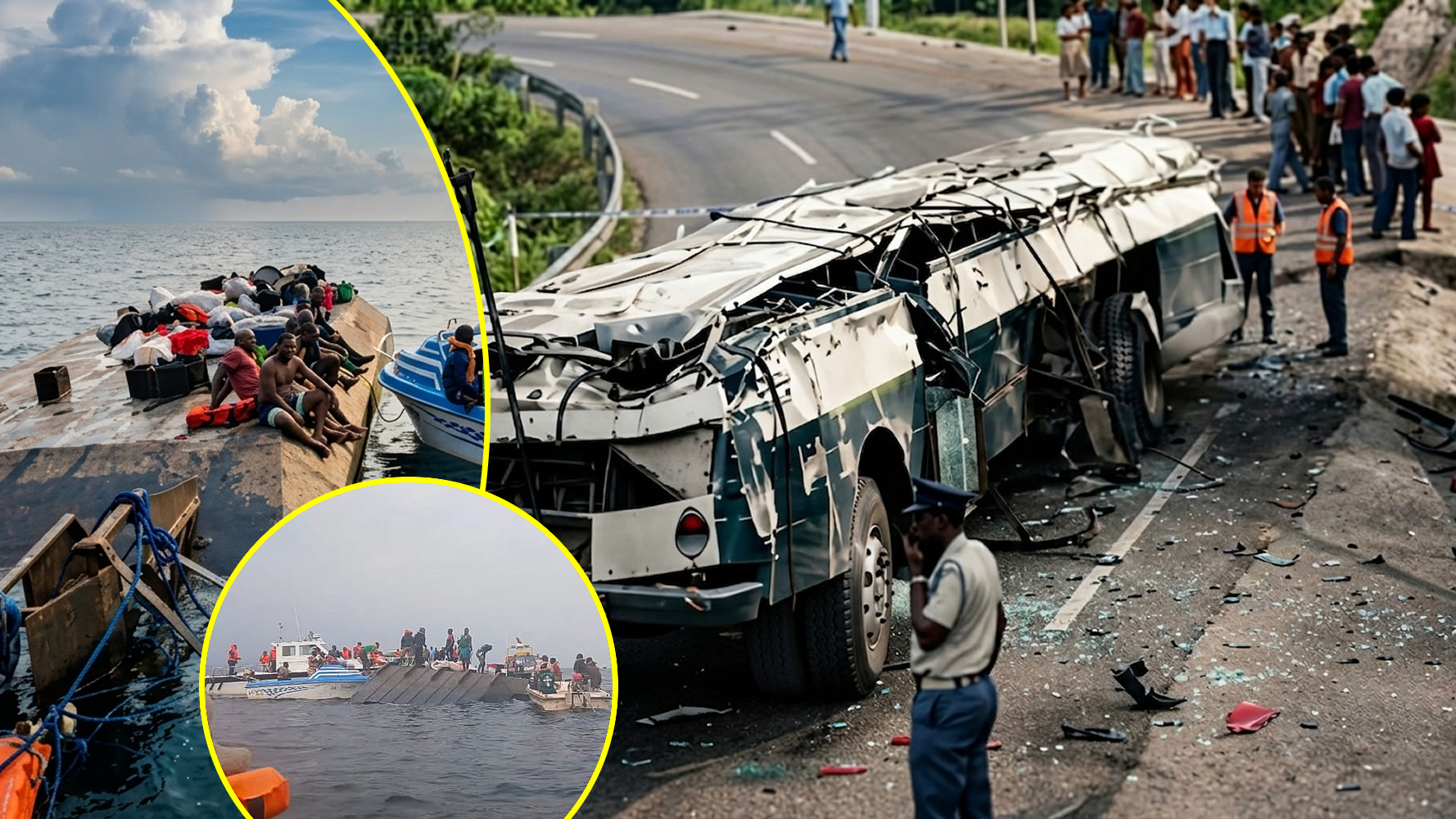
The death toll from the Rida Mbuya Nehanda ferry disaster has risen to 92, making it Zimbabwe’s deadliest transport tragedy and placing the country’s most painful memories of mass death alongside a fresh lake disaster that has devastated families across Nyaminyami.
Eight more bodies were recovered yesterday as divers and rescue teams widened the search across Lake Kariba. The victims are no longer being found only near the place where the ferry capsized. Bodies have been recovered near Long Island and King’s Camp, with some drifting towards the boundary with Zambia.
The search has become a race against time. Six of the recovered bodies remain unidentified, while about nine families were still waiting to identify and collect the remains of their relatives. Mashonaland West Minister of State for Provincial Affairs and Devolution Marian Chombo said the condition of some bodies was making the process increasingly difficult.
“As the search and recovery effort continues, we have been able to identify all but six of the bodies recovered so far, with 67 people rescued,” said Minister Chombo.
“It will be very difficult to identify the bodies that are being recovered. So far, people are relying on identifying clothes and other features, but we are running out of time and DNA may now be needed to assist in the identification process.”
The figures already point to a disaster larger than the official passenger lists first suggested. Ninety-two people are confirmed dead and 67 have been rescued, putting the estimated number of people aboard at 168. That figure could still rise because it does not include lone travellers, particularly traders who may not have told relatives that they were making the journey.
The ferry was carrying a cross-section of the communities that depend on Lake Kariba. Parents were taking children to their rural homes for the holidays. Traders were travelling to fishing camps along the Kariba-Chalala route to restock their wares. Buyers were heading to the lake to purchase fish for resale in different parts of Zimbabwe.
For those communities, the Mbuya Nehanda was not a leisure boat or an occasional service. It was a vital link between scattered settlements and the outside world. It offered a cheaper route than travelling by road, where passengers could pay about US$20 to Siakobvu and another US$20 to Mola. The ferry fare could be as little as US$10 per passenger. Travellers from Harare paid US$13 to reach Kariba before boarding the vessel.
That price difference explains why so many people accepted the risks of a journey across a vast and unpredictable lake. The ferry connected families, markets and fishing camps, but it also carried the weight of rural poverty. For many passengers, the choice was not between a safe journey and a dangerous one. It was between the only affordable route and a road journey that could cost several times more.
The vessel capsized on 11 August while travelling from Kariba towards the Chalala fishing areas. Earlier official figures indicated that the boat was authorised to carry 90 passengers, but far more people were aboard when it overturned in strong waves. Estimates placed the number of passengers and crew at more than 150, including adults, children and several crew members.
The scale of the loss is most visible in Mola, in Nyaminyami Rural District. At least 53 of the confirmed dead are from the area, with about 47 coming from Wards 1 and 3 under Chief Mola. Entire households have been affected, and in some cases the search for one missing person has become a wait for several members of the same family.
Ward 3 councillor Tight Bhusumani lost a child and a niece. He said some families had spent six days waiting for the recovery and transport of the bodies of their loved ones. As they waited, they ran out of food.
“The situation has been dire for some families because they have run out of food as they gather waiting for bodies to be recovered and transported for burial,” said Clr Bhusumani.
“We have full confidence that the Second Republic will timeously address the challenges we are facing. “We would like to thank our shadow Member of Parliament Cde Nigel Shamu, who has drawn from his own pocket to assist affected families.”
The crisis has reached beyond the immediate grief of funerals. Children have been left without parents, siblings and, in some cases, entire immediate families. Bhusumani described cases in which surviving children were being cared for by neighbours and well-wishers because no close relative remained to take responsibility for them.
“We have distressing cases where a child lost both parents and other siblings, leaving them as the only surviving member of the family.
“There is the case of a 10-year-old who lost both parents and two siblings. They have no one to look after them hence neighbours and well-wishers are assisting,” he said.
At the district hospital and other points near the lake, families have continued to look for news. Identification has relied on clothing and other personal features, but the passage of time and the condition of the bodies have made that work harder. The possibility of DNA testing has now become part of the recovery effort, while teams continue to search the lake and surrounding areas for people still missing.
The disaster has overtaken the Nyanga bus tragedy of 1991, in which 89 people, mainly schoolchildren, were killed when a bus plunged into the Nyanga Mountains. That crash had remained the country’s deadliest transport disaster for 35 years. Its victims were returning from a school trip, and the tragedy became a lasting symbol of the danger posed by mechanical failure, overcrowding and the loss of control on mountain roads.
Ignatius Bukuta, one of the survivors, remembered the mood before the crash. “When we left St Killian’s Mission, gaiety and excitement was high. We were singing all the way,” he said. “The driver was not the one who had taken us to St Killian’s.”
That account placed the horror of the crash against the ordinary excitement of a group of young people travelling home. The bus company later disappeared from active operation, but the disaster remained part of Zimbabwe’s national memory. For families in Mola, however, the old story is now being repeated in a different setting: children travelling with parents, traders carrying stock, and passengers relying on a transport service that had become essential to daily life.
The country’s history contains even larger death tolls outside public transport. In 1972, an underground explosion at Wankie Colliery killed 427 mineworkers in what became known as the Kamandama mine disaster. It remains one of Zimbabwe’s worst industrial catastrophes. The tragedy is remembered not only for the number of workers who died, but also for the families and mining communities left without their main earners.
The construction of Kariba Dam also carried a heavy human cost. Eighty-six workers died during the building of the dam between 1956 and 1960. Their deaths formed part of the price paid for creating the lake that now sustains transport, fishing and trade between communities on both sides of the Zambezi Valley.
The Kariba ferry disaster has therefore struck at the centre of a place already marked by loss. The lake was created through one of the country’s largest engineering projects, and it has since become a source of electricity, fishing and movement. Yet for the families now gathered beside it, Lake Kariba is also the site where parents, children, traders and neighbours disappeared beneath the water.
The tragedy has renewed attention on the dangers faced by people who travel on the lake because they have no affordable alternative. The Mbuya Nehanda was carrying more than passengers. It was carrying food, fuel, groceries, fish and luggage, all of which formed part of the rural economy. Survivors described rough water, goods shifting and passengers struggling to reach life jackets beneath luggage as the vessel began to take on water.
The recovery operation is continuing, and the final death toll may rise. Authorities are searching farther from the original accident scene as currents carry bodies across the lake. At the same time, families are still trying to establish who was aboard, collect the remains of those identified and find answers for those who have not yet been accounted for.
With 92 confirmed dead, the Rida Mbuya Nehanda disaster has moved beyond the scale of a local accident. It has become one of the defining national tragedies of modern Zimbabwe, surpassing the Nyanga bus disaster and placing the suffering of Mola among the country’s darkest chapters.
For the families waiting by the lake, the figures are not history. They are names, empty homes, children without parents and funerals delayed by the search for bodies. The US$10 journey that once offered a lifeline between Kariba and the rural communities around the lake has ended in a loss that Zimbabwe will remember for generations.