
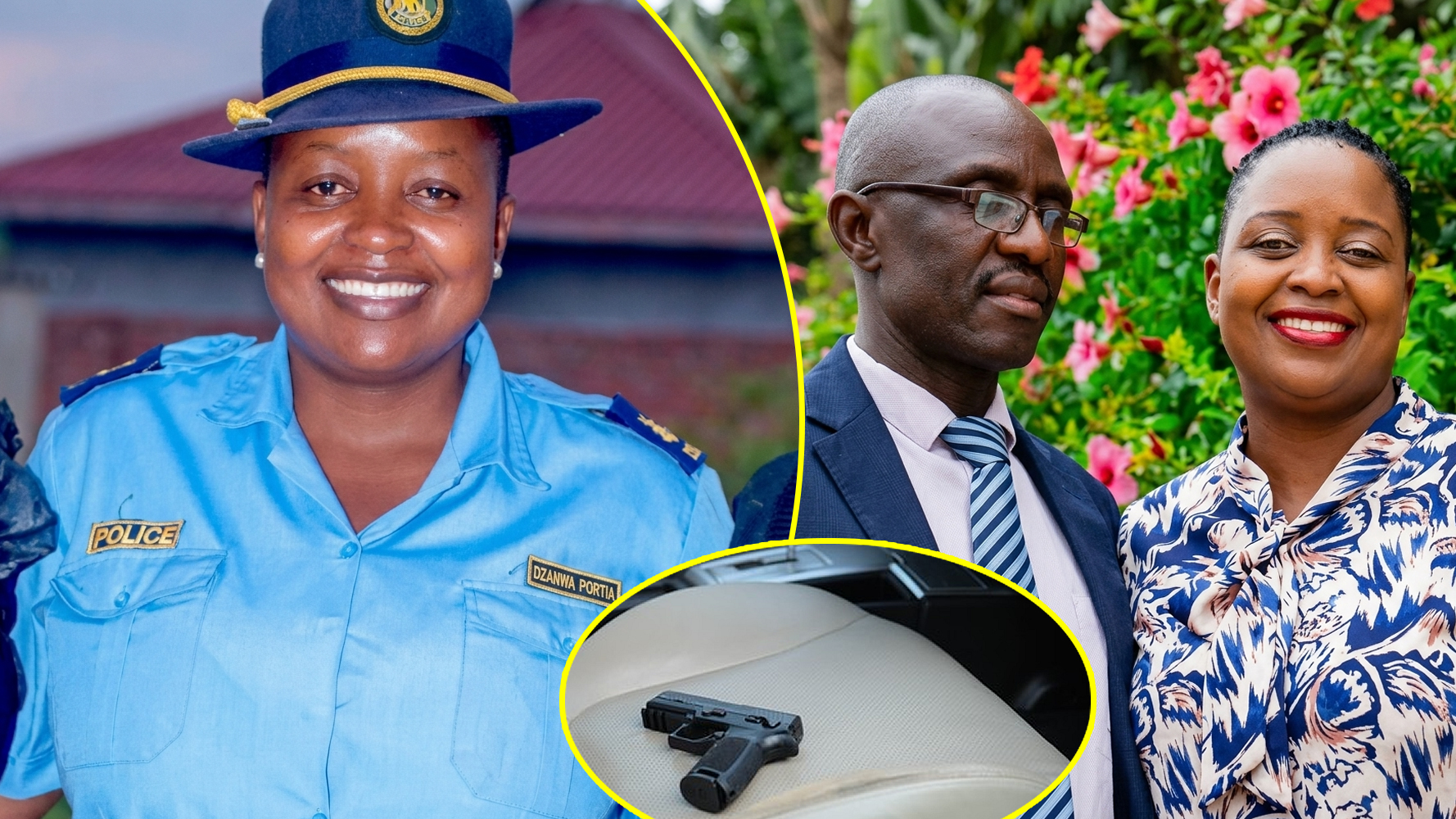

Police sergeant shot dead after confronting husband over alleged abuse of teenage daughter
HARARE — A Hatfield traffic officer, Sergeant Portia Dzanwa, was shot dead inside a parked vehicle in Harare on Sunday night after confronting her husband over allegations involving her 16-year-old daughter, according to police.
Her husband, 52-year-old Pharaoh Dombodzvuku, survived after suffering a gunshot wound to the head. He remained in critical condition at Sally Mugabe Central Hospital under police guard, while detectives from the Criminal Investigations Department’s Homicide section worked to establish what happened inside the vehicle.
The shooting took place at about 9pm on 16 August in Hopley Zone 5, after the family had been travelling towards Southlea Park Police Station to report the allegations made by the teenager. Instead of reaching the station, Dombodzvuku reportedly stopped at the home of his older brother, Trymore Dombodzvuku, saying he wanted to discuss the matter first.
The decision to stop at the house placed the family in a private setting at the moment when tensions were already high. The teenager was taken inside the house while Dzanwa and her husband remained in the vehicle. A short time later, Trymore heard two gunshots.
He rushed outside and found Dzanwa dead and Dombodzvuku unconscious and bleeding in the front of the vehicle. A CZ pistol was recovered from Dombodzvuku’s lap. Police said the magazine contained 12 rounds.
National police spokesperson Commissioner Paul Nyathi confirmed the killing and urged people facing serious family disputes to seek peaceful ways of resolving them.
“The Zimbabwe Republic Police confirms the death of a police officer after being shot by her husband using a firearm. The accused person used the same weapon in an attempt to kill himself following a misunderstanding on allegations of sexually abusing his stepdaughter,” said Comm Nyathi.
“The suspect injured himself and is currently in hospital under police guard. Investigations are underway to establish the cause and origins of the firearm used.”
Dzanwa, 36, was stationed at ZRP Hatfield Traffic. Police said she was shot once in the head. Dombodzvuku was found in the driver’s seat with a similar wound and was taken to Sally Mugabe Central Hospital for emergency treatment.
The family had planned to go directly to Southlea Park Police Station after the teenager told her mother what had allegedly happened. Police said the girl described an intimate relationship with her stepfather and reported that he had collected her from school and taken her to a lodge in Waterfalls, where she alleged that they had sex.
Her identity, school and other details that could identify her have been withheld. She was inside Trymore’s house when the shots were fired. Officers are investigating both the allegations involving the teenager and the circumstances surrounding Dzanwa’s death and Dombodzvuku’s injury.
The police account says Dombodzvuku asked his brother to take the teenager into the house before he and Dzanwa continued their discussion in the car. Trymore was inside when he heard the gunfire. He then reportedly went to report the incident at the ZRP Southlea Park. A night patrol was sent to the property and CID Homicide detectives attended the scene.
The killing has also drawn attention to the danger faced by women when domestic disputes turn violent behind closed doors. Zimbabwean officials and organisations working with survivors have repeatedly warned that abuse often takes place within families and that people close to victims can be among those responsible for violence.
In a recent warning, police said cases of sexual abuse involving minors were rising and that many alleged perpetrators were people known to the children or trusted by their families. Commissioner Nyathi said some parents and relatives had helped conceal abuse or protected those accused of committing it.
“It is disturbing to note that some of these perpetrators are people who are expected to provide a safe and nurturing environment for these children. Instead, they are exploiting and abusing the trust placed in them.”
He also warned relatives who hide such cases that they risk arrest for obstructing the course of justice, and called on the public to report suspected abuse to the police. The warning followed investigations involving a 13-year-old girl in Murewa and a 14-year-old girl in Lusulu in Matabeleland North province, where close relatives were named in the police reports.
Police have previously described similar patterns in which children were abused by parents, guardians, uncles, brothers, landlords or other adults with access to them. In one case, officers reported that a five-year-old girl was sexually abused near Bravoland Mine Compound in Mberengwa while returning from school. In another, a 13-year-old girl in Mutawatawa, under Murewa district, was reported to have been abused by her uncle. Police said the matter was reported months after the alleged abuse.
A separate case in Lusulu in Binga involved a 14-year-old girl who police said had been abused by her uncle over a period stretching from February to November 2024. The case came to light after the girl complained of stomach pains. Police said she had previously tried to report what was happening to another relative, who reprimanded the suspect but did not take the matter further.
Those cases have reinforced police calls for traditional leaders, churches and families to support children who disclose abuse rather than silence them. In the Dzanwa case, the teenager’s disclosure led to a plan to make a formal police report. That journey ended before the family reached the station, when the shooting took place at the brother’s home.
The killing comes as Zimbabwe continues to confront a wider pattern of violence against women. Government figures cited in a recent assessment show that nearly 40 per cent of women aged between 15 and 49 have experienced physical violence, while an estimated 12 to 25 per cent have experienced sexual violence. The country does not keep a separate national record for femicide, making it difficult to measure the full scale of killings linked to gender-based violence.
Musasa Project, an organisation that supports survivors of gender-based violence, recorded more than 30,000 incidents in 2024. Police recorded nearly 19,000 cases during the same period. The figures cover a broad range of violence, but they show the scale of the pressure facing families, police stations, courts, hospitals and organisations providing shelter and counselling.
In Matabeleland, government officials have recently raised particular concern about intimate-partner violence. Judith Ncube, the minister of state for Bulawayo Metropolitan provincial affairs, said the region had some of the country’s highest rates and called for urgent public discussion about domestic violence.
“Something has gone wrong in our social fabric: we no longer have aunts and uncles who are go-betweens in marriages,” Ncube said. “We need to capacitate caregivers to be professional and sit down with our young people and talk. We have pastors that can help, too.”
The cases are different in their circumstances, but together they have placed renewed focus on the private spaces where women and children should be safest. They have also highlighted the importance of responding quickly when a child reports abuse or when a domestic dispute involves threats, weapons or a history of violence.
Samkeliso Tshuma, founder of the Zimbabwean advocacy group The Girls Table, said communities needed to speak more openly about intimate-partner violence and its effect on families.
“It’s heartbreaking,” she said. “We need to use social media to raise awareness of what intimate partner violence does to a community, to a society and the families that we are building.”
She added: “We need people to renew their minds, because as long we have people who still think that there is a reason for a man to abuse a woman, then we have a long way to go.”
For Dzanwa’s family, the broader debate about violence is now tied to the loss of a police officer who was killed while attempting to take a child’s disclosure to the authorities. Her husband remains in hospital as detectives continue their work, and the firearm recovered from the vehicle is central to the investigation.
Police have not released further details about Dzanwa’s final conversation with her husband or the precise sequence of the two shots. Investigators are continuing to record statements, examine the scene and follow the family’s movements from Southlea Park to Hopley.
Commissioner Nyathi urged members of the public to report abuse and to avoid resolving dangerous disputes through violence.