


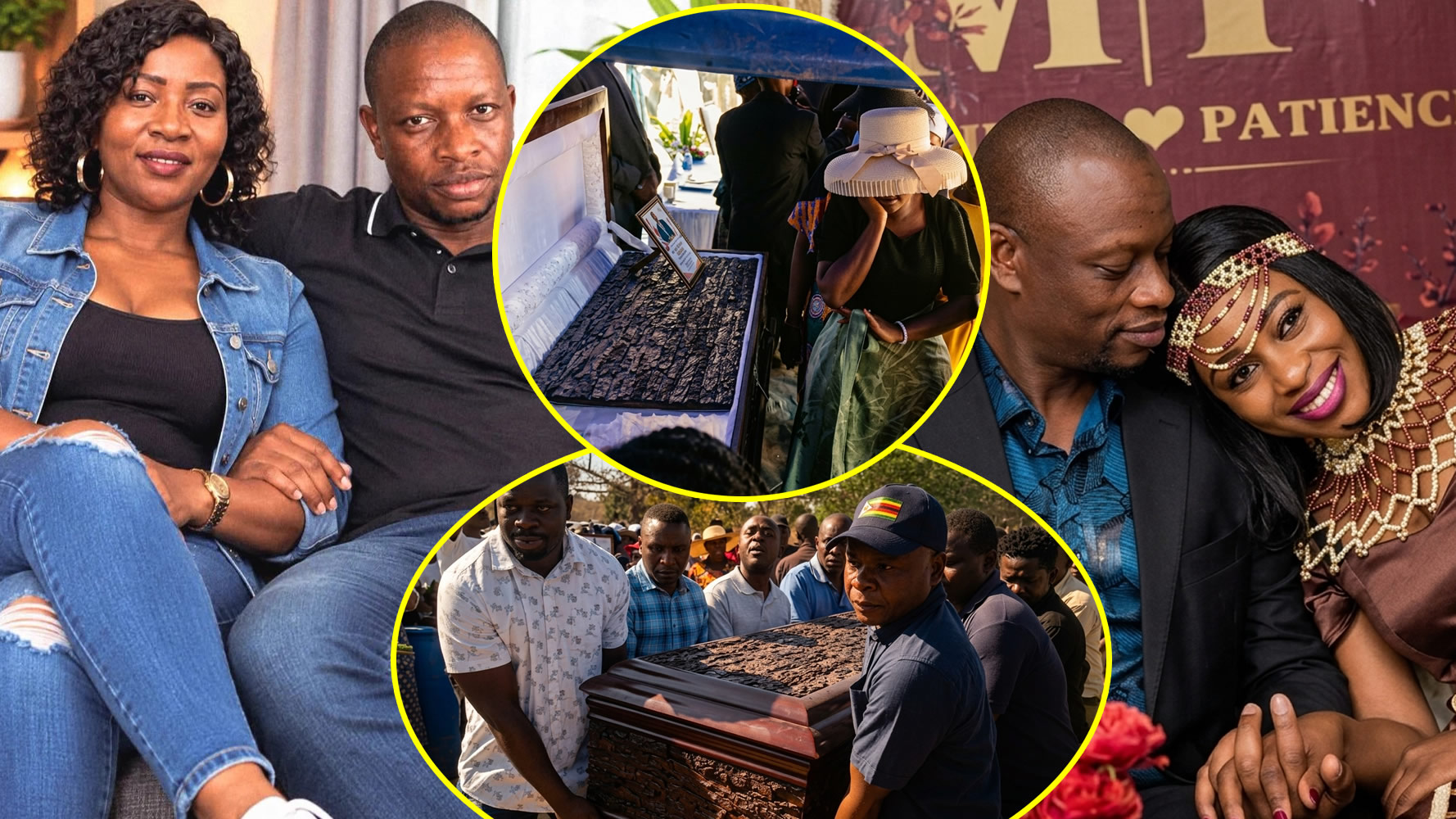
A week on, Muduva-Chirara tragedy leaves two funerals, three children and a family searching for answers
Today marks exactly a week since the family tragedy in Dzivarasekwa became public. The violence that began inside a family home has since travelled through two funerals, a handwritten suicide note and the grief of three children left without both parents.
Dr Martin Muduva, a Zimbabwe Human Rights Commission commissioner and Midlands State University lecturer, was buried in Buhera on Sunday. His wife, Lyliosa Chirara, was buried separately after her death on Saturday. Chirara, a nurse, died after consuming rat poison following the attack on her husband at their home in Dzivarasekwa Extension.
The couple had been together for about 14 years. They first met as students at Murambinda High School, where their relationship began before marriage. Their story, once rooted in a school friendship and a long family life, ended in a violent death and a second death hours later.
Muduva died at Parirenyatwa Hospital after he was struck on the head with an axe. Chirara left behind a handwritten note in which she described years of anger, rejection and unhappiness. She apologised to relatives, referred to her children and accused members of Muduva’s family of supporting a decision that she said destroyed their marriage.
The note has become the centre of the questions surrounding the tragedy. A section addressed to Muduva’s brother, Misheck Muduva, was written in red ink, while the rest was written in blue. In it, Chirara said she had become, in the eyes of her husband and his family, “FOOL, THE DOG, THE WASTE”. She wrote that they should now be happy because all that had gone away.
Addressing Misheck, she wrote: “Babamukuru Baba va Philip, be happy, all that you wanted has come to pass, you were the one encouraging Martin to get an educated wife because the wife that he had was no longer fit for him, he needed a wife who understood the way he worked and who respected him.”
“You went to marry, you did well. You went as the father and that’s exactly what you should have done. I was always trying to tell you how I was suffering but I could see that you didn’t have any concern about what I was telling you until you told me that you didn’t want to intervene in our problems. But, you intervened when Patience Mangwiro was being married because you wanted her. Chisarai mugarike, please take care of my children.”
Misheck accompanied Muduva when he paid lobola for his second wife, Patience Mangwiro, a university lecturer. He acknowledged the contents of the note and the accusations directed at him during the funeral proceedings.
“Lyliosa and Muduva had a misunderstanding for some time, and some issues are too sensitive to be disclosed publicly,” he said.
“Among them was Muduva’s decision to marry another wife. Lyliosa accepted after several counselling sessions, where I represented the Muduva family and she was with her two sisters.”
He said Chirara had set a condition that she was not at liberty to cancel the marriage certificate. He also said Muduva had told the family that he gave Chirara US$2,000, although she neither confirmed nor denied receiving the money as a token for violating their marriage vows.
The note described the second marriage as a betrayal that Chirara believed had been hidden from her. She said she learnt about it through a social media post showing the roora ceremony. She also wrote about the pain of watching her husband’s life change after he obtained his PhD and became more successful.
She also alleged that Muduva objected to her keeping 500 chickens at their home for an egg-production business, forcing her to sell them. She said he told her that his earnings were his own business and that she had no right to know how much he made.
The note further stated: “I’m crying, I’m suffering, murume avekundisema, kundisvipira mate nhasi nekuti ave nemari, akanganwa kwatakabva,” a passage in which she accused him of despising her because he had money and had forgotten where they had come from.
Chirara also addressed Mangwiro directly. “Now, let Patiece Mangwiro be happy because all she wanted was to destroy my marriage with Martin,” she wrote.
She told her children that she had wanted to watch them grow. “My kids, they don’t know anything, yes, I wanted to see them grow but I would still have died because of stress, sorry, I have failed,” she wrote.
She apologised to her relatives and Muduva’s family for the pain caused by the deaths. “To my mothers, I know I have inflicted pain on you where it hurts the most but understand this letter, I have written it with tears streaming down my cheeks,” she wrote.
Her final appeal was direct: “Chisarai mugarike, please take care of my children.”
The funeral arrangements deepened the distress around the couple’s final separation. Muduva was taken to his parents’ homestead in Buhera, where the burial took place on Sunday. Chirara’s relatives remained with mourners in Dzivarasekwa before her burial at her family home.
Muduva had not built a house of his own in his rural area, so the funeral was held at the family homestead. One community member said the delay in the burial was linked to arrangements for his coffin and the absence of a funeral policy.
“Muduva was an urban person and he did not build his own house here in the village,” the community member said.
“We were told burial was supposed to happen on Saturday but it was delayed because we heard that he had no funeral policy while his wife had a funeral policy. Takaswera takatarisira body on Friday only to be told that his coffin was yet to be bought.”
At both funerals, the focus turned to the children and to the failure of conflict inside a marriage to remain private once violence had taken hold. Traditional and church leaders called for counselling, open discussion and earlier intervention in troubled relationships.
Headman Mombeyarara, whose real name is Clemence Mutafiri, said: “As traditional leaders, we encourage people to consider counselling sessions rather than resorting to evil acts like what happened to the Muduva couple.”
“We have lost two lives and this has serious negative effects on the children and the family. We want healthy marriages. Polygamous marriages have existed and will continue to exist. Where a husband wishes to marry another wife, let it be discussed openly and avoid extra-marital affairs.”
Apostle Benjamin Joseph Murata, leader of New Life Pentecostal Church, said churches had a duty to confront violence, substance abuse and the breakdown of family relationships.
“As church leaders, we have a mandatory role to uphold moral values in society,” he said.
“The rise in murder and gender-based violence cases is a challenge to us church leaders. We should be transforming people’s lives through counselling and empowerment, not looking for ways to ‘milk’ people and leave them poor.”
Reverend Tsitsi Madziyire, the United Methodist Church Seke North Circuit pastor-in-charge, urged couples to protect life and seek help before conflict became destructive.
“Protect your marriages through prayer. We are walking a path already walked by our elders, and they conquered,” she said.
“It is better to move away from an unhealthy marriage, pray about it, and see if there will be changes than resorting to violence. To men, be responsible, seek help when faced with challenges and open your eyes to see that there is nothing special in extra-marital affairs.”
Pastor Rosemary Mangwanya of New United Apostolic Faith Church also called on couples to turn to prayer during difficult periods, saying every family faced challenges but that violence could not be the answer.
Bishop Albert Chikuni of the Interreligious Association for Peace and Development in Zimbabwe said the deaths showed how violence inside a home could destroy an entire family.
“Whether the perpetrator is male or female, violence in the home leaves no winners – only grief, trauma and shattered families,” he said.
For the Muduva and Chirara families, the immediate task is to care for the three children and arrange a future shaped by loss. The burials have ended, but the questions raised by the note, the second marriage and the final hours in the Dzivarasekwa home remain with those who knew the couple.
What began with two students meeting at Murambinda High School ended with separate graves in Buhera and elsewhere. Between those two burials lies a story of a long marriage, a family dispute that grew deeper over time and a home that became the scene of two deaths. A week later, the children, relatives and mourners are left to carry what happened next.