


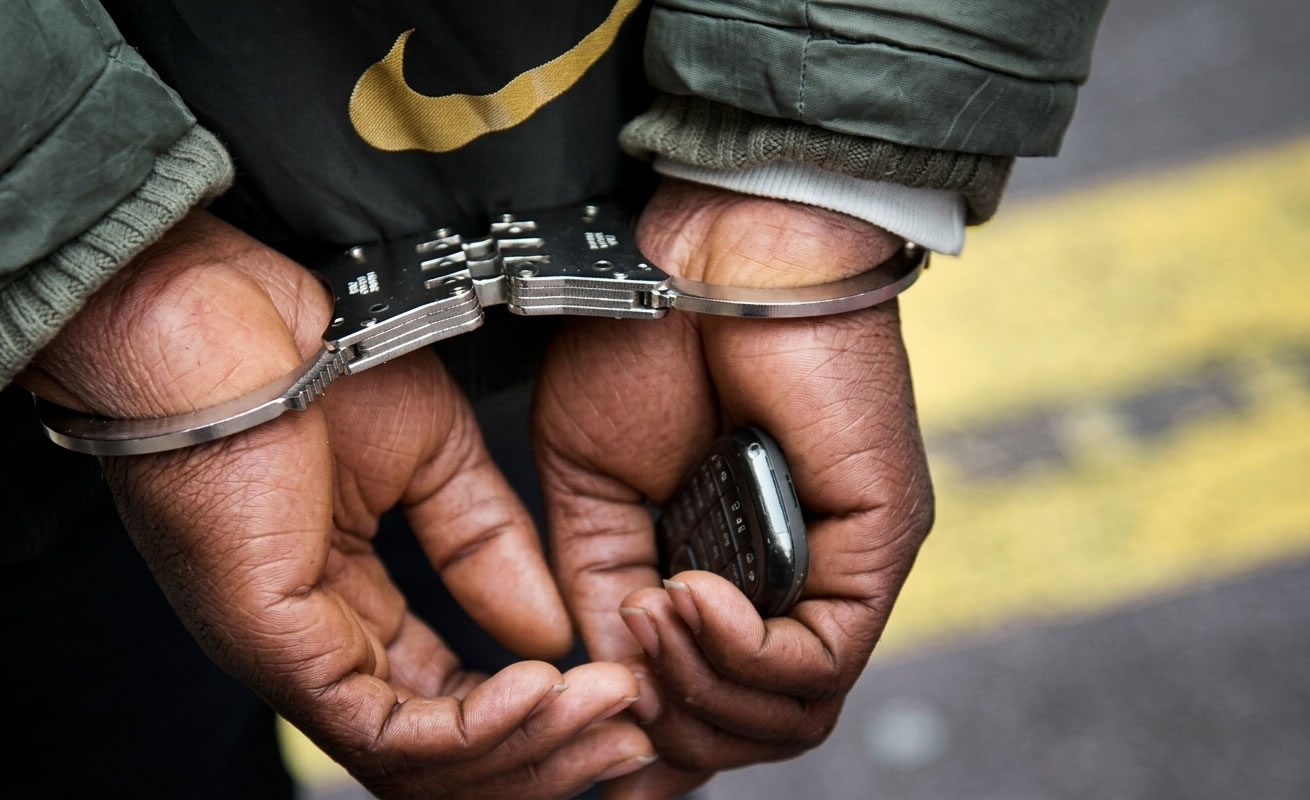
Zimbabwean spiritual healer remanded in Botswana over suspected human remains
FRANCISTOWN — A 28-year-old Zimbabwean man who told police he was a spiritual healer has been remanded in custody in Botswana after he was arrested near Shashe-Mooke Village with exhibits suspected to be human remains.
Nyasha Mudzongeri appeared before Francistown magistrate Ditebogo Nthuli on Tuesday, facing two charges. He is accused of entering Botswana through an ungazetted point of entry and of unlawfully possessing human flesh or remains.
The case has placed fresh attention on the movement of people and material across the porous border between Botswana and Zimbabwe, while investigators work to establish exactly what was recovered and where it came from.
Mudzongeri was arrested on Sunday, 13 September, after Botswana police received information about his movements. Officers from the Gerald policing area detained him near Shashe-Mooke Village, a settlement north of Francistown. During the arrest and subsequent investigation, police recovered exhibits that have now been sent for scientific examination.
The Botswana Police Service said the exhibits were submitted to its Forensic Science Services Laboratory. The examination is expected to determine their origin and establish whether they have further evidential value in the investigation.
Police have not released a detailed inventory of all the items recovered. They have also not disclosed how Mudzongeri came to be in possession of them or whether other people are being investigated in connection with the matter.
In the information provided to officers, Mudzongeri allegedly identified himself as a spiritual healer. That detail has drawn attention because traditional and spiritual practices remain part of everyday life in much of southern Africa, while police in the region have repeatedly warned about people who use claims of supernatural powers to exploit vulnerable clients or obtain prohibited material.
The case in Francistown is being handled as both an immigration and a criminal matter. The first count concerns the alleged use of an unofficial crossing to enter Botswana without passing through a recognised border post. The second concerns the suspected possession of human flesh or remains.
After the court appearance, Mudzongeri was remanded in prison. He is expected to return before the Francistown magistrate on 18 September, when investigators are expected to provide a further update on the evidence and the progress of the case.
Assistant commissioner of police Near Bagali, the Botswana Police Service public relations officer, said the public should not circulate material that had not been verified by authorities.
“The public is also encouraged to rely on official updates issued by the BPS and other competent authorities,” Bagali said in a statement issued on 15 September.”Responsible use of social media is essential in safeguarding the integrity of investigations and ensuring that justice is not undermined by misinformation.”
The warning followed a rapid spread of claims on social media about the nature of the exhibits and the reasons for Mudzongeri’s alleged journey into Botswana. Police have urged members of the public to avoid creating, forwarding or sharing information that has not been confirmed.
The laboratory examination is central to the next stage of the investigation. It will establish whether the material is human, identify its condition and characteristics, and help investigators determine whether it can be linked to a particular person, place or incident. The results may also help clarify whether the exhibits have any connection to the charge of unlawful possession.
The Botswana case comes amid a series of troubling incidents in Zimbabwe and the wider region involving graves, human remains and the exploitation of vulnerable people. In one recent Zimbabwe case, a 38-year-old man from Goromonzi was sentenced to six months in prison after admitting that he had disturbed and desecrated his aunt’s grave.
The man, Challenge Jasi, went to Mermaid Pool Cemetery in Chief Chikwaka, Juru, on 2 August and dug into the grave of Rosina Dipazhi, who had died in 2002. He had told his nephew that he needed a hoe to collect traditional medicine from a forest. Instead, he used it to open the grave while searching for gold rings he believed had been buried with the deceased woman.
The court heard that Jasi removed a skull, ribs, a tibia and a fibula, as well as a green skirt and a black petticoat. He put the remains and clothing into a sack and travelled to Harare. The following day, he went to Highlands police station, where an officer became suspicious about the sack and questioned him. Jasi then admitted that it contained human remains, leading to his arrest.
The circumstances of that case differ from the investigation in Botswana, but the incident showed how quickly the disturbance of a grave can turn into a wider criminal investigation once human remains are removed from their resting place. It also demonstrated the importance of physical evidence, witness accounts and forensic work in establishing what happened.
Another case before a Zimbabwean court has focused on the sale and cross-border movement of a newborn child. Evidence presented in the trial of Janet Marimo described an online group involving women in Zimbabwe, South Africa and the United States. A prosecution witness, Pauline Maganga, told the court that she had sold her two-day-old baby after members of the group offered financial assistance during her pregnancy and promised to cover hospital costs.
Maganga testified that she was warned the child could be taken for organ donations if she gave the baby to other members of the group. She said she later agreed to hand the child to Marimo in exchange for 25,000 South African rand. Marimo was subsequently arrested after returning to Zimbabwe with the five-month-old baby, who was placed in the care of the Department of Social Welfare.
That trial concerns alleged human trafficking and is separate from the Botswana investigation. It has nevertheless added to public concern about the way vulnerable people can be targeted through promises of money, medical help or spiritual services. The cases have also increased pressure on investigators to distinguish confirmed evidence from rumours, particularly when accusations involve children, graves or human body parts.
For now, the Botswana investigation remains focused on Mudzongeri, the two charges before the Francistown court and the exhibits held by the Forensic Science Services Laboratory. Police have not announced any additional arrests or identified a possible victim. They have also not confirmed the final nature or origin of the recovered material.
Mudzongeri’s return to court on 18 September is expected to provide the next formal development. Until then, investigators are continuing their work in Botswana while police maintain that official statements are the appropriate source of information about the case.