


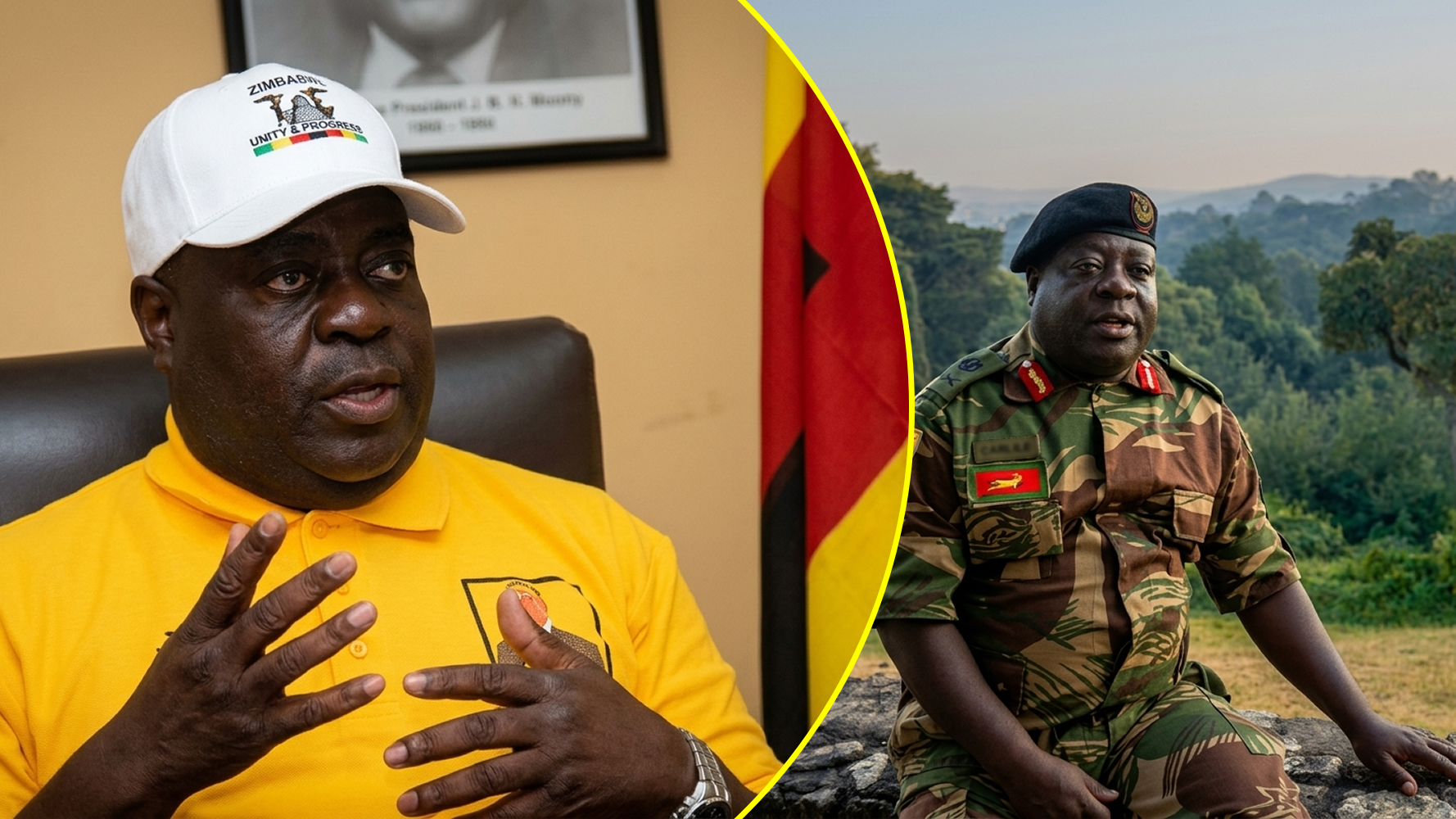
Chiwenga ally General Rugeje changes course and agrees to take Mozambique diplomatic post
Retired Lieutenant-General Engelbert Rugeje has changed his position and is now prepared to accept a diplomatic posting to Mozambique if President Emmerson Mnangagwa formally appoints him, in a sudden turn in a dispute that had exposed tensions inside Zimbabwe’s ruling Zanu PF party, The News Hawks has reported.
Rugeje, a Zanu PF politburo member and close ally of Vice-President Constantino Chiwenga, was lined up to replace the late Victor Matemadanda as Zimbabwe’s ambassador to Mozambique and Eswatini. He had initially been reluctant to accept the assignment, with people familiar with his position citing political, security and economic concerns.
That position has now shifted. A Zanu PF politburo member said Rugeje had decided he would comply with the appointment if it was officially made.
“When this issue came to light, Rugeje didn’t want to take any diplomatic posting for the reasons in your story yesterday, but things have now changed — he says he will comply and take the position if officially appointed,” the politburo member told the News Hawks.
The reported change came after details of the proposed posting became public. It follows an earlier account from a person close to Rugeje who insisted that the retired general would not accept the assignment.
“Your first story was correct; the second one is wrong. Rugeje will not accept such an appointment. I was speaking to him right now,” the source said at the time.
The conflicting accounts have placed renewed attention on the proposed appointment, the influence of retired military commanders in Zanu PF and the long-running rivalry between Mnangagwa and Chiwenga. Rugeje has not been formally inducted as ambassador, and the government has not publicly announced that he will take over the Maputo mission.
The post became vacant after Matemadanda died in June while serving as Zimbabwe’s ambassador to Mozambique and Eswatini. The veteran politician and former Zanu PF political commissar was 66. His death was confirmed by the Foreign Affairs and International Trade ministry, which said he had died early that morning. The cause of death was not disclosed in the ministry’s announcement.
Matemadanda had served in Maputo and Mbabane since March 2021. His diplomatic career followed a rapid rise through the ruling party and government. Born in Gokwe on 3 March 1960, he joined the Zimbabwe African National Liberation Army in 1973 and went to the war front in 1979, operating in the Mutoko area.
He later became secretary-general of the Zimbabwe National Liberation War Veterans Association and emerged as one of the strongest public critics of former President Robert Mugabe. He was arrested in 2016 after helping to produce a communiqué condemning Mugabe’s leadership.
During the military-assisted political transition of November 2017, Matemadanda mobilised war veterans and other supporters behind the move that removed Mugabe and brought Mnangagwa to power. He became Zanu PF national political commissar, won the Gokwe Central parliamentary seat in 2018 and was appointed deputy minister of defence and war veterans affairs.
His political fortunes changed in 2021 when he was removed from the commissariat and lost his deputy ministerial responsibilities. He was then posted to Mozambique, with additional accreditation to Eswatini. In that role, he worked on the identification, preservation and reburial of Zimbabwean liberation fighters who died or were buried in Mozambique, including at sites associated with the struggle in Chimoio, Tete and Nyangawo.
Nyikayaramba had held senior posts in the army, including chief of staff for administration at Zimbabwe National Army headquarters. He was later declared a national hero and buried at the National Heroes Acre in Harare. His tenure in Maputo lasted less than two years.
The history of the post has added weight to Rugeje’s reported hesitation. People close to him said he was uneasy about taking a position previously held by two senior figures who later died while serving or after holding the assignment. Nyikayaramba’s death was attributed to Covid-19, while the official announcement following Matemadanda’s death did not state a cause.
There was also a financial calculation. Rugeje has been doing consultancy work and, according to people familiar with his circumstances, earns enough to maintain a comfortable lifestyle in Zimbabwe. The ambassadorial position was viewed as less attractive financially.
“Rugeje says he is doing some consultancy work now and is earning some reasonable amounts, while living a decent lifestyle, but being an ambassador is a route to poverty,” a source said.
The same view was expressed more bluntly by people familiar with the discussions: there was no money in the post. Rugeje’s reported decision to accept the assignment therefore represents a change not only in his political position but also in the economic calculation that had made him reluctant to leave his current work.
His political history helps explain why the proposed posting has attracted unusual attention. After the 2017 transition, Rugeje was removed from the army and appointed Zanu PF national political commissar in December of that year. The post placed him in charge of party mobilisation, structures and election organisation.
Rugeje did not return to a major operational command. He was later linked to the vice-chancellorship of the Zimbabwe National Defence University, but that appointment did not materialise. He was also considered for command of the Zimbabwe National Army after the death of Lieutenant-General Edzai Chimonyo in July 2021.
Instead, retired Lieutenant-General David Sigauke became army commander in July 2021. Sigauke served until October 2023, when Lieutenant-General Anselem Sanyatwe took over. Sanyatwe was associated with Chiwenga’s faction and was later moved from the military command structure before being appointed Minister of Sport, Recreation, Arts and Culture.
The removal, reassignment and retirement of senior commanders changed the balance of influence within Zimbabwe’s security establishment. Several figures who had played prominent roles in the 2017 transition were moved away from direct command of troops or from the party machinery that controlled mobilisation and election preparations.
Rugeje’s reported willingness to take the Maputo assignment follows the same pattern of moving senior political and military figures into official roles outside Harare. It also resembles the path taken by Matemadanda, who moved from the centre of Zanu PF’s political machinery to a diplomatic post after losing his influence inside the party.
For Mnangagwa, the appointment would place a powerful retired commander outside Zimbabwe’s daily political and security networks. For Rugeje, accepting the post would mean a return to formal state service after years away from the army’s operational command and the party’s top organising office.
The proposed deployment also comes as Zanu PF continues to manage tensions over succession. Mnangagwa and Chiwenga worked together to remove Mugabe in 2017, but their political interests have since diverged. Chiwenga remains vice-president and retains strong links with figures from the military establishment, while Mnangagwa has consolidated control over the party and state institutions.
Rugeje’s name has remained important in that contest because of his past military role, his brief control of the party commissariat and his association with Chiwenga. His acceptance of the Maputo post would remove one more senior figure from Harare’s political arena, but it would also give the retired general a formal diplomatic position with responsibility for relations with two neighbouring countries.
The change of heart has ended, for now, the immediate standoff over whether Rugeje would pack his bags for Maputo. The next step rests with the presidency and the Foreign Affairs and International Trade ministry, which would have to make the appointment official and begin the accreditation process.
Until then, Rugeje remains a politburo member whose reported decision has exposed the delicate balance between retirement, diplomatic service and political influence in Zimbabwe. What began as a proposed posting to replace a dead ambassador has become a test of whether a senior figure from Chiwenga’s military network will accept a new role beyond the centre of power in Harare.