


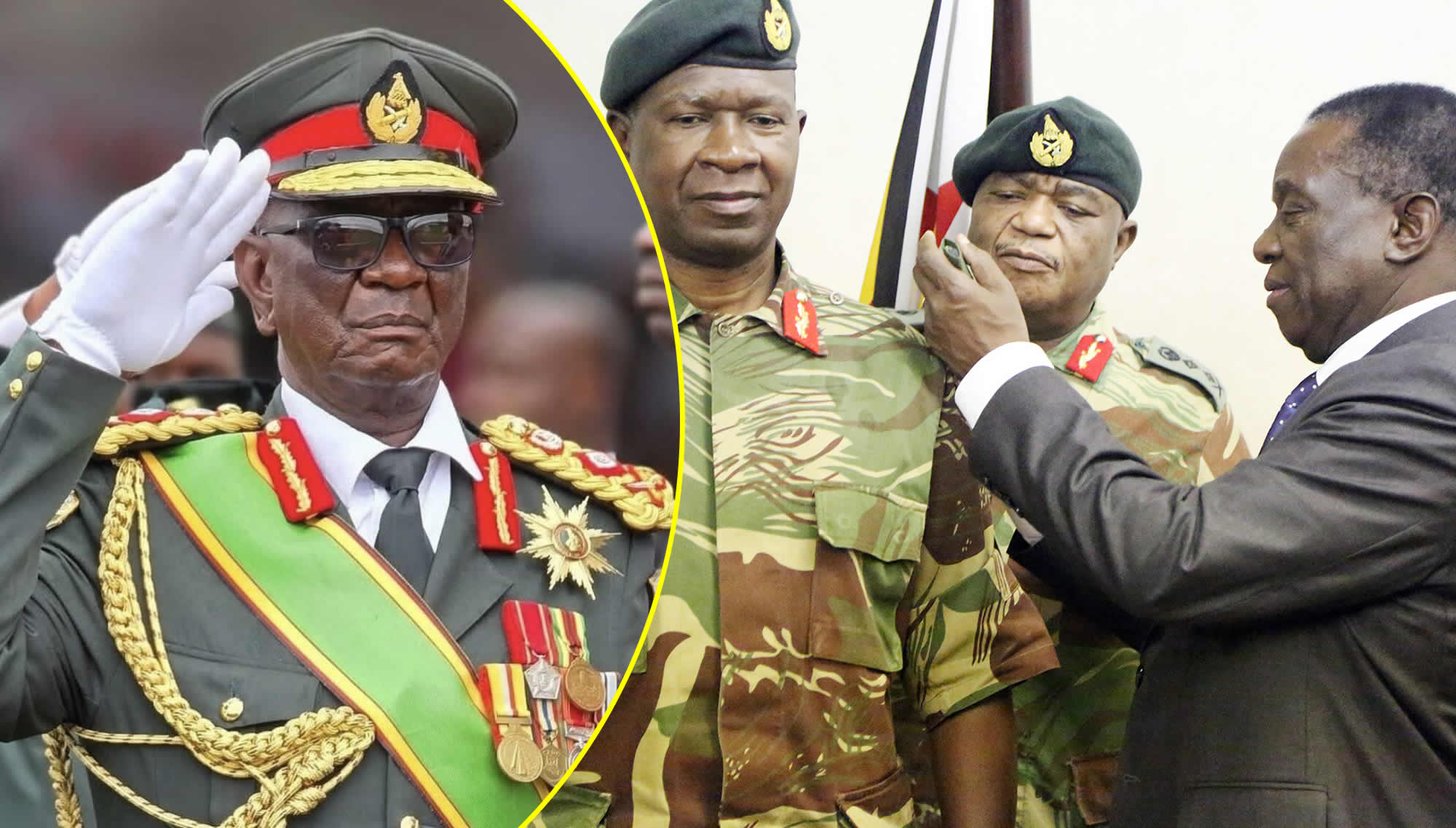
HARARE – In a move widely anticipated to have significant political ramifications, particularly concerning the internal succession power struggle within Zanu PF and the broader political landscape leading up to 2030, President Emmerson Mnangagwa has promoted Lieutenant-General Emmanuel Matatu to the rank of General. Consequently, he has been appointed as the new Commander of the Zimbabwe Defence Forces (ZDF), effective 21 November 2025.
President Mnangagwa had previously attempted to appoint Sibanda to the Zanu PF politburo during the party’s annual conference in Gweru in December 2023. However, this move was blocked on constitutional grounds.
In a related development, Major-General Asher Walter Tapfumaneyi has been promoted to the rank of Lieutenant-General and appointed as the Commander of the Zimbabwe National Army (ZNA), also effective from 21 November 2025. These appointments were formally announced on Wednesday through separate statements issued by Chief Secretary to the President and Cabinet, Martin Rushwaya.
“His Excellency, the President of the Republic of Zimbabwe and Commander-in-Chief of the Zimbabwe Defence Forces, Cde Dr Emmerson Dambudzo Mnangagwa, acting in terms of section 216(2 of the Constitution of Zimbabwe as read with sections 7(1) and 8(2 of the Defence Act [Chapter 11:02], promoted Lieutenant General Emmanuel Matatu to the rank of General and appointed him Commander of the Zimbabwe Defence Forces with effect from 21 November 2025. The appointment follows the retirement of outgoing Commander of the Zimbabwe Defence Forces, General Philip Valerio Sibanda,” Rushwaya stated.
The elevation of Matatu and Tapfumaneyi, both considered allies of President Mnangagwa, is viewed by analysts as a strategic move to consolidate his grip on the military and bolster his political position. This is particularly pertinent in the context of the ongoing succession battle within Zanu PF and Mnangagwa’s ambition to potentially extend his rule beyond the constitutionally mandated two-term limit in 2028, aiming for 2030.
Matatu, 72, only assumed the role of army commander in March of this year, following the abrupt removal of Anselem Sanyatwe from the position. Sanyatwe’s removal in March was reportedly due to his perceived support for Vice-President Constantino Chiwenga’s succession ambitions, particularly in the lead-up to the March 31 anti-government mass stay away protests organised by disgruntled war veterans leader Blessed Geza, an ally of Chiwenga.
Tapfumaneyi had been named ZNA Chief of Staff in May. Prior to this, he served as the former Deputy Director General of the Central Intelligence Organisation (CIO).
These changes within the military command structure further solidify Mnangagwa’s control over the army, making it increasingly challenging for Vice-President Chiwenga to leverage his historically strong military influence to advance his own presidential aspirations.
The military’s role in Zimbabwean politics remains a critical factor, often holding the balance of power in succession matters. As evidenced during the 2017 coup that brought Mnangagwa to power, the army acts as a kingmaker in power transitions and a guarantor of Zanu PF’s political dominance.
Its influence extends to Zanu PF succession battles, where military leaders wield significant sway and have previously intervened to ensure political outcomes that align with their interests. The deep integration of the military into the state, with numerous retired officers occupying key positions, reinforces its control over political security and the perpetuation of the ruling party’s dominance.
General Sibanda, who succeeded Chiwenga as ZDF commander in 2017, has been regarded as a stabilising figure within the military ranks, maintaining a relatively low public profile compared to some of his predecessors. His departure marks a further stage in the ongoing reshuffling of the top command structure that commenced after the 2017 transition.
While Sibanda’s immediate future remains uncertain, speculation is rife that he will take up a role within the ruling Zanu PF politburo. Mnangagwa had previously attempted to appoint him to the party’s politburo in 2023, but reversed the decision following criticism from civil society and legal experts who argued that the appointment was unconstitutional. It was indicated that his appointment would be reconsidered upon the completion of his army tenure.
The appointments of Matatu and Tapfumaneyi come at a time when tensions are reportedly escalating over Mnangagwa’s succession. Analysts interpret the elevation of his close allies to key military positions as a strategic manoeuvre to safeguard his political interests and consolidate his power.
The military played a crucial role in the 2017 coup that propelled Mnangagwa to power, underscoring the importance of controlling the security sector in maintaining his grip on the state.
It is worth noting that Tapfumaneyi was placed under US sanctions in 2024 for his alleged involvement in disrupting the 2023 general elections through the Forever Association of Zimbabwe (FAZ), an organisation accused of intimidating voters at polling stations.
Matatu takes over the military at a time when the institution continues to cast a long shadow over Zimbabwean politics. Senior commanders have historically played decisive roles in political transitions, most prominently in November 2017, when the military intervened to remove then-president Robert Mugabe after internal Zanu PF power struggles.
The operation, led by retired General Constantino Chiwenga, now vice president, paved the way for Mnangagwa to assume power.
Since then, the security sector has remained a key pillar of Mnangagwa’s administration, with several former or serving military figures appointed to influential positions in government, state enterprises and diplomatic posts.
The opposition and civil society groups have long argued that the military’s deep involvement in civilian affairs has complicated efforts toward political reform and weakened democratic oversight.