


THE BUS RIDE FROM HELL: HOW TWO TEACHERS TURNED A SCHOOL TRIP INTO A CRIME SCENE
HARARE — It was supposed to be a day of learning and exploration, a chance for students to step outside the classroom and bond with their peers. Instead, for one Form 2 student from First Choice Private School in Waterfalls, a school trip became a harrowing nightmare of violence and humiliation. What unfolded on a crowded school bus was not an act of discipline, but a savage, sustained assault that has left the nation reeling and the government demanding answers.
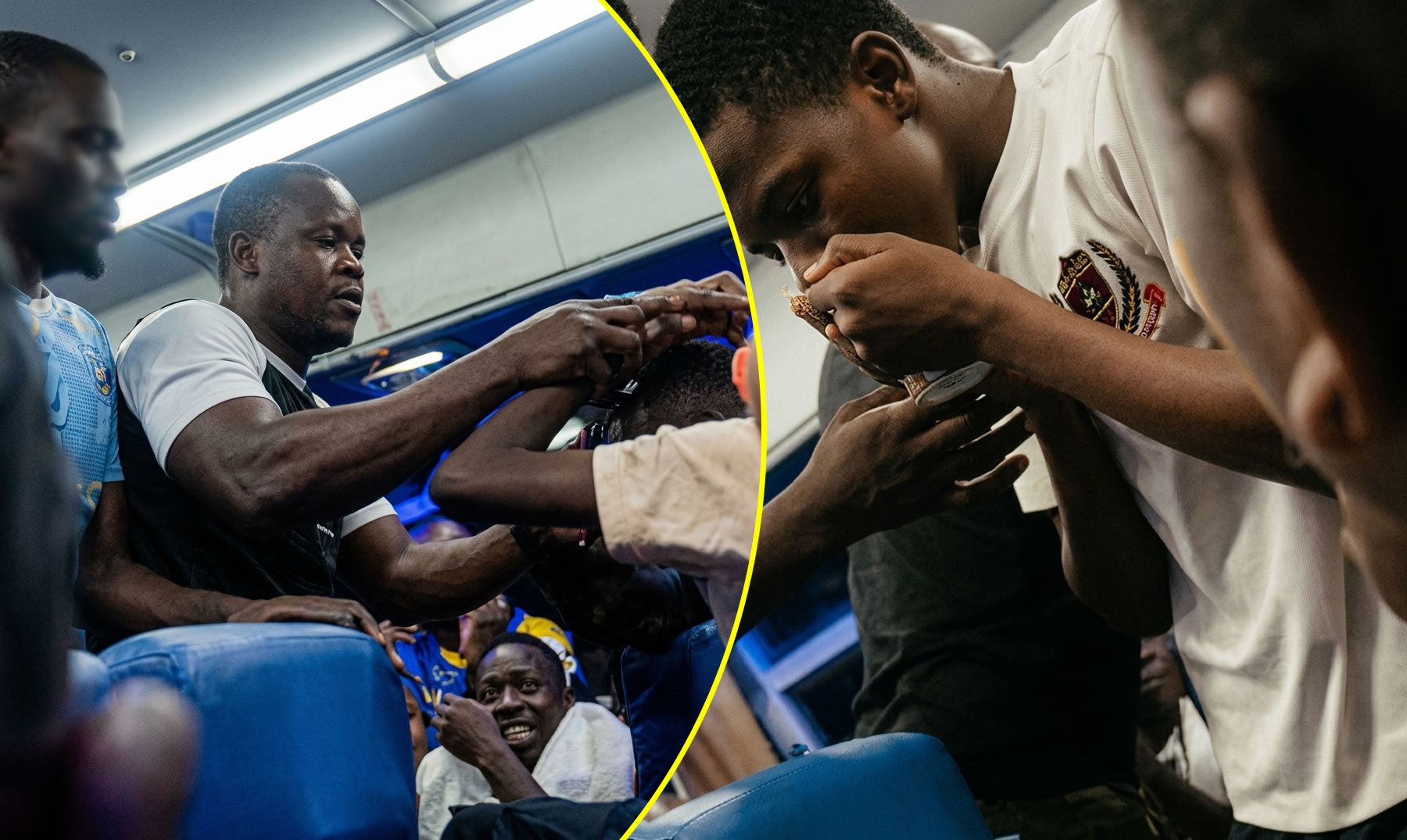
The incident, which was captured in a graphic video that has since gone viral across social media platforms, shows two grown men — individuals entrusted with the safety and well-being of their pupils — taking turns to viciously beat a helpless teenager. The footage, which is difficult to watch, depicts the student being treated like a human “punching bag” while his classmates looked on in stunned silence, trapped in the confined space of the vehicle.
The Ministry of Primary and Secondary Education has moved swiftly to address the scandal. Taungana Ndoro, the Director of Communications and Advocacy, confirmed that a team of investigators has been dispatched to the school to uncover the full extent of the “vicious attack.”
“First and foremost, the Ministry condemns in the strongest possible terms any form of violence or abuse within our learning institutions,” Ndoro stated, his voice reflecting the gravity of the situation. “The allegations captured in the widely circulated video, if proven true, represent a gross violation of the Education Act and the government’s policy on the administration of corporal punishment.”
A Verbal Spark, A Savage Response
The violence reportedly began with a relatively minor disagreement. Sources close to the investigation suggest that what started as a verbal exchange between two pupils aboard the bus escalated rapidly. When the teachers intervened, however, they did not seek to mediate or de-escalate the situation. Instead, they allegedly turned their fury on one of the boys.
The student’s “crime,” according to witnesses, was allegedly using a four-letter swear word during the argument. In response to this breach of discipline, the teachers — one of whom has been identified by sources as Mr Manyehwe — allegedly launched a physical assault that far exceeded any legal or moral boundary.
Witnesses describe a scene of chaos and terror. The teachers did not merely “clip” the boy or deliver a measured reprimand. They struck him repeatedly, using their fists and strength against a child who could not fight back. The confined environment of the school bus meant there was no escape for the victim, and the other students were forced to witness the brutality firsthand.
“We are treating this matter with the urgency it deserves,” Ndoro added. “We also urge the parents and guardians of the affected learner — and any other witnesses — to report the matter to the police, as the alleged actions may constitute a criminal offence.”
The Shadow of Alcohol and Negligence
As the investigation deepens, even more disturbing allegations have surfaced. Some reports suggest that some of the teachers on the bus may have been under the influence of alcohol at the time of the attack. While these claims remain unverified, they have added a new layer of outrage to the public discourse. If true, it would suggest a total collapse of professional standards and a complete disregard for the safety of the children in their care.
The Ministry’s investigation is not limited to the assault itself. Investigators are also looking into whether the school trip was properly authorised and whether the institution had complied with the necessary regulations governing learner discipline.
“The Ministry’s investigation will focus on establishing the authenticity of the video, identifying all individuals involved, determining whether the school trip was properly authorised, and assessing the institution’s overall compliance with regulations governing learner discipline,” Ndoro explained.
A Culture of Excessive Discipline
The incident at First Choice Private School is not an isolated one, according to some parents and former students. In the wake of the viral video, many have taken to social media to allege a broader culture of excessive discipline at several schools under the same management. They describe an environment where physical punishment is used not as a last resort, but as a primary tool for control.
This case has reignited the long-standing debate over corporal punishment in Zimbabwe. While the Education Amendment Act of 2020 explicitly outlawed corporal punishment in all schools — both public and private — some educators and parents still cling to the belief that “sparing the rod spoils the child.”
However, what happened on that bus was not “punishment” in any traditional sense. It was a savage attack that violated every principle of child protection. As one commentator noted, the attack had “everything which is not allowed even in corporate punishment – excessive force, public humiliation and punishment that endangers the physical or psychological well-being of the student.”
The 2020 Act was a landmark piece of legislation intended to align Zimbabwe’s education system with international human rights standards. It provides that children must not be subjected to any form of physical or psychological torture, or to cruel, inhuman, or degrading treatment. Yet, the reality on the ground often tells a different story.
A History of Violence
The statistics regarding violence in Zimbabwean schools are sobering. A 2011 Zimbabwe Violence Against Children and Youth Survey (VACS) revealed that a staggering 34 per cent of females and 48 per cent of males had experienced physical violence before the age of 18. Much of this violence occurs within the very institutions meant to protect and nurture them.
Recent years have seen a string of similar incidents. In Bulawayo, a male teacher was recently arrested for the alleged sexual assault of a 17-year-old learner at Founders High School. In another case, a teacher was detained for the assault of an 18-year-old student. These incidents, coupled with the latest bus attack, point to a systemic issue within the education sector that requires more than just investigation — it requires a fundamental shift in how discipline and authority are viewed.
The Ministry of Education, however, remains firm in its stance. “The Ministry remains committed to ensuring that all schools, private or public, operate within the confines of the law,” Ndoro insisted. “We will not hesitate to impose the necessary sanctions where violations are established.”
The Long Road to Justice
For the victim of the bus attack, the physical wounds may eventually heal, but the psychological scars are likely to remain. The trauma of being assaulted by those meant to be his mentors, in front of his peers, is a burden no child should have to carry.
The government’s recommendation that the parents report the case to the police is a crucial step. If the teachers are charged and convicted, it will send a clear message that the “teachers from hell” will no longer be tolerated in Zimbabwe’s classrooms.
As the nation waits for the final report from the Ministry’s investigators, the calls for justice grow louder. The viral video has ensured that this incident cannot be swept under the carpet. It has forced a mirror up to the education system, revealing the dark corners where violence still lurks under the guise of discipline.
The “Bus Ride from Hell” must serve as a turning point. It is a stark reminder that the safety of our children is not a given, but something that must be vigilantly protected. The teachers involved may face criminal charges, but the real challenge lies in ensuring that no other student ever has to endure such a savage ordeal again.
In the words of Taungana Ndoro, the Ministry will not rest until the law is upheld. “We will not hesitate to impose the necessary sanctions where violations are established,” he reiterated. For the parents of Zimbabwe, those sanctions cannot come soon enough.
|
Date
|
Incident
|
Location
|
Status
|
|
April 2026
|
Vicious assault of Form 2 student on school bus
|
First Choice Private School, Waterfalls
|
Under Ministry Investigation
|
|
2025
|
Male teacher arrested for sexual assault of 17-year-old
|
Founders High School, Bulawayo
|
Legal proceedings ongoing
|
|
2025
|
Education Minister reaffirms ban on corporal punishment
|
National
|
Policy Statement
|
|
2023
|
Eight learners expelled for drug abuse on school trip
|
Dominican Convent, Harare
|
Expelled
|
|
2020
|
Education Amendment Act outlaws corporal punishment
|
National
|
Law enacted
|
|
Feature
|
Lawful Discipline (Under 2020 Act)
|
Illegal Assault (As seen in Bus Incident)
|
|
Method
|
Non-physical, constructive, and restorative
|
Physical violence, punching, and striking
|
|
Intent
|
To guide and correct behaviour
|
To inflict pain and humiliate
|
|
Setting
|
Controlled, private, and professional
|
Public (on a bus), chaotic, and unregulated
|
|
Physical Force
|
None allowed
|
Excessive and dangerous
|
|
Witnesses
|
Confidential between teacher and student
|
Performed in front of a crowd of peers
|
|
Legal Standing
|
Protected by the Education Act
|
Constitutes a criminal offence
|
The case of the Waterfalls student has become a rallying cry for those who believe that the safety of the child must always come first. As the investigation continues, the focus remains on the two teachers who, for one terrible afternoon, became the very thing they were supposed to protect their students from: a source of terror and pain.
The “Teachers from Hell” may soon find that the law they so casually ignored is the very thing that will bring them to account. And for the students of Zimbabwe, that justice is the only way to ensure that the next school trip is defined by learning, not by fear.