


A Political Earthquake in Matabeleland
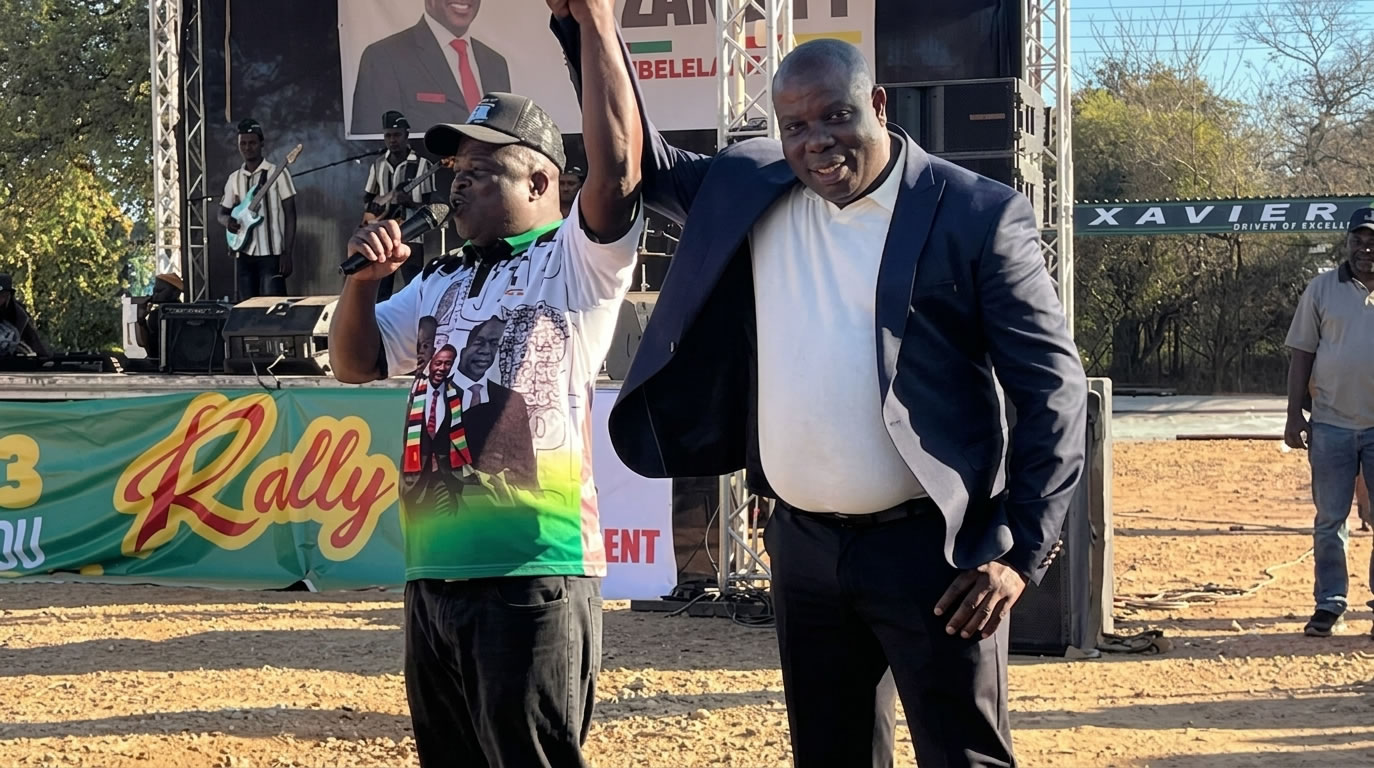
The political landscape of Matabeleland has been irrevocably altered by the recent defection of Gift Banda, a former Bulawayo deputy mayor and a once-stalwart figure of the Citizens Coalition for Change (CCC), to the ruling Zanu PF. His dramatic switch, announced at a high-profile rally in Gwanda, Matabeleland South, has ignited a firestorm of speculation and dismay across Zimbabwe. While state media has predictably framed this as a “return to the fold,” investigative insights suggest a far more intricate and troubling narrative behind Banda’s sudden “conversion”.
For years, Banda embodied the spirit of opposition resilience in Bulawayo, navigating a labyrinth of legal challenges and internal party strife. His unexpected alignment with Zanu PF, particularly as the ruling party pushes for a constitutional amendment to extend President Emmerson Mnangagwa’s term, has raised profound questions. Is this a genuine change of heart, or a calculated manoeuvre for survival in Zimbabwe’s high-stakes political arena?
The Man Behind the Headlines
Gift Banda’s political journey has been anything but uneventful. As a prominent figure within the CCC, he was a familiar face in Bulawayo, a city often considered an opposition stronghold. His past was marked by a tenacious spirit, frequently clashing with authorities and defending his political ground. This history makes his defection all the more perplexing for many who viewed him as an unshakeable pillar of the opposition.
His public declaration of support for Zanu PF and, crucially, for Constitutional Amendment Act No. 3 (CAA3), stands in stark contrast to his previous political allegiances. At the Gwanda rally, Banda articulated his belief that joining Zanu PF and endorsing CAA3 would “help advance Zimbabwe’s political and economic development” and contribute to the nation’s goal of achieving upper middle-income status by 2030. These statements, while seemingly forward-looking, are viewed with deep scepticism by many who recall his consistent opposition to the ruling party’s policies.
The Legal Noose: A Pattern of Pressure
Investigative sources close to the matter suggest that Banda’s defection was not merely a spontaneous ideological shift but rather the culmination of sustained pressure, potentially involving a series of legal entanglements. The ruling party has long been accused of employing a “catch and release” tactic, where opposition figures are subjected to legal and administrative scrutiny until they capitulate, only to be embraced as new allies once they switch sides.
Banda’s past is riddled with such legal controversies, painting a picture of a man frequently embroiled in battles with the justice system:
• March 2017: Illegal Residential Stands Allegations
Banda faced accusations of illegally acquiring residential stands in Bulawayo, leading to his temporary removal from office by the then Local Government Minister, Saviour Kasukuwere. Banda vehemently denied these allegations at the time.
• February 2020: US$60,000 Land Transaction Fraud
He was arrested on allegations related to a US$60,000 land transaction. Prosecutors alleged that Banda and Bard Real Estate conspired to forge signatures to facilitate the sale of a residential stand in Selbourne Brooke, Bulawayo. Both pleaded not guilty.
• December 2024: Forged O-Level Certificate Case
Banda found himself in court again, accused of submitting a forged Ordinary Level certificate while seeking nomination for the Zimbabwe Football Association (ZIFA) vice-presidency. The prosecution claimed that inquiries established the examination centre and candidate numbers on his submitted results slip belonged to another individual, Sino Gumbo.
These recurring legal battles, regardless of their outcomes, would undoubtedly have placed immense strain on Banda. The timing of his defection, amidst these unresolved or recently concluded legal challenges, fuels the narrative that a “clean slate” was offered in exchange for his public endorsement of Zanu PF.
The Shadowy Meetings and “Operation Mop-up”
The whispers in Bulawayo speak of a series of “quiet meetings” that took place in the weeks leading up to the Gwanda rally. These clandestine discussions, according to insiders, were where the terms of Banda’s defection were allegedly brokered. The promise of a “clean slate” regarding his pending administrative and legal issues is believed to have been a significant factor in his decision.
This alleged quid pro quo aligns with a broader strategy widely referred to as “Operation Mop-up” – a concerted effort by Zanu PF to systematically dismantle and weaken the opposition, particularly in its urban strongholds, ahead of the 2028 elections. By attracting high-profile figures like Banda, Zanu PF not only gains a new member but also sends a powerful psychological message to the electorate: the opposition is a fractured entity, and its leaders are susceptible to the ruling party’s influence.
Constitutional Amendment No. 3: A Convenient Timing
Banda’s defection is inextricably linked to the recent passage of Constitutional Amendment Act No. 3 (CAA3). This controversial legislation, assented to by President Mnangagwa on 7 July 2026, extends presidential and parliamentary terms from five to seven years, effectively prolonging President Mnangagwa’s tenure potentially until 2030.
The Gwanda rally itself was a “Thank You Rally” celebrating the passage of CAA3. Banda’s public endorsement of this amendment, which has been met with significant criticism from human rights organisations and opposition groups for its implications on democratic governance and presidential term limits, further solidifies the perception of a strategic alliance rather than a genuine ideological shift. His support lends a veneer of legitimacy to a move widely seen as consolidating power within the ruling party.
The Fractured Opposition: A Landscape of Disarray
Banda’s departure is not an isolated incident but rather a symptom of a deeper malaise within Zimbabwe’s opposition. The Citizens Coalition for Change has been grappling with internal strife and a series of high-profile defections that have left it significantly weakened. The most notable of these was the abrupt resignation of its leader, Nelson Chamisa, in January 2024.
Chamisa cited the party being “hijacked by the ruling Zanu-PF” as his reason for leaving, pointing to the disruptive role of Sengezo Tshabangu, who claimed to be the CCC’s interim secretary-general and initiated a series of recalls of elected CCC officials. This internal turmoil has created an environment of instability and distrust, making the opposition vulnerable to external pressures and inducements.
Other prominent opposition figures who have crossed the floor to Zanu PF in recent years include Blessing Chebundo, who famously defeated President Mnangagwa in the 2000 elections, and Collins Tsvangirai, brother of the late MDC founding leader Morgan Tsvangirai, along with Witness Dube and Gift Konjana. These defections, often accompanied by similar narratives of disillusionment with the opposition and newfound belief in Zanu PF’s vision, contribute to the narrative of a “sinking ship” that Zanu PF actively promotes.
The Human Cost: Loyalty as a Commodity
For the ordinary Zimbabwean voter, particularly those in Bulawayo who had placed their trust and hopes in Gift Banda, this defection is a bitter pill to swallow. It lays bare the harsh reality that in the cutthroat world of Zimbabwean politics, loyalty can often be a commodity, traded for personal safety, political relevance, or a reprieve from legal woes.
The psychological impact on the remaining CCC supporters is profound. The departure of a heavyweight like Banda further demoralises the base, fostering a sense of betrayal and reinforcing the perception that even their most trusted leaders are susceptible to the lures of the ruling party. This effectively neutralises the opposition’s influence in key regions and deepens the sense of political apathy among the populace.
Every decision made at the top, particularly those involving high-profile political figures, has a profound and often unpredictable impact on the lives of millions. As the nation watches these events with a mixture of hope and trepidation, the need for transparency and accountability has never been more urgent.