


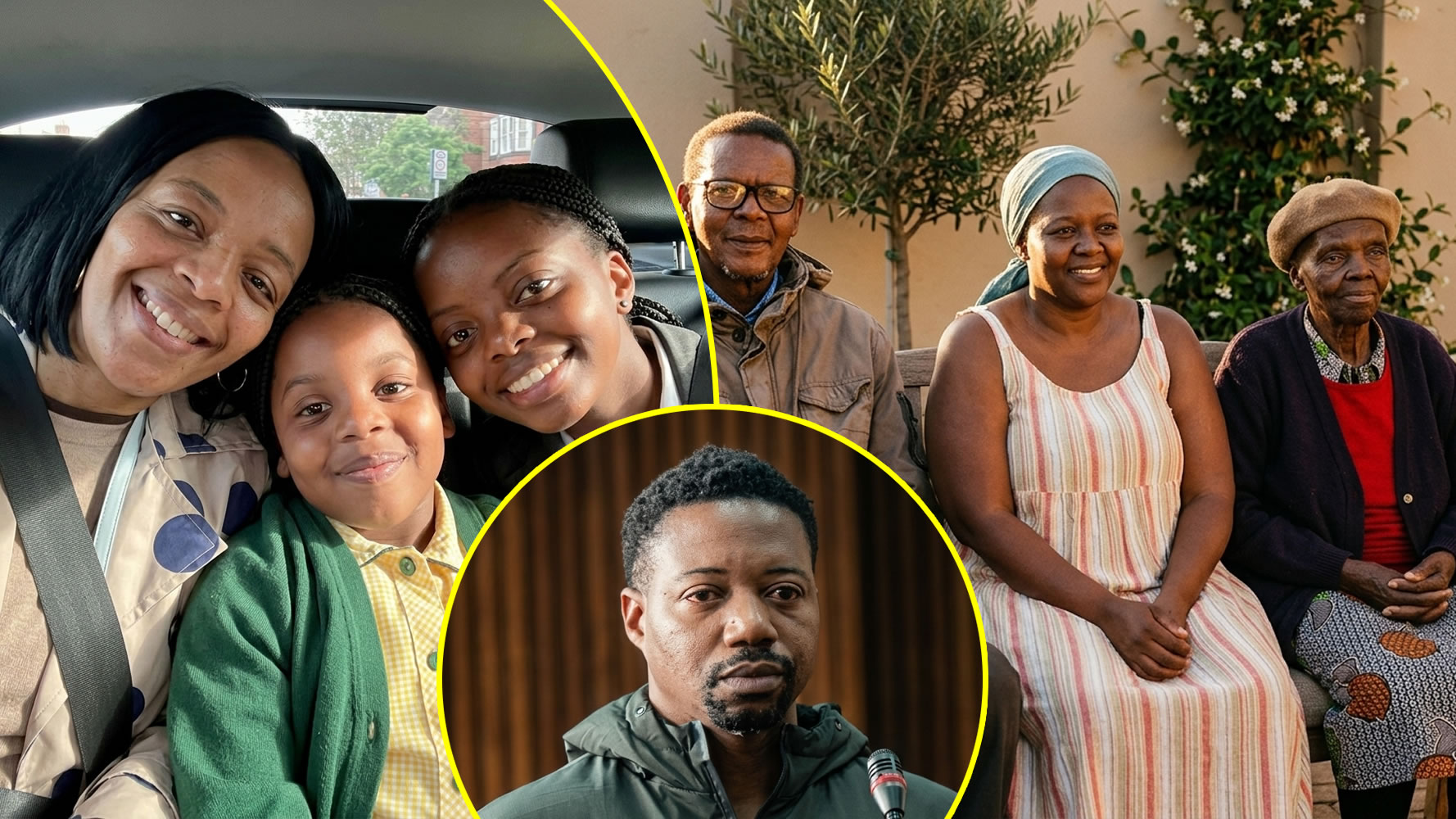
BLOOD AND BETRAYAL: THE BITTER BURIAL BATTLE OVER THE UK TRIPLE MURDER
BULAWAYO – In the quiet, dusty streets of Gwabalanda, a high-density suburb in Bulawayo, the air is thick with a grief so profound it has curdled into a cold, hard resolve. Behind the gates of the Khumalo family home, a tragedy that began thousands of miles away in the leafy English village of Great Denham has reached a bitter impasse. It is here that the final remains of Nothabo Zandile Khumalo and her two young daughters, Natalie and Nala, are expected to eventually rest. But before the first spade of earth can be turned, a fierce domestic war has erupted over who has the right to mourn them.
The conflict reached a breaking point last weekend when a delegation from the Tshuma family—the kin of the man accused of the brutal triple slaying—arrived at the Khumalo residence. They came seeking to discuss funeral arrangements and, audaciously, to request that the burial proceedings be handled at their family home in Waterford. They were not met with the traditional Zimbabwean hospitality of Ubuntu. Instead, they were sent packing in a scene of raw, unfiltered anger.
“The Tshuma family where Nothabo was married sent a delegation to our home in Gwabalanda last weekend to talk to us about the tragedy that befall us and discuss issues surrounding the murders, including funeral and burial arrangements,” a Khumalo family member revealed, still visibly shaken by the encounter. “Our family rejected their moves and sent them packing mainly because; first, the families were not in talking terms anyway, second they had not even sent a condolence message to us and third, they had not apologised for the murder of our beloved daughter and grandchildren by their son.”
The rejection was absolute. To the Khumalos, the arrival of the in-laws was not an act of contrition, but a crowning insult to a series of horrific events that have left their family tree violently pruned. “They came last weekend and there was a brief meeting out of respect or Ubuntu, but then we firmly yet politely them to go away because we were not happy with what has been happening; our relationship was already broken down and bad, now the murders and the way they handled the whole situation made things worse,” the source added.
“It was insensitive and disrespectful to come and ask that the funeral and burial arrangements must be handled by them given the situation and under these circumstances. They can’t be the ones burying our daughter and grandchildren. No. We won’t allow that.”
The Horror in Great Denham
To understand the depth of this animosity, one must look back to the morning of July 3, 2026, in the United Kingdom. In the affluent Bedfordshire village of Great Denham, neighbours lived in the kind of quiet security that £1.3 million homes usually provide. But inside the residence of Ndodana Mkhanyisi Tshuma and Nothabo Zandile Khumalo, a darkness had been festering.
Tshuma, a 45-year-old British citizen of Zimbabwean heritage known to many as “Mark,” was a successful businessman on paper. He operated Nexus Trove Holdings, a property firm with assets reportedly exceeding £1 million. Yet, beneath the veneer of professional success lay an environment described by friends and relatives as one of “intense coercive control and toxicity.” The couple was in the midst of a bitter separation, a process that criminologists often identify as the primary catalyst for domestic “family annihilation.”
On that fateful Wednesday, the toxicity turned fatal. Nothabo, 42, and her daughters—15-year-old Natalie and 5-year-old Nala—were murdered. Post-mortem examinations later conducted by British authorities would confirm a harrowing detail: all three victims died from blunt force trauma. They were not just killed; they were beaten to death in their own sanctuary.
The discovery was only made days later, on July 6, after concerned neighbours noticed the family’s unusual absence. By then, the man responsible was already thousands of miles away.
A Fugitive’s Flight
The timeline of Ndodana Tshuma’s movements suggests a man who acted with cold, calculated precision before the weight of his actions seemingly drove him to the brink of self-destruction. On July 4, less than twenty-four hours after the murders, Tshuma fled the UK. He boarded a flight from London Heathrow to Johannesburg, South Africa, via Dubai, using his British passport.
He arrived in Johannesburg on July 5 and immediately vanished into the sprawling urban landscape. For two days, he stayed at a high-end hotel in Sandton under a pseudonym, watching from afar as the news of his brutality began to saturate international media. When the story broke on Monday, July 6, Tshuma checked out and retreated to a family property in Kensington.
It was during this period of hiding that Tshuma allegedly sought a final, permanent escape. Investigations by the South African Police Service (SAPS) revealed that he travelled to the Alexandra township, where he purchased an unlicenced 9mm pistol loaded with two rounds of ammunition.
“We are still investigating who sold the gun to him, while the pistol is still undergoing forensic ballistic tests to see if linked to any crimes,” Brigadier Athlenda Mathe, the SAPS national spokesperson, confirmed. “He is charged for illegal possession of a firearm, but investigations are going on about it.”
Mathe further elaborated on the suspected motive for the purchase: “It is our suspicion that this particular firearm was going to be used to end his life. It is commendable that our teams worked quickly to arrest him before that process could unfold so that he can answer to the crimes that he committed in the UK.”
The arrest on July 10 was a coordinated strike involving Interpol, SAPS Crime Intelligence, and the Organised Crime Investigation Unit. Tshuma was found with the weapon, his attempt at a final “coward’s exit” thwarted by the very authorities he had hoped to outrun.
The Psychology of the “Annihilator”
The Great Denham tragedy is not an isolated incident but part of a disturbing pattern of “family annihilation” that has increasingly surfaced within the diaspora community. Criminologists at institutions like Birmingham City University have long studied the profiles of men who kill their entire families. These individuals often fall into categories such as the “self-righteous”—those who believe they are “saving” their family from a perceived threat—or the “anomic,” who see their family as an extension of their own status and choose to destroy them when that status is threatened by divorce or financial ruin.
In the UK alone, domestic homicides remain a pervasive plague. The Office for National Statistics reported 111 domestic homicides in the year ending March 2025. For the Zimbabwean community, these incidents carry a double weight of grief and cultural shame. Similar cases, such as the 2024 Nicholas Prosper triple murder in Luton, where a 19-year-old killed his mother and siblings, highlight the extreme violence that can erupt within domestic settings.
For Nothabo’s mother, Velile Khumalo, the academic labels matter little. At 76, the retired teacher is left to grapple with a reality that has shattered her world. “I can only accept what God has allowed to happen,” she said during an interview in Bulawayo. “My only wish now is that my daughter and grandchildren get buried here in Zimbabwe at Luveve Cemetery. Makhu (Zandile) had the two sweetest daughters ever, my grandchildren. They are all gone, just like that.”
Mrs. Khumalo’s regret is palpable. She had last seen her granddaughters when Nala was just an infant and had been counting down the days until their planned visit to Zimbabwe this coming December. “If I had one more chance to talk to her, I would advise her to leave everything and come home,” she lamented.
A Long Road to Justice
While the families feud in Bulawayo, the legal machinery is grinding slowly in Johannesburg and London. Ndodana Tshuma, whose real surname is reportedly Dlodlo, faces a dual legal battle. In South Africa, he is being prosecuted for the illegal possession of the firearm he intended to use on himself—a charge that can carry a 15-year sentence.
Simultaneously, the extradition process is underway. South African Justice Minister Mmamoloko Kubayi has confirmed that authorities are processing the necessary documents to return Tshuma to the UK to face three counts of murder. This process, however, is notoriously complex and can take months, if not years, as defence lawyers often exhaust every possible appeal to prevent their clients from being sent to foreign jurisdictions.
The delay in the legal process means a delay in the burial. The Khumalo family is adamant that Nothabo and her daughters will be buried in Bulawayo, but the logistics of repatriating three bodies from the UK while the primary suspect is detained in South Africa are daunting.
Amidst this wait, the family has had to contend with the modern-day scourge of social media speculation. Leon Leroy Khumalo, Nothabo’s uncle, issued a plea for dignity: “As a family, we would like to appeal to all those online people who are making up stories about the tragedy to let us grieve in peace. We also appeal to journalists to stop coming here canvassing for stories as we have nothing to say.”
The Unspoken Fracture
The decision to send the Tshuma in-laws packing is more than just a dispute over a gravesite; it is a rejection of a lineage that produced a killer. In many Zimbabwean cultures, a marriage is a union of two families, not just two individuals. When that union is severed by such a violent betrayal, the traditional ties of kinship are not just broken—they are incinerated.
The Khumalo family’s refusal to allow the Tshumas any role in the funeral is a symbolic reclaiming of Nothabo and her children. By insisting on handling the burial in Gwabalanda and Luveve, they are effectively “unmarrying” Nothabo in death, bringing her back to the safety of her paternal home.
As the sun sets over Bulawayo, the Khumalo home remains a fortress of mourning. The “in-laws” are gone, sent back to Waterford with the clear message that they are no longer welcome in the narrative of Nothabo’s life or death. For the community watching this tragedy unfold, it is a stark reminder that some wounds are too deep for Ubuntu to heal, and some betrayals are so absolute that they leave no room for apology.
The legal battle for Ndodana Tshuma’s future will continue in the courts of Johannesburg on August 27. But for the Khumalo family, the real battle is just beginning: the long, agonising journey of bringing their “beloved daughter and grandchildren” home to a soil that, they hope, will finally offer them the peace they were denied in life.