


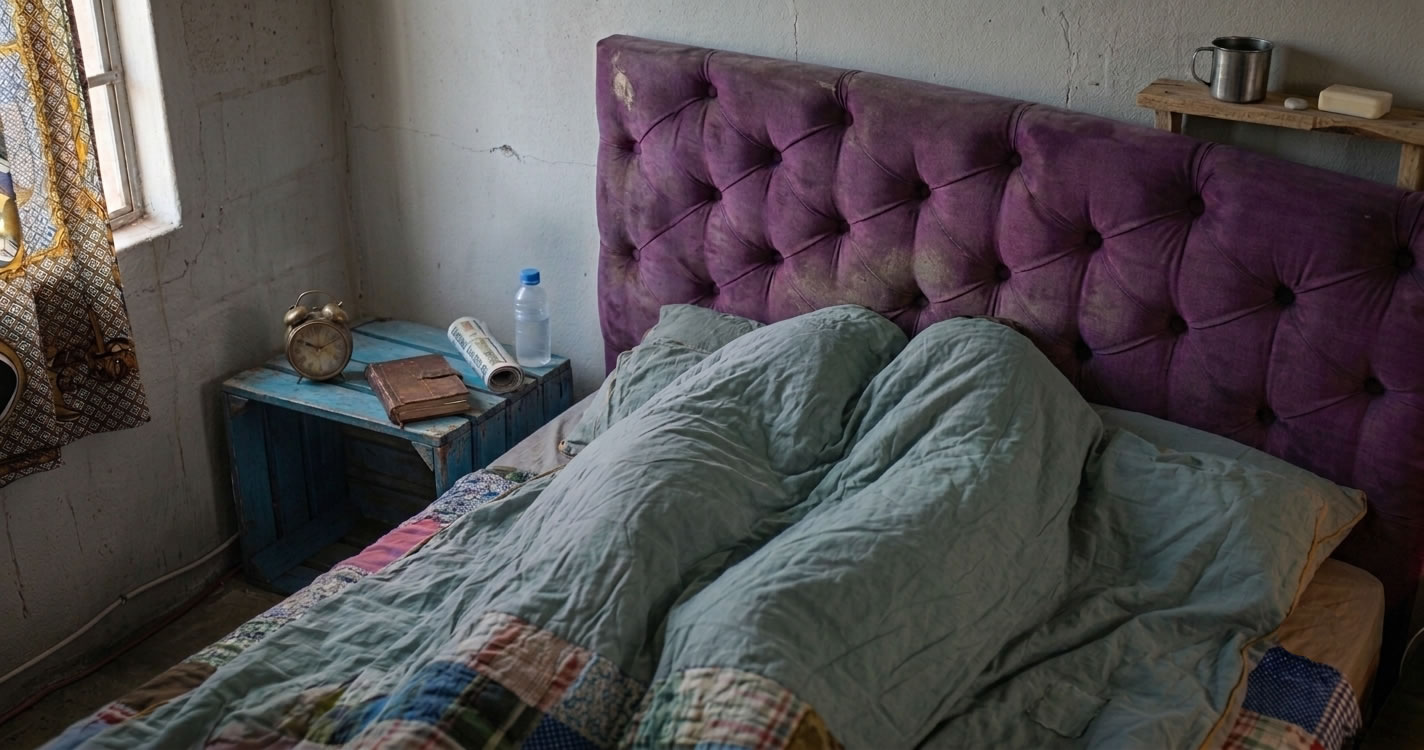
Zvishavane’s Dark Secret: 20-Year Sentence for Incest – A Cry for Justice in Rural Zimbabwe
ZVISHAVANE — In the dusty, heat-soaked landscapes of the Midlands Province, the Zvishavane Magistrates’ Court recently became the stage for a grim reckoning. A 53-year-old man, whose name has been withheld to protect the identity of his victim, stood before the bench to receive a sentence that many hope marks a turning point for rural justice. For the repeated rape of his own 16-year-old daughter, he was handed an effective 20-year prison term — a sentence that serves as both a punishment for a harrowing crime and a stark reminder of the domestic horrors that often remain buried beneath the surface of village life.
The details that emerged during the trial, documented in a National Prosecuting Authority of Zimbabwe (NPAZ) bulletin dated 21 July 2026, describe a betrayal of the most fundamental kind. The ordeal began in February 2026, on an evening when the father returned to the family home in a state of heavy intoxication. In a chilling declaration that stripped away any semblance of parental protection, he informed the teenager that he intended to make her his “wife.” This was not a drunken rambling to be ignored; it was the start of a systematic campaign of abuse.
During that same month, the court heard how the father’s threats escalated into physical violence. He retrieved a knife from his satchel, using the blade to ensure his daughter’s compliance. To ensure her screams did not reach the ears of neighbours or other family members, prosecutors stated that he used the victim’s own t-shirt to cover her mouth. This initial attack was not an isolated incident. Court documents reveal that the man continued to rape his daughter on numerous occasions throughout the early months of the year, transforming their home into a place of constant fear.
The cycle of abuse only came to an end when a tip-off reached the authorities, leading to the father’s arrest. This detail is particularly significant in the context of rural Zimbabwe, where the “culture of silence” often acts as a secondary prison for victims. According to researchers at Women and Law in Southern Africa (WLSA) Zimbabwe, reporting sexual abuse within the family is frequently discouraged by community elders who fear the “shame” it might bring to the lineage. In many instances, incestuous crimes are treated as private family matters to be settled through traditional rituals or the payment of livestock, rather than through the criminal justice system.
The 20-year sentence handed down in Zvishavane is seen by many legal experts as a necessary deterrent. It aligns with a broader push within the Zimbabwean judiciary to stiffen penalties for sexual violence. Recent amendments to the Criminal Law (Codification and Reform) Act have proposed mandatory minimum sentences of 15 years for rape, but judges are increasingly using their discretion to impose even harsher terms when the victim is a minor or when the perpetrator is a person in a position of trust.
However, the Zvishavane case is far from an anomaly. In March 2025, a 47-year-old police officer was sentenced to 21 years in prison for the rape and sexual assault of his own daughter, a case that similarly horrified the nation. Earlier that same year, in January 2025, another Zvishavane man was remanded in custody for allegedly raping his eight-year-old daughter. These incidents, occurring within a relatively short timeframe, suggest that the “dark secret” of incest is a pervasive crisis that requires more than just courtroom victories.
Social workers from the Musasa Project, an organisation dedicated to supporting survivors of gender-based violence, point out that the 30,000 cases they recorded in 2024 represent only the tip of the iceberg. In rural areas like Zvishavane, the challenges of reporting are compounded by economic pressures. Often, the perpetrator is the sole breadwinner for the family. Removing him from the household can mean the difference between having food on the table and going hungry, creating a devastating conflict of interest for mothers and other relatives who might otherwise speak out.
“The human cost is immeasurable,” says one community leader in the Midlands, who spoke on the condition of anonymity. “When a father does this, he doesn’t just hurt one girl; he destroys the trust of the entire community. We are seeing more of these cases coming to light now, but it is because people are finally starting to realise that silence is not protection. It is a death sentence for our children’s futures.”
The role of the judiciary in these sensitive cases is under constant scrutiny. While the Zvishavane Magistrates’ Court has been praised for its decisive action, there are lingering questions about the support services available to victims once the gavel falls. A 20-year sentence puts the predator behind bars, but it does not automatically provide the psychological counselling or medical care that a 16-year-old survivor requires to rebuild her life. In many rural districts, there is a chronic lack of “victim-friendly” infrastructure, meaning survivors often have to travel long distances to reach a safe house or a specialised clinic.
Cultural norms also play a complex role. In some traditional settings, the concept of ngozi (avenging spirits) is used to explain away or justify incestuous behaviour, or conversely, to prevent people from reporting it for fear of spiritual retribution. Investigative reports into the causes of incestuous rape in Zimbabwe have highlighted how these beliefs, combined with high levels of substance abuse—as seen in the Zvishavane father’s intoxication—create a volatile environment where the most vulnerable members of the family are at constant risk.
To address these deeply entrenched issues, community leaders and legal experts are calling for a fundamental shift in societal attitudes. This includes better education for children about their rights, more accessible reporting mechanisms that bypass traditional hierarchies when necessary, and increased funding for rural support services. The NPAZ has been active in promoting its “Protocol on the Multisectoral Management of Sexual Abuse and Violence,” which aims to coordinate the efforts of police, healthcare workers, and social services. Yet, the implementation of such protocols remains uneven across Zimbabwe’s vast rural stretches.
The Zvishavane verdict is a powerful call for justice, but it is also a mirror held up to a society that is still grappling with its internal demons. The courage of the 16-year-old girl in this case, and the individual who provided the tip-off, cannot be overstated. They broke through a wall of silence that has stood for generations.
As the 53-year-old man begins his two-decade journey behind bars, the conversation in Zvishavane continues. It is a conversation about protection, about the sanctity of the home, and about the urgent need to ensure that no other child has to experience the harrowing betrayal that this young girl endured. The 20-year sentence is a victory, certainly, but the true measure of justice will be whether it leads to a future where such secrets no longer have a place to hide.