


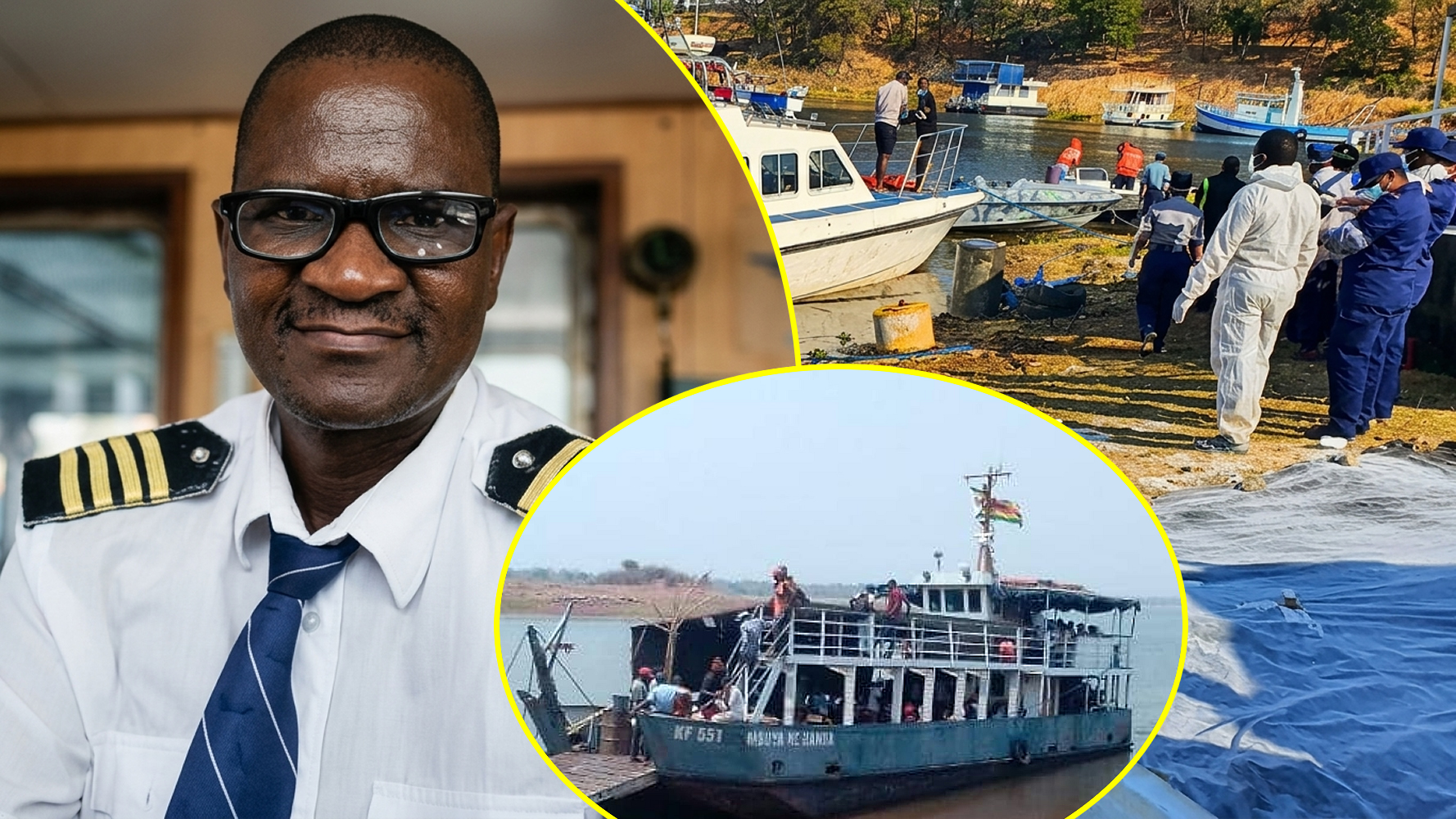
KARIBA — Kariba MP Shine Gwangwava has buried his sister Matilda in Mola, weeks after the Mbuya Nehanda ferry capsized on Lake Kariba and claimed the lives of more than 90 people, including at least 15 of his close relatives.
Matilda’s body was among those recovered during the continuing search and was identified by Gwangwava’s brother at Kariba District Hospital. Her burial has brought a moment of closure to one branch of the family, but three relatives remain unaccounted for as recovery teams continue to search the lake and families wait for further identifications.
“I can confirm that my late sister was among those retrieved at the weekend and my brother identified her in Kariba. As a family, we decided to have her buried here in Mola,” Gwangwava said from the village, where he was supporting families affected by the disaster.
Matilda leaves behind three children and a husband who lives in the Makande rural area. Her funeral was held as mourners gathered across communities around Lake Kariba, where the disaster has taken several members from the same households and left villages struggling to account for the dead.
“She was among 12 of my close relatives that have been retrieved so far. We are missing three more, but will be updating as the search continues,” Gwangwava said.
“Kariba is in state of mourning,” he added.
The mourning has been made harder by the condition of some of the recovered bodies. Families have faced lengthy identification processes, with some bodies badly decomposed and others recovered with missing body parts. Relatives have travelled to Kariba District Hospital to search for loved ones, while officials have worked to match names, recovered remains and reports from families who are still waiting.
Gwangwava has been moving between affected communities, offering moral support and distributing donated goods from well-wishers. His own family’s loss has placed him among the mourners even as he tries to help constituents deal with the aftermath of Zimbabwe’s worst public transport tragedy on record.
The latest confirmed figures put the death toll at 94, with 77 people rescued. Seven families have reported that relatives have not yet been accounted for, and officials have warned that the final number could rise to “99 or over 100 people dead.” Police have released the names of 39 additional victims, taking the number of identified bodies to 83 after 44 had been identified earlier. Among the dead was Tehillar Matembeka, a one-month-old baby from Mola Village in Siakobvu.
The figures have changed repeatedly since the ferry overturned on 11 August while travelling from Kariba town towards Chalala Fishing Camp, near Long Island. Early reports recorded 15 deaths, 27 people missing and 77 rescued. As more bodies were found, the reported toll rose to 37, then 44, and later climbed into the nineties.
The Mbuya Nehanda was a government-owned passenger ferry operated through the Rural Infrastructure Development Agency. It served remote communities, fishing camps and islands on Lake Kariba, connecting residents with Kariba town for markets, schools, healthcare and other essential services. For many people living around the lake, the journey was part of ordinary life rather than a leisure trip.
The vessel was licensed to carry 90 passengers. However, government figures indicated that more than 180 people and goods were aboard when it capsized. The cargo included goats, drums of fuel and other materials bound for fishing communities in Binga. The combined number of confirmed deaths and survivors alone indicates that at least 171 people were aboard, nearly twice the ferry’s reported capacity.
The passenger count has been one of the central questions since the disaster. Earlier accounts referred to more than 120 people on board, while ticket records indicated 114 adults and five crew members. A crew member gave a higher figure of 153 people, including infants. The later government estimate of about 180 passengers and goods raised fresh questions about how people were counted before departure, whether children were included on the manifest and who authorised the ferry to leave harbour.
Local Government and Public Works Minister Daniel Garwe said the vessel had a valid fitness certificate and placed responsibility for the disaster on the late captain, 59-year-old Sign Patsikadova, who also died in the capsizing.
“The boat had a fitness certificate. The problems that occurred were as a result of negligence and human error by the captain of the boat. It had nothing to do with whether the boat was fit or unfit,” Garwe told journalists after a Cabinet meeting.
Garwe said the captain ignored warnings from the Meteorological Services Department about strong waves forming on the Binga side of the lake. He said the captain proceeded with the voyage and continued loading the vessel despite the warning.
“We are advised that the meteorological department advised the lake captain to advise all sailors to stop any sailing on this fateful day because there were some strong waves that were forming on the Binga side. The boat captain for this specific boat disregarded those early warnings and proceeded to load and continue with the journey.”
He said Cabinet had approved a formal inquest into the disaster. “We are advised that the carrying capacity of that boat was about 90, but based on what we have- 93 dead and 77 rescued and seven families saying their relatives are yet to be identified- it was carrying over 100 people, which is against laid-down rules and regulations by the Transport Ministry.”
Garwe also said the public had heard statements from people who did not have authority over the management of the ferry and other boats operating on Lake Kariba. “There are a lot of things that have been said by people without authority on how this boat and many other boats in Kariba are being managed,” he said.
Survivors’ accounts have added detail to the final hours before the ferry overturned. Itai Marumisa said a battery and inverter fell into the water while passengers were boarding, prompting people to ask for the trip to be postponed. The captain, Marumisa said, replied that he had worked on the lake for many years and expected the wind to subside. He then prayed before the journey continued.
Friday Munenga, from Dobe Village in Mola, said passengers continued to object after the ferry left harbour.
“We left the harbour and before long we highlighted to the captain that the conditions were not suitable for us to continue with the journey. We suggested that we dock at a nearby island, but he insisted on continuing with the journey, saying that he had traversed the lake for many years,” Munenga said.
Other survivors said the captain assured passengers that the boat would not sink. He allegedly told them, “DDF does not drown.” The phrase referred to the District Development Fund, the predecessor of the Rural Infrastructure Development Agency, which owns the ferry.
As the vessel moved across the lake, heavy winds and waves battered it. Water began entering the boat before it overturned. Rescue teams brought survivors to Long Island and later to shore, while an army boat squadron, a police sub-aqua unit and a privately owned helicopter joined the recovery operation. Divers and boats searched around Long Island and nearby channels for bodies and survivors.
The funerals have exposed another crisis. Roads leading to some of the affected communities have become impassable, forcing families to bury relatives in Kariba town instead of taking them home. The government has pledged to rehabilitate the roads, but for grieving families the damage has meant extra expense, delayed ceremonies and a funeral process separated from the villages where many victims lived.
The formal inquest is expected to establish the sequence of events, from ticket sales and loading to the weather warnings, the captain’s decisions, the ferry’s route, the availability of life jackets, communications on board and the speed of the rescue response. The passenger manifest, the fitness certificate and the management of the ferry will all be central to the investigation.
For Gwangwava’s family, those questions sit alongside a more immediate search for the three relatives who are still missing. Matilda has been returned to Mola, where her children, husband and wider family can mourn her. But the lake continues to hold the remains of other families’ loved ones, and the work of identifying and bringing them home is not yet over.
The disaster has already overtaken the Nyanga bus tragedy of 1991, in which 89 people died, as Zimbabwe’s deadliest public transport incident. Its final toll will depend on the remaining recovery work and the identification of those still missing. In Kariba, however, the numbers are measured not only in bodies recovered and survivors rescued, but in families such as Gwangwava’s, where a single voyage has left funerals across an entire community.