


The fallout from the recent Africa Cup of Nations (AFCON) has been swift and brutal, with the Gabonese government delivering a shocking verdict on its national team, the Panthers. This dramatic action serves as a stark warning across the continent, even as the Zimbabwean Warriors find themselves once again grappling with the familiar sting of failure and a deep-seated crisis that extends far beyond the technical bench.
In a move that has captured headlines across Africa, Gabon’s acting sports minister, Simplice-Desire Mamboula, announced the immediate suspension of the national team, the sacking of head coach Thierry Mouyouma, and the exclusion of two key players, including their global superstar striker, Pierre-Emerick Aubameyang. The government’s decision came after the Panthers were eliminated from the 2025 AFCON tournament in Morocco, finishing bottom of their group.
The Gabonese Hammer Blow
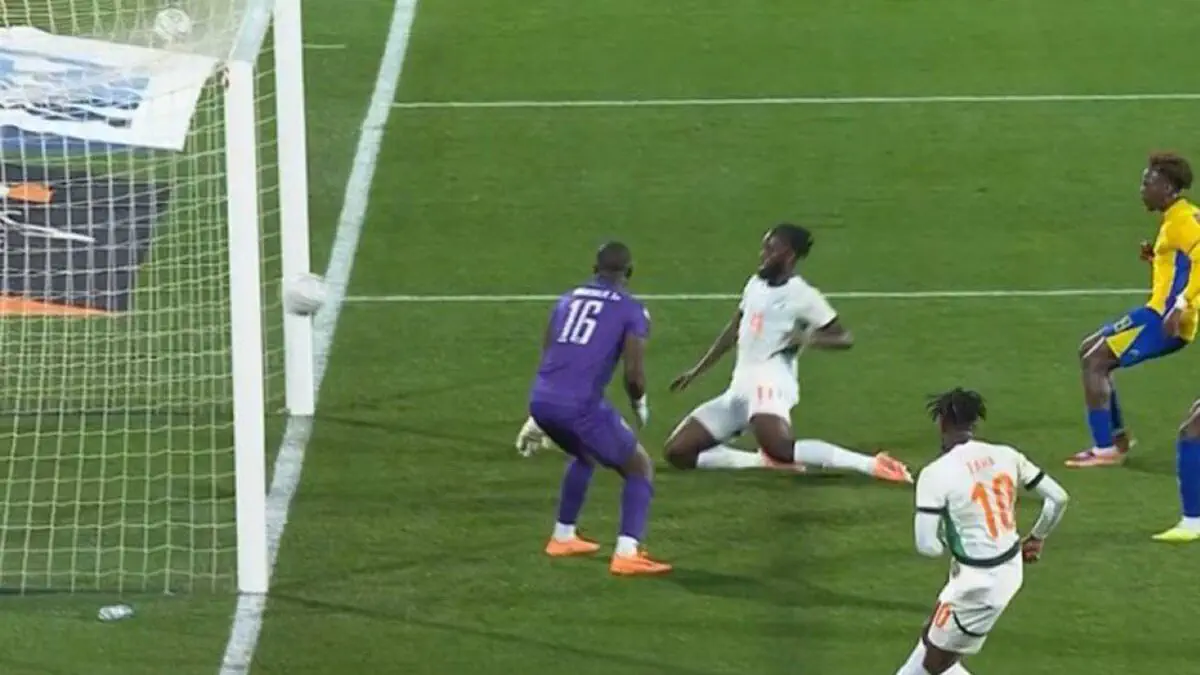
The West Africans endured a disastrous campaign, losing all three of their Group F matches. Their run began with a narrow 1-0 defeat to Cameroon, followed by two consecutive 3-2 losses against Mozambique and Ivory Coast. This “disgraceful performance,” as described by the authorities, triggered the government’s unprecedented response.
Speaking on national television, Minister Mamboula did not mince his words, delivering the full weight of the state’s disappointment.
“Given the Panthers’ disgraceful performance at the Africa Cup of Nations, the government has decided to dissolve the coaching staff, suspend the national team until further notice, and exclude players Bruno Ecuele Manga and Pierre-Emerick Aubameyang.”
The exclusion of Aubameyang and veteran defender Bruno Ecuele Manga is particularly noteworthy. Neither player featured in the final match of the tournament. Aubameyang, who plays for French club Olympique de Marseille, had already returned to his club for treatment on a thigh injury.
Responding to the suspension, the 36-year-old Marseille forward took to social media platform X to offer a cryptic but pointed assessment of the situation.
“I think the team’s problems are far deeper than the little person who I am.”
Aubameyang’s statement suggests that the issues plaguing the Gabonese national team are systemic, hinting at a crisis that a mere change of personnel may not resolve. This echoes a similar, if less dramatic, soul-searching currently underway in Zimbabwe regarding the perennial underperformance of the Warriors.
Warriors’ Familiar Failure: The Foreign Gamble
For the Zimbabwean football fraternity, the Gabonese crisis provides a moment of reflection, especially considering the Warriors’ own recent history of disappointment. The gamble by the Zimbabwe Football Association (ZIFA) to appoint a foreign coach to lead the Warriors at the AFCON finals—a first in the nation’s history—failed to rewrite the script.
Mario Marinica, the Romanian coach dubbed “Super Mario,” was tasked with breaking the cycle of failure. Yet, his adventure, much like those of the local coaches before him, ended at the very first hurdle. The Warriors finished bottom of their group, marking the sixth time in six attempts that Zimbabwe has failed to progress past the group stages of the AFCON finals.
This latest failure places Marinica in the company of previous coaches who also struggled to secure a meaningful tally of points. The Romanian coach’s total of just one point from three group matches meant he matched the tallies achieved by Kalisto Pasuwa in 2017 and Sunday Chidzambwa in Egypt in 2019.
Crucially, Marinica’s mission was less successful when compared to the efforts of other coaches who managed to secure three points in their respective campaigns. Chidzambwa’s team, on their maiden appearance at the AFCON finals in 2004, picked up three points. Charles Mhlauri’s mission in 2006 and Norman Mapeza’s team in 2021 also took home three points each.
The failure to secure even a single win is magnified by the fact that just two points were enough to take Tanzania into the Round of 16 at the current AFCON finals. This puts into sharp context how “Super Mario” may have “blown the best chance the Warriors had of reaching the knockout stages.”
Questionable Decisions and Missed Opportunities
One of the most criticised aspects of Marinica’s tenure was his tactical rigidity and apparent reluctance to fully utilise emerging talent. The most glaring example cited is his handling of one of the team’s best forwards, Tawanda Maswanhise.
The coach made a “diabolical decision to restrict” Maswanhise to just 90 minutes of the final game, despite the player emerging as the best performer in that match. This decision was seen by many observers as a clear “sign of his weaknesses,” suggesting a lack of faith or an unwillingness to adapt his strategy to the players at his disposal.
However, a closer look at the past campaigns reveals just how close the Warriors have come to achieving glory, underscoring the fine margins that separate success from failure in continental football.
Charles Mhlauri, for instance, is credited with the best campaign in the nation’s history. His troops only missed a place in the quarter-finals at the 2006 AFCON finals by virtue of an inferior goal difference. They ended with the same number of points as continental heavyweights Ghana and Senegal in a group that was dominated by Nigeria. Mhlauri can even argue that had the Video Assistant Referee (VAR) system been in operation at the time, his team would have progressed, as their third effort against Ghana, which was controversially ruled out for offside, would have potentially taken them through.
Similarly, Norman Mapeza’s Class of 2021 showed immense resilience. They took the eventual champions, Senegal, the full distance before a last-gasp penalty, converted by Sadio Mane in the 97th minute, helped the Teranga Lions to a narrow 1-0 win. That same team beat Guinea 2-1. Qualification for the Round of 16 was within their grasp, as a draw against Malawi would have been sufficient. Yet, the Warriors “somehow… blew their chance” by losing 1-2 to the Flames.
The Deeper Crisis: Beyond the Coaches
While the focus often falls on the coach, the latest failure suggests that it is time to look beyond the technical staff and take a “closer look at the players themselves and how they have performed while representing their country.” The statistics, particularly those compiled over the past five years, paint an “ugly picture of failure” that highlights a worrying trend of underperformance.
The data reveals a stark reality for the Warriors:
|
Statistic
|
Detail
|
|
Winless Streak
|
WINLESS in their last 11 AFCON/World Cup games.
|
|
Worst Loss
|
Included a miserable 0-1 defeat at the hands of Lesotho.
|
|
Wins in Last 30 Games
|
Only beaten three countries (Namibia, Botswana, and Guinea) in their last 30 matches in these two major competitions.
|
|
Losses in Last 30 Games
|
Half of those 30 games, 15 in total, were losses.
|
|
Notable Losses
|
Included two defeats at the hands of Eswatini.
|
|
Longest Win Gap
|
A three-year gap existed between the 1-0 win over Botswana (March 2021, under Zdravko Logarusic) and the 1-0 win over Namibia (October last year, under Michael Nees).
|
|
Last Qualifier Win
|
The 3-1 win over Namibia on October 14 last year was the last time the Warriors won a World Cup/AFCON qualifier.
|
|
Current Drought
|
Eleven games later, representing 990 minutes of action, or more than 16 hours of battle, the Warriors are yet to win another game in these two big competitions.
|
Since football resumed after the Covid-break, the Warriors have played 32 World Cup/AFCON qualifiers. Their record during this period is alarming: they have won just four matches, drawn 10 games, and lost the other 12. They have scored 19 goals while conceding 29.
This poor run of form means the team has only managed to secure 19 points out of a possible 75 points on offer. This translates to a meagre 25.33 per cent of the total points available during that period in the two major competitions. Furthermore, they have only taken maximum points on four occasions, and only against three teams: Namibia, Botswana, and Guinea.
Despite the overall gloom, there have been a few “bright spots,” such as the hard-fought 1-1 draw away in Nigeria and the goalless draw against Bafana Bafana in Durban. However, the general consensus remains that the overall adventure has been “very poor.”
The Culture Clash: Old School vs. New Talent
One potential reason for the persistent underperformance appears to be a deep-seated reluctance among coaches to fully embrace the emerging stars who grew up in Europe, particularly England. These players come from a football culture where a player is “allowed to ask a coach why he has not been included in the starting XI.”
For some of the “old school coaches” in the Zimbabwean setup, this questioning of authority has been “taken as a challenge to their authority.” This cultural clash may be hindering the integration and optimal use of some of the nation’s best talent.
The performance of these European-raised players on the pitch, when given the chance, speaks for itself. Tawanda Maswanhise scored the crucial goal against Kenya, and Tawanda Chirewa scored the equaliser in Nigeria. Despite these vital contributions, their places in the starting eleven have not been guaranteed, suggesting a continued preference for players who do not challenge the established hierarchy.
The crisis facing Zimbabwean football is clearly multifaceted. It is a complex web of coaching decisions, historical underperformance, and a cultural disconnect that prevents the full potential of the national team from being realised. While the Gabonese government has opted for a dramatic, immediate purge, Zimbabwe’s challenge is to address the systemic issues that continue to plague the Warriors, ensuring that future campaigns do not end in the same cycle of disappointment. The time for deep, honest introspection is now, before the next major tournament arrives.