


HARARE – In the dead of a humid Tuesday night in the high-density suburb of Glen Norah, the silence was shattered by the screech of tyres and the heavy boots of men who move with the impunity of those protected by the state. For Baird Gore, a member of the burgeoning Constitution Defenders Forum (CDF), this was the beginning of a harrowing ordeal that has once again cast a dark shadow over Zimbabwe’s fragile democratic landscape.
The abduction and subsequent torture of Gore comes at a time of escalating political volatility in the Southern African nation. The catalyst for this latest wave of repression is the controversial “ED2030” agenda—a bold and, critics say, unconstitutional manoeuvre by President Emmerson Mnangagwa’s administration to extend his tenure beyond the constitutionally mandated two-term limit.
The Midnight Raid
According to eyewitnesses and a detailed statement released by the CDF, the operation to seize Gore began late on Tuesday evening. A black Ford Raptor, a vehicle frequently associated with clandestine security operations in Harare, pulled up outside Gore’s residence.
“When the armed men first arrived at his residence, Baird was not at home as he had gone to the shops. They violently assaulted his brother while demanding to know his [Baird] whereabouts,” the CDF statement read. The brutality was immediate and indiscriminate. When Gore arrived back from the shops, he walked straight into an ambush. He was seized, blindfolded, and bundled into the waiting vehicle before being whisked away to an unknown location.
For several hours, Gore was subjected to what human rights lawyers have described as “barbaric” interrogation techniques. His captors were not interested in criminal activity; their questions were purely political. They demanded information on CDF convener Tendai Biti and the organisation’s strategic plans to resist the 2030 agenda.
The torture was physical and calculated. The CDF alleged that Baird sustained a suspected broken hand and other serious injuries, including to his back, from being beaten with switches and batons. Most chillingly, Gore alleged that during the torture, his captors deliberately ran over his legs with their vehicle—a tactic designed to leave lasting physical and psychological scars.
From Torture Chamber to Hospital Raid
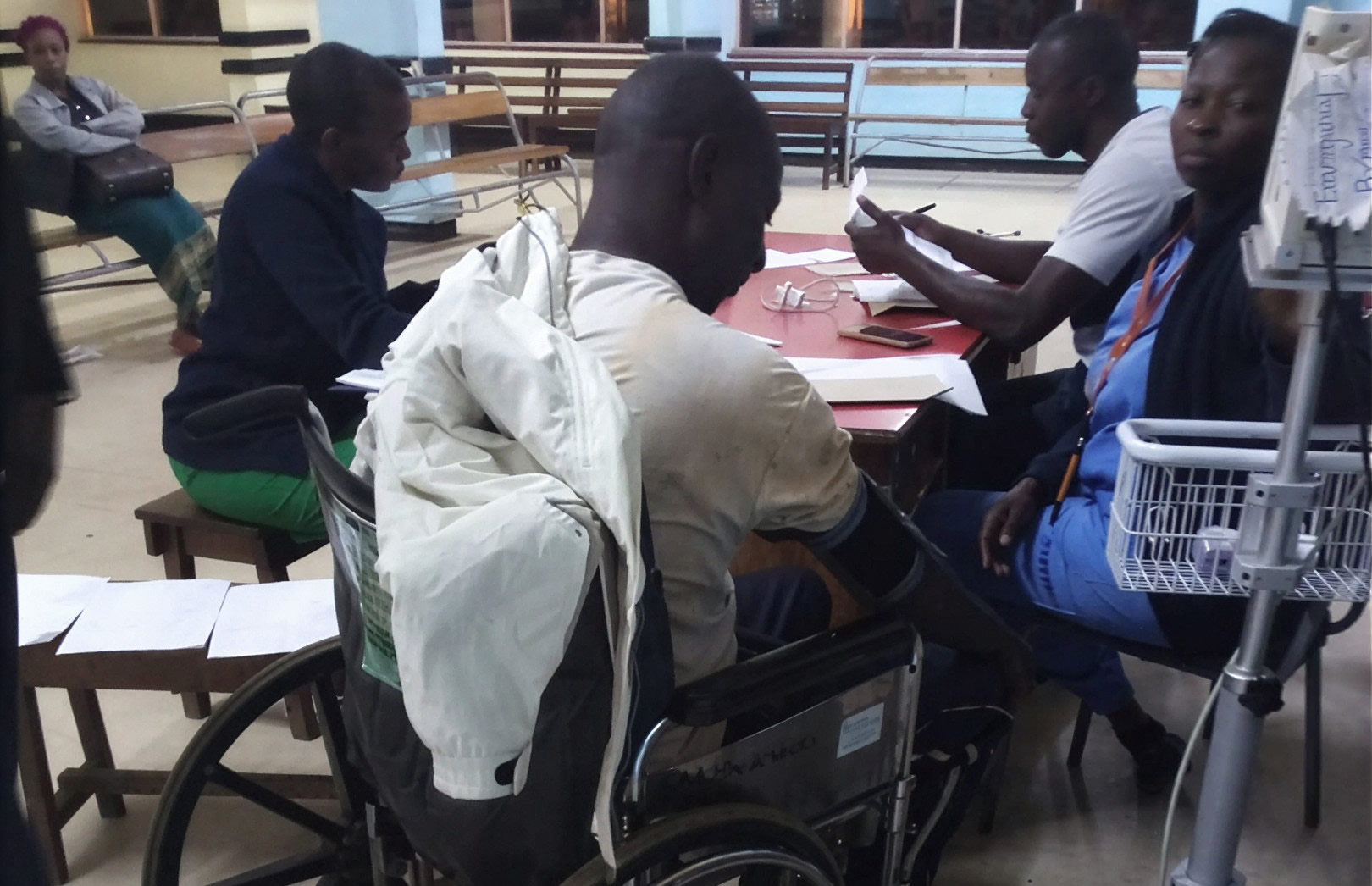
After hours of abuse, Gore was dumped at the City Sports Centre, just outside Harare’s central business district, at around 7:00 PM. Dazed and severely injured, he managed to contact his family with the help of a well-wisher. From there, the family proceeded to Glen Norah Police Station to file a formal report.
In a move that initially seemed like standard procedure, the police issued Gore with a medical request form. He was then taken to a local hospital for urgent treatment. However, the safety of the medical facility proved to be an illusion.
“Tragically, before doctors could complete their medical assessment or inform him of the results of his X-rays, a team of armed uniformed and plain-clothes officers identifying themselves as members from Machipisa Police Station stormed the hospital around 2 AM,” the CDF reported.
The officers reportedly refused to wait for medical procedures to be finalised and forcibly removed Gore from his hospital bed. He was later found at Machipisa Police Station, where he remains in custody. This “coordinated pattern of abduction, torture and re-arrest,” the CDF argues, demonstrates that the organisation is now under siege.
The “ED2030” Flashpoint
The violence meted out against Gore is inextricably linked to the “ED2030” campaign. This movement, spearheaded by loyalists within the ruling Zanu PF party, seeks to ensure that President Mnangagwa remains in power until at least 2030, despite his current term being set to expire in 2028.
Last week, the proposed constitutional amendments were tabled during a Cabinet meeting before being gazetted by the Speaker of the National Assembly, Jacob Mudenda. These amendments represent a fundamental overhaul of the 2013 Constitution. They seek to extend the presidential tenure by two years and, more controversially, propose the scrapping of direct presidential elections. Under the new proposal, the President would be chosen by Members of Parliament (MPs)—a move that would effectively insulate the executive from the direct will of the electorate.
The opposition, civil society, and stakeholders, including the CDF, have fiercely opposed these changes. They argue that any such fundamental shift in the nation’s governing document requires a national referendum. The government and Zanu PF loyalists, however, insist that legislative approval is sufficient.
A Pattern of Repression
For seasoned observers of Zimbabwean politics, the Baird Gore incident is not an isolated event but part of a well-documented pattern of “pre-emptive” state violence. In August 2024, on the eve of the SADC Summit in Harare, activists Namatai Kwekweza, Robson Chere, and Samuel Gwenzi were abducted from a departing plane and subjected to severe torture before being surfaced in court.
The current crackdown appears to be a response to the CDF’s growing visibility. Gore was one of three members who had participated in a “peaceful walkabout” in CDF regalia over the weekend. The regime, seemingly rattled by the sight of organised resistance, has resorted to its traditional toolkit of intimidation.
Tendai Biti, the CDF convener and former Finance Minister, condemned the treatment of Gore in the strongest possible terms. In a statement on X, Biti described the abduction and torture as “barbaric.”
“We condemn in the strongest terms the use of violence and terror tactics against any citizen,” Biti said. “Citizens reject Constitutional Amendment No 1 of 2026. We reject the overthrow and coup d’état against the 2013 Constitution. It is our constitutional right to peacefully defend that Constitution.”
The Legal Battleground
The legal arguments against the amendments are grounded in the very document the government seeks to change. Obert Masaraure, a prominent activist and leader of the Amalgamated Rural Teachers Union of Zimbabwe (ARTUZ), pointed out the blatant attempt to bypass democratic safeguards.
“Furthermore, the proposed amendments represent a blatant attempt to bypass the democratic will,” Masaraure stated. “Since these amendments seek to extend the term of office for the incumbent, they must be subjected to a referendum. This is a mandatory requirement under section 328(7) of the Constitution, which explicitly states that an amendment to a term-limit provision cannot benefit the person who held that office before the amendment. Any attempt to circumvent this through legislative sleight of hand is a violation of section 328(9).”
Section 328 is the “entrenchment” clause of the Zimbabwean Constitution. It was specifically designed to prevent the kind of “constitutional coup” that the CDF alleges is currently underway. By requiring a referendum for any changes to term limits, the framers of the 2013 Constitution sought to ensure that power remains with the people.
The Narrative of “Stability” vs. Democracy
The government’s push for 2030 is often framed by its proponents as a necessity for “economic stability” and the completion of “Vision 2030” projects. Exiled former Cabinet minister Jonathan Moyo has thrown his weight behind the amendments, arguing for their necessity. However, his critics have been quick to dismiss his support as “propaganda dressed in academic costumes.”
The reality on the ground in Glen Norah and other high-density areas tells a different story. It is a story of citizens who feel increasingly besieged by a state that views dissent as treason. The abduction of Baird Gore is a message sent to all who dare to say “no” to the extension of the President’s term.
As the debate over the 2030 agenda rages on, the international community’s eyes are once again turning toward Harare. Human rights organisations are calling for an independent investigation into Gore’s abduction, though such calls have historically fallen on deaf ears.
The police have remained tight-lipped, with no official comment obtained regarding the allegations of torture or the irregular removal of a patient from a hospital.
Conclusion: A Nation at a Crossroads
Zimbabwe stands at a critical juncture. The path chosen over the coming months—whether to uphold the spirit of the 2013 Constitution or to allow its dismantling for political expediency—will define the country’s trajectory for a generation.
For Baird Gore, the cost of constitutionalism has been paid in blood and broken bones. His ordeal serves as a stark reminder that in the struggle for democracy in Zimbabwe, the battlefield is often the very bodies of those who dare to stand for the law. As the CDF vows to continue its resistance, the “ED2030” agenda has become more than just a legislative proposal; it is a test of the nation’s resolve to protect its hard-won rights.
The struggle for the soul of the Zimbabwean Constitution continues, and as the events of this week have shown, the stakes could not be higher.