


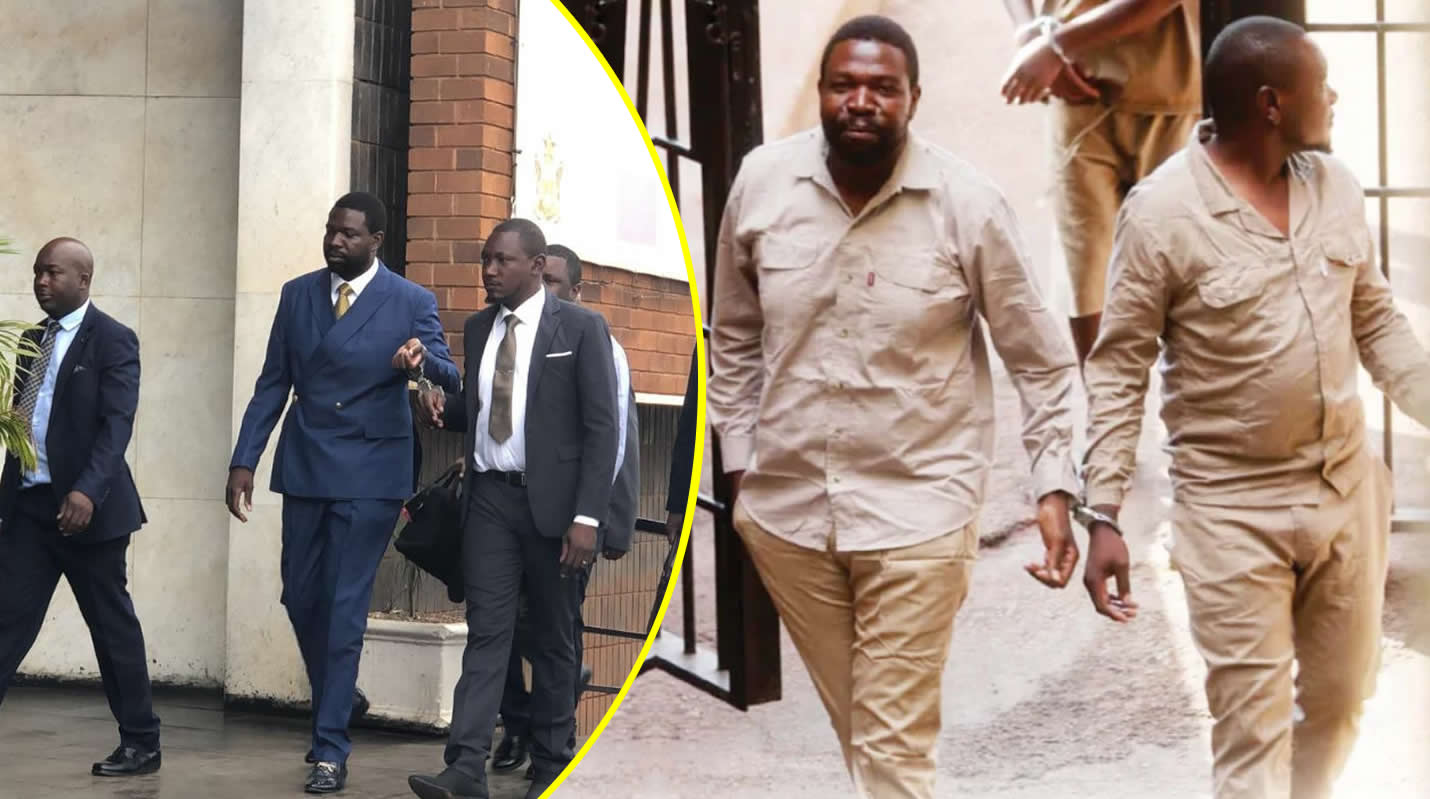
Prophet Walter Magaya, the charismatic and often controversial leader of the Prophetic Healing and Deliverance (PHD) Ministries, is currently facing what many observers describe as his most perilous legal and spiritual crisis to date. The self-styled man of God, whose influence once seemed unassailable, is now fighting a desperate battle on two fronts: a staggering US$3 million debt that he has been ordered to repay, and a series of fresh, disturbing rape allegations that have landed him back in the dock. As the walls appear to be closing in, many are asking the same question: is this the beginning of the end for the Magaya empire?
The financial blow came from the High Court, which recently ordered Magaya to repay US$3 million to an investor who has been identified in diplomatic circles as Zimbabwe’s Ambassador to Israel, Ron Adam. The deal, which has now turned sour, involved a substantial investment that Magaya reportedly failed to honour. This massive debt is not just a financial burden; it is a significant dent in the carefully constructed image of a man who preaches the “prosperity gospel” and often displays immense personal wealth.
Simultaneously, Magaya is grappling with four new counts of rape. These are not the first such allegations he has faced, but the timing and the nature of the charges have cast a dark shadow over his ministry.
This is not the first time Magaya has used his wealth and influence to navigate the treacherous waters of the Zimbabwean legal system. Investigative records reveal a pattern of “shenanigans” that date back over a decade. One of the most notorious incidents involved a Midlands State University student, Petronella Donhodzo. In 2016, Donhodzo accused Magaya of rape, but in a move that left the public stunned, she later withdrew the charges. It was widely reported that Magaya paid her a staggering US$200,000 to drop the case. At the time, she cited “external threats” and a desire for peace, but the shadow of that settlement has never truly left the Prophet.
Magaya’s penchant for flashing cash has often been a source of both awe and suspicion. In 2015, during a high-profile event, he reportedly paid US$50,000 for a copy of former First Lady Grace Mugabe’s autobiography. It was a display of wealth that many saw as a strategic move to align himself with the then-powerful first family. More recently, he made headlines for donating US$200,000 to the First Lady, Auxillia Mnangagwa, for the promotion of women’s football. While presented as a philanthropic gesture, critics often view such large donations to political figures as a form of “insurance” against legal scrutiny.
However, while Magaya was busy donating hundreds of thousands of dollars to political elites and buying expensive books, many of his own followers were feeling the sting of his unfulfilled promises. For years, Magaya’s company, Planet Africa, promised affordable residential stands and houses to his congregants. Hundreds of home-seekers, including those in the Zimbabwean diaspora, poured their life savings into these schemes, believing in the Prophet’s vision of a better life. Yet, for many, those houses never materialised. Deposits were collected, but the land remained undeveloped, and refunds have been notoriously difficult to obtain. Some investors have even seen the very properties they were promised being auctioned off to satisfy Magaya’s other debts.
The Prophet’s controversies are not limited to finance and sex. In 2014, a stampede at a Magaya-led crusade in Kwekwe resulted in the deaths of 11 people. The tragedy was blamed on overcrowding and the fact that exits had been locked, yet Magaya managed to emerge from the incident with his ministry largely intact. He also faced a conviction in 2019 for claiming to have discovered a cure for HIV/AIDS and cancer through a herbal remedy called “Aguma.” He pleaded guilty under the Medicines Control Act and was fined a mere US$700—a pittance for a man who buys books for US$50,000.
Even his sporting ventures have been marred by deception. His “Heart Stadium,” which he claimed was a 5,000-seater facility, was found by independent inspectors to have a capacity of less than 2,000. Furthermore, his bid to become the president of the Zimbabwe Football Association (ZIFA) was recently derailed when it was discovered he did not meet the minimum academic requirements, a decision he unsuccessfully challenged in the High Court. In fact, it was then discovered that he had allegedly forged a University of South Africa (UNISA) qualification, resulting in MultiChoice cancelling his channel on DStv.
The current legal battles, however, feel different. The combination of a multi-million dollar debt to a high-ranking diplomat and multiple fresh rape charges is a “double-edged crisis” that may be too sharp for even Magaya to handle. His followers, once fiercely loyal, are increasingly being confronted with a reality that contradicts the image of the holy man they once revered.
The removal of the prosecutor in his current rape trial has only added fuel to the fire. It suggests a level of behind-the-scenes manoeuvring that is deeply unsettling. If the legal system is seen to be bending to the will of a powerful religious leader, it undermines the very foundations of justice in Zimbabwe.
As the investigative report into his “intricate web of financial dealings and alleged abuses of power” continues, the broader religious community is watching closely. Magaya has long been a polarising figure, with some seeing him as a beacon of hope and others as a master manipulator who uses the “prosperity gospel” to enrich himself at the expense of the poor.
The question of whether the empire is crumbling is no longer just a headline; it is a pressing reality. With his properties being auctioned, his academic credentials questioned, and his personal conduct under the microscope of the courts, the “unassailable” Prophet is looking more vulnerable than ever. For the thousands who lost money in his housing schemes and the women who have come forward with stories of abuse, the hope is that this time, the truth will finally prevail.
Whether Magaya can once again use his immense influence and vast resources to navigate these challenges remains to be seen. But as the US$3 million debt looms and the rape trial proceeds, the shadow over PHD Ministries is longer and darker than it has ever been. The Prophet who once promised to heal and deliver now finds himself in desperate need of a miracle of his own.