


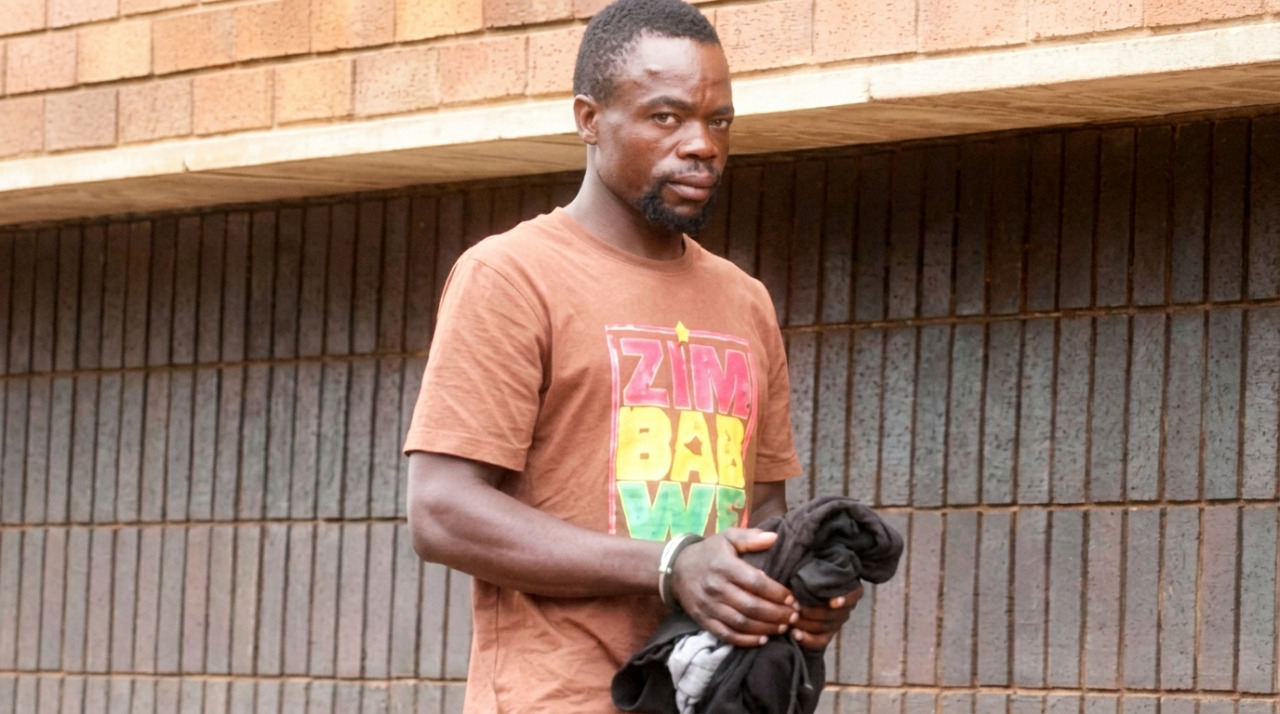
HARARE – For five long years, Alfred Shumba believed he had successfully outrun the law. As one of the key figures in the audacious US$2.7 million ZB Bank cash-in-transit heist that stunned Zimbabwe in early 2021, he had vanished across the Limpopo River into South Africa, leaving behind a trail of broken security boxes and a nation demanding answers. But in the end, it was not the sophisticated tracking of the Criminal Investigation Department (CID) that brought him down. Instead, it was the oldest motive in the book: a bitter family dispute over squandered loot.
Shumba’s journey from a fugitive living in the shadows of South Africa to a handcuffed prisoner in a Harare courtroom is a tale of greed, betrayal, and the inevitable collapse of a criminal brotherhood. He appeared before Harare magistrate Jessie Kufa this week, facing charges that date back to a sweltering January morning in 2021 when a carefully orchestrated “inside job” turned a routine cash delivery into one of the most significant robberies in the country’s history.
The undoing of Alfred Shumba began not with a police raid, but with a phone call born of fury. Before fleeing to South Africa, Shumba had entrusted a significant portion of his share of the US$2.7 million loot to his brother for safekeeping. It was a decision based on blood ties, but in the world of high-stakes crime, blood proved thinner than the allure of easy money. While Shumba was hiding out, his brother was busy squandering the cash. When Shumba eventually confronted his sibling, demanding the return of his “investment,” the resulting fallout was explosive. In a fit of retaliatory rage, the brother contacted the authorities, providing the crucial tip-off that ended Shumba’s five-year run.
The Genesis of the Heist
To understand the magnitude of Shumba’s alleged crimes, one must look back to January 6, 2021. The robbery was a masterpiece of deception, executed with a level of precision that immediately suggested internal collusion. The target was a ZB Bank cash-in-transit vehicle tasked with delivering seven boxes of cash to branches across the country, including Chinhoyi, Kadoma, Kwekwe, Gweru, Bulawayo, Gwanda, and Zvishavane.
The total haul was staggering: US$2,775,000 and an additional ZW$43,090. At the heart of the conspiracy was Fanuel Musakwa, a member of the cash-in-transit crew who, according to prosecutors, acted as the gang’s eyes and ears on the inside. Musakwa allegedly provided real-time updates on the vehicle’s location and movements to the waiting gang of armed robbers.
The operation began in Harare. As the vehicle made its way towards Chinhoyi, it stopped at the Inkomo tollgate to deposit a single box containing ZW$43,090. It was shortly after this routine stop that the trap was sprung. At the Inkomo turn-off, the driver of the security van stopped to pick up three men. They were presented as genuine hitch-hikers, a request allegedly made by Musakwa to his unsuspecting colleague behind the wheel. In reality, these “passengers” were the first wave of the strike team.
A Highway Ambush
As the vehicle reached the 60-kilometre peg on the Harare-Chinhoyi highway, the atmosphere inside the van shifted from routine to terrifying. The “passengers” drew pistols, threatening to shoot the crew members if they did not comply. Simultaneously, a red Toyota Hilux twin-cab—driven by Gerald Rutizirira, a man later identified as a prominent local figure—pulled up alongside.
The gang, armed with an array of firearms, moved with clinical efficiency. They disarmed the security guards, seizing a pistol and a rifle, before forcing the cash-in-transit vehicle off the main highway to a secluded spot. There, in the quiet of the Zimbabwean bush, the boxes of cash were offloaded from the security van and thrown into the back of the red Hilux. The crew members were left stranded as the robbers sped away into the labyrinth of farm tracks west of Nyabira.
At a secluded farm, the gang broke open the security boxes, revealing the millions of dollars within. The loot was shared among the conspirators, and the empty boxes were dumped—discarded remnants of a life-changing score. While many of his accomplices were rounded up in the weeks that followed, Alfred Shumba managed to slip through the net, crossing the border into South Africa with his share of the spoils.
The Mastermind and the Fallout
The ZB Bank heist was not merely a crime of opportunity; it was a sophisticated operation led by individuals like Shadreck Njowa, the alleged mastermind. Njowa, who also fled to South Africa before being apprehended at a flat in Highfield in late 2022, had been meticulous. Investigations revealed that he had bought multiple properties and vehicles using his share of the money, including two houses in Stoneridge Park and a fleet of Toyota vehicles.
The police recovery efforts have been a slow, grinding process. To date, authorities have recovered approximately US$693,026 in cash, along with 17 vehicles and five houses bought with the stolen funds. Yet, a significant portion of the US$2.7 million remains unaccounted for—hidden in secret accounts, buried in rural yards, or, as in the case of Alfred Shumba’s brother, squandered on the whims of those left behind.
The arrest of Shumba brings a sense of closure to one of the remaining chapters of the 2021 heist, but it also highlights the persistent threat of armed robbery in the region. Recent incidents have shown that the lure of cash-in-transit vehicles remains high, with gangs becoming increasingly violent and sophisticated. In late 2024, the Zimbabwean High Court made headlines when it overturned the conviction of Tendai Zuze, another suspect in the ZB heist, citing insufficient evidence—a reminder of the legal complexities involved in prosecuting such large-scale conspiracies.
A Seasoned Criminal Network
The ZB Bank heist was part of a broader pattern of high-stakes robberies that have plagued the country. The gang involved in the 2021 robbery was linked to other notorious figures. One suspect, Charles Chirara, was later shot dead by former detective Joseph Nemaisa during a separate robbery in Chadcombe while out on bail. This web of interconnected criminals suggests a professionalised underworld where heists are planned with the same rigour as corporate mergers.
For Alfred Shumba, the five years spent in South Africa were likely defined by a constant state of vigilance. He had escaped the initial dragnet, watched from afar as his accomplices were arrested, and perhaps believed he had reached the “statute of limitations” in the court of public opinion. He could not have predicted that his own brother, the man he trusted to guard his future, would become the instrument of his downfall.
As Shumba stands in the dock, the details of that January morning are being laid bare once more. The court heard how the gang used the red Toyota Hilux to transport the millions, how they shared the money at a farm near Nyabira, and how they dumped the evidence that they thought they no longer needed.
The ZB Bank heist remains a landmark case for Zimbabwean law enforcement. It exposed the vulnerabilities in the country’s cash-handling systems and the dangerous potential for “inside jobs” to bypass even the most stringent security measures. The recovery of the stolen millions continues, but for the victims—the security guards who looked down the barrel of a gun and the bank that lost a fortune—the scars of that day remain.
Alfred Shumba’s return to Zimbabwe marks the end of his flight, but for the investigators still hunting for the remaining millions and the fugitive accomplices who skipped bail, the work is far from over. In the end, the story of the US$2.7 million heist is a reminder that while a criminal may outrun the police for a time, they can rarely outrun the greed of those they call family.
The case continues, with Shumba remanded in custody as the legal system prepares to dissect the final remnants of a robbery that changed the face of Zimbabwean crime.