


The Warren Park Four: Unpacking the Police Shootout and the Shadow of Armed Robbery in Zimbabwe
HARARE – On 30 March 2026, a police operation in Warren Park, Harare, culminated in a violent shootout that left four suspected armed robbers dead and two others arrested. The Zimbabwe Republic Police (ZRP) presented the incident as a decisive blow against a criminal syndicate responsible for a spate of violent robberies across the capital. However, the circumstances surrounding the event, coupled with a broader context of escalating armed crime and public concern over police tactics, invite a deeper examination beyond the official narrative.
The Official Account: A Crackdown on Criminality
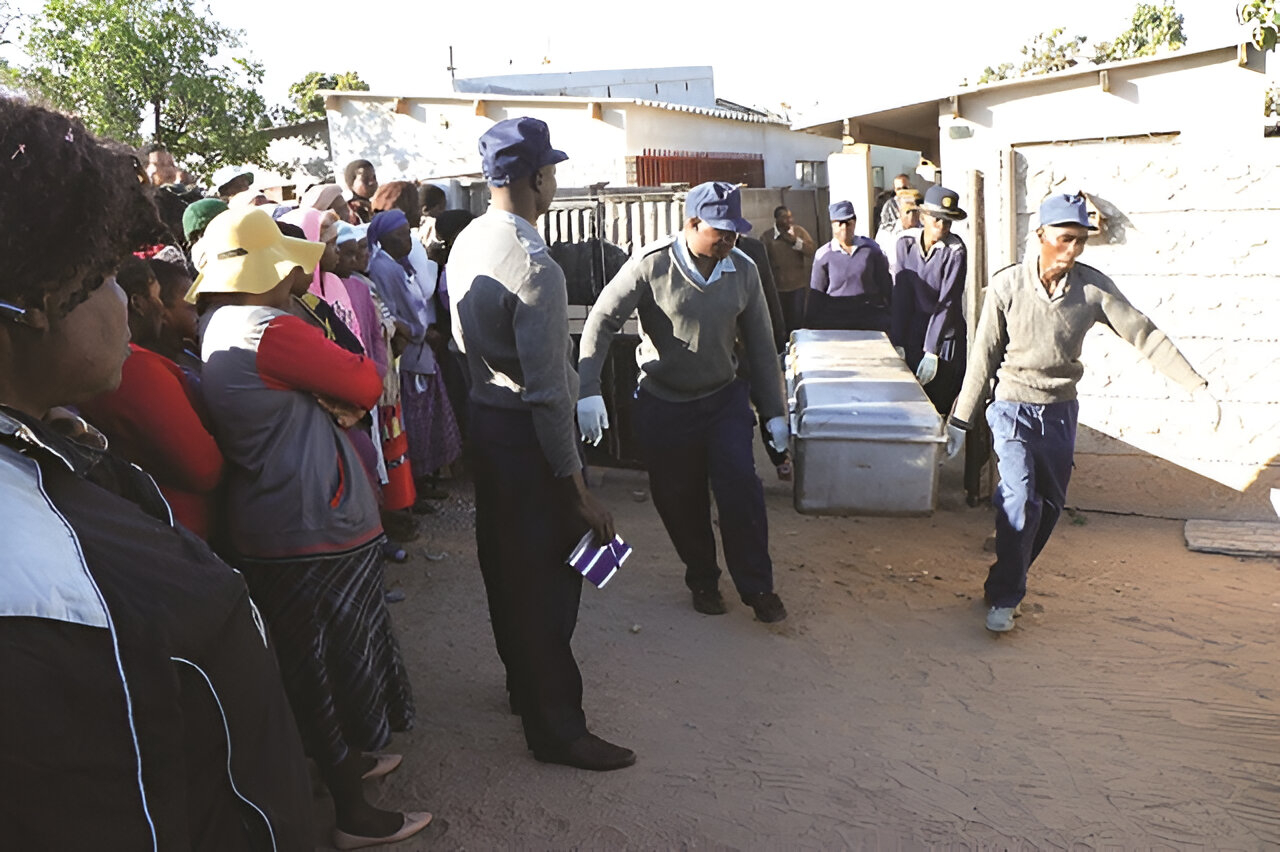
National Police Spokesman Commissioner Paul Nyathi confirmed the details of the operation, stating that detectives from CID Homicide Harare acted on a crucial tip-off. This intelligence led them to the suspects, who were reportedly linked to a series of armed robberies that had gripped Harare throughout February and March 2026. The four individuals who died in the confrontation were identified as Mike Manyima, 37, Office Chanakira, 38, and two others known only by their aliases, Atenzi and Chris. All four were pronounced dead upon admission to Parirenyatwa Group of Hospitals.
The police also reported the arrest of two other suspects: Nelson Chitima, 28, who was apprehended at his Glenview 7 Extension residence, and Edson Guvira, 38. Guvira was reportedly lured to Mhishi Shopping Centre, where he was shot in the leg while attempting to flee from officers.
A significant cache of weapons and evidence was recovered from the scene and the suspects’ alleged getaway vehicle, a Nissan NV350. This included a .70 Vozol pistol with a three-round magazine, a .38 Rossi revolver loaded with one round, a Supercat 1911 pellet gun, 35 x 9mm live rounds, eight detonators, four fuses, a paper spray, four mobile phones, and identity cards belonging to Manyima and Chanakira. Furthermore, three additional vehicles—a black Toyota Hiace, a purple Toyota Passo, and a red Honda Fit—were also recovered.
These recovered items and vehicles were linked to a string of violent crimes attributed to the gang. These included a break-in at Kuwadzana 2 Shopping Centre on 25 February 2026, where goods valued at US$500 were stolen. Another incident involved an attack on security guards in Aspindale on 26 February 2026, during which a .38 Rossi revolver was stolen. The gang was also implicated in a raid on a Glen Norah liquor store on 25 March 2026, where lager and whisky worth US$1,989 were seized.
Commissioner Nyathi’s public statements underscored the police’s unwavering commitment to combating violent crime. He declared, “there is no going back in the fight against armed robbery cases in the country” and affirmed that the police would “decisively respond appropriately to any form of violent confrontation by armed robbery gangs”. This firm stance reflects the ZRP’s stated determination to restore order amidst a troubling increase in armed criminal activity.
The Broader Context: A Surge in Armed Robberies and Security Sector Links
The Warren Park shootout did not occur in isolation. It is set against a backdrop of a noticeable surge in armed robberies across Harare and indeed, the wider country, throughout early 2026. This rise in violent crime has been a significant concern for both law enforcement and the public. What adds a layer of complexity and public disquiet to these incidents is the recurring implication of individuals with connections to the state’s security apparatus.
Recent reports have highlighted the involvement of serving members of the Zimbabwe National Army (ZNA) in armed robberies. For instance, in separate incidents, three serving members of the ZNA were arrested in connection with various armed robbery cases. While these arrests are distinct from the Warren Park incident, they contribute to a broader narrative suggesting that elements within the security sector may be involved in criminal activities. This pattern raises questions about internal discipline and oversight within these critical state institutions.
Public Perception and the “Dead Men Tell No Tales” Discourse
In the wake of incidents like the Warren Park shootout, a growing public discourse has emerged, often encapsulated by the phrase “Dead Men Tell No Tales.” This sentiment reflects a pervasive public skepticism regarding official accounts of police-involved fatalities, particularly when suspects are killed rather than apprehended and brought to trial. Critics argue that such outcomes can conveniently silence individuals who might otherwise reveal uncomfortable truths or implicate more powerful figures.
The Mutangadura murder case, which occurred on 23 March 2026, just days before the Warren Park incident, serves as a recent example that has fuelled this public concern. In that case, a suspect was shot and killed by police, an event that local media outlet MyZimbabwe described as a “convenient way to close files” and part of a “shocking pattern”. The similarities in outcome between the Mutangadura case and the Warren Park shootout have intensified public debate and reinforced the perception that a “shoot-to-kill” policy might be in operation, particularly by units like CID Homicide.
This public skepticism is not merely anecdotal. It stems from a history where the swift elimination of suspects in high-profile cases has sometimes precluded judicial processes that could uncover deeper criminal networks or political connections. The lack of independent, transparent investigations into such incidents further exacerbates this distrust, leading to persistent questions about accountability and the rule of law.
The Need for Transparency and Accountability
The Warren Park Four incident, while officially presented as a successful police operation, underscores the critical need for enhanced transparency and accountability within Zimbabwe’s security sector. The official report provides a factual account of the events, including the names of the deceased, the arrested individuals, and the items recovered. However, the broader context of armed robberies involving security personnel and the public’s concerns about police conduct necessitate a more comprehensive and open approach to investigation.
For public confidence to be genuinely restored, there must be clear and verifiable processes that demonstrate that all police operations adhere strictly to legal protocols, prioritising apprehension over lethal force whenever possible. The truth behind the Warren Park Four incident must emerge through rigorous, impartial inquiry, not only for the sake of justice for the deceased and their families but also for the long-term integrity of the nation’s security institutions and the foundational principles of the rule of law.