


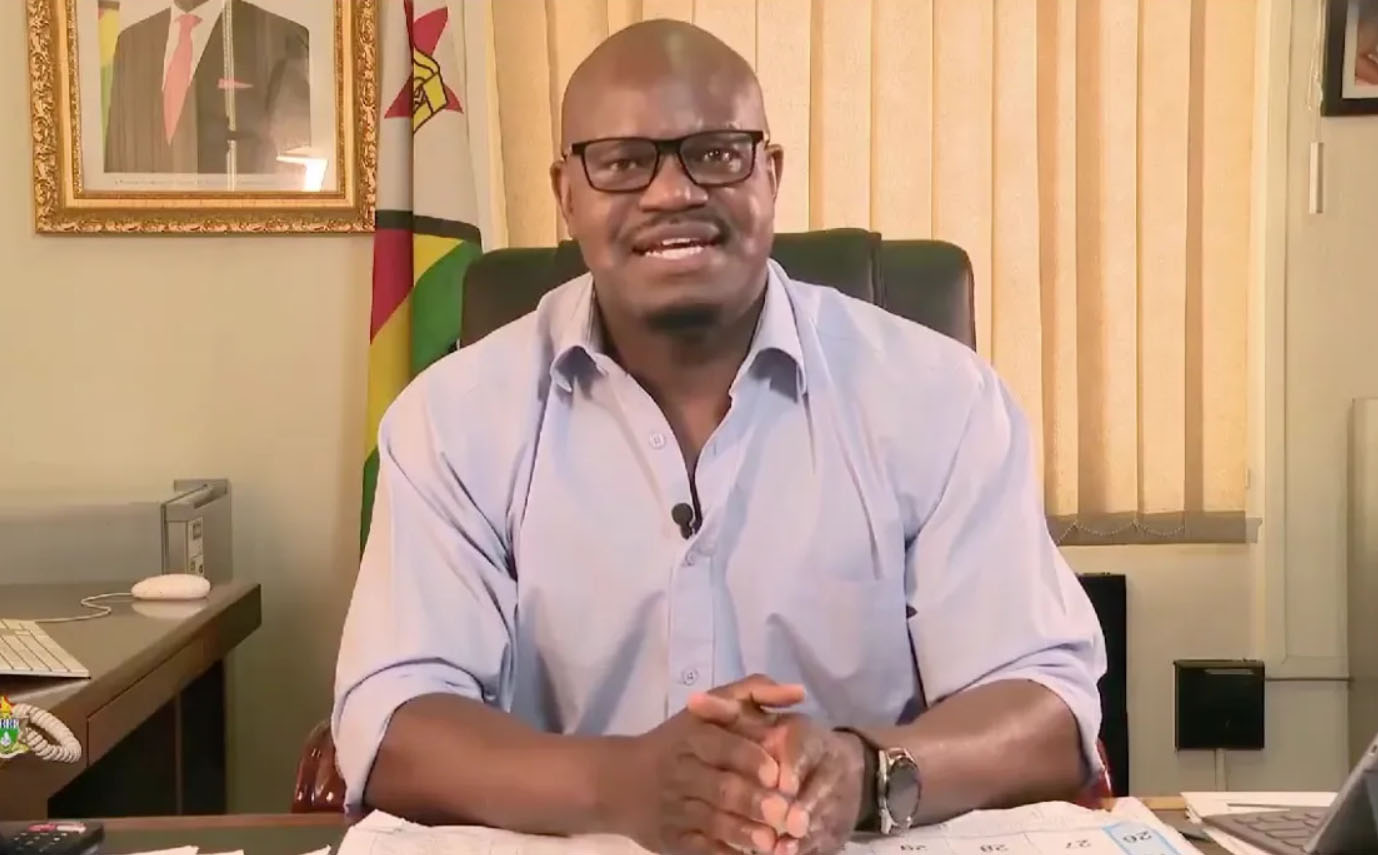
In the swirling controversy surrounding Zimbabwe’s Constitutional Amendment Bill 3 (CAB3), government spokesperson Nick Mangwana has emerged as a vocal defender, particularly regarding the proposed changes to presidential selection. His arguments, often centred on what critics term the ‘electoral college myth’, have sparked intense debate and suspicion among the populace. This article undertakes an in-depth investigation into Mangwana’s justifications for CAB3, scrutinising the historical and constitutional accuracy of his claims. We aim to unmask the ‘truth’ behind these defences, examining whether they are genuine attempts to clarify policy or calculated political manoeuvres designed to mislead and garner support for a contentious bill.
The concept of an ‘electoral college’ in the Zimbabwean context, as presented by Mangwana, will be meticulously deconstructed, comparing it with established democratic practices and constitutional frameworks both within Zimbabwe and internationally. Our analysis will highlight the discrepancies between the official narrative and the concerns raised by legal experts, civil society organisations, and opposition figures who fear that such a system would effectively disenfranchise the Zimbabwean voter. We will explore the implications of shifting presidential selection from direct popular vote to an indirect parliamentary process, revealing how this could fundamentally alter the balance of power and accountability.
This piece seeks to empower citizens with a clearer understanding of the arguments being put forth by CAB3’s proponents, enabling them to critically evaluate the information and discern the potential hidden agendas at play. By shedding light on the rhetoric and reality, we hope to foster informed public discourse on a matter of profound national importance.
The Anatomy of the ‘Electoral College’ Argument
At the heart of the current constitutional crisis is a series of statements made by Nick Mangwana, the Permanent Secretary for Information, Publicity and Broadcasting Services. Mangwana has been active on social media platforms, particularly X (formerly Twitter), where he has attempted to redefine the very nature of Zimbabwean democracy. His central thesis is that democracy is not necessarily about direct popular choice, but rather a collection of nested electoral colleges.
Mangwana has frequently pointed to Section 180 of the Constitution, which governs the appointment of judges, as a “glaring hole” in the opposition’s argument for direct elections. He argues that since citizens do not vote directly for judges or traditional chiefs, there is no inherent democratic requirement for them to vote directly for a president. In one of his social media posts, he suggested that the presidency could be seen as just another administrative role that can be delegated to a representative body.
However, legal experts and investigative journalists have been quick to point out the fundamental flaws in this comparison. The Judicial Service Commission (JSC), which oversees the appointment of judges, is not an electoral college in any democratic sense. It is a meritocratic screening body designed to ensure that those who interpret the law possess the necessary legal expertise and impartiality. A judge’s legitimacy comes from their adherence to the law, not from a popular mandate. In contrast, a president is a political actor who sets the national agenda, manages the economy, and represents the nation’s collective will. To equate the two is to ignore the basic distinction between administrative delegation and political legitimacy.
A Regression in Public Participation
The current atmosphere surrounding the CAB3 public hearings in April 2026 stands in stark contrast to the constitutional debates of the late 1990s. Historical records from the 1999 hearings describe a period of authentic, grassroots engagement. In towns like Redcliff, ordinary Zimbabweans participated in high-octane and passionate exchanges of ideas, demanding executive accountability and term limits. The generation of 1999 sought to trim the powers of the presidency and share them with a Prime Minister, demonstrating a sophisticated understanding of governance.
Fast forward to April 2026, and the landscape of public participation has regressed into what many observers describe as a hollow, stage-managed shadow of its former self. During the recent parliamentary public hearings, the intellectual depth of 1999 has been replaced by rowdy, and often violent, behaviour. Reports from Harare, Bulawayo, and Kwekwe indicate that venues have been flooded with bussed-in crowds—individuals who have allegedly been “rented” through a combination of fear and the promise of free food and beer.
These organised groups have been observed moving in to drown out any divergent views, even resorting to manhandling those who dare to speak out against the proposed amendments. In Kwekwe, a participant named Melody Chingarande was reportedly attacked after she stood up to oppose the bill. This shift in the government’s approach suggests a move away from genuine public consultation toward a manufactured consensus achieved through coercion and bribery.
The Myth of the International Model
In his defence of CAB3, Mangwana has frequently cited international models, most notably the United States Electoral College and the South African parliamentary system. He presents these as examples of “mature” democratic practices that Zimbabwe should emulate. However, a closer look reveals that these comparisons are both intellectually lazy and historically blind.
The American Electoral College is a 230-year-old historical compromise designed to balance the interests of 18th-century states. It is currently under intense internal criticism in the United States because it has, on several occasions, denied office to the candidate with the most popular votes. To hold up such a flawed and archaic mechanism as a justification for Zimbabwe’s retreat from direct democracy is a strange form of logic. Zimbabweans did not struggle for the 2013 Constitution just to inherit the discarded errors of a foreign past.
Similarly, the comparison with South Africa is deeply misleading. While the South African President is chosen by Parliament, that Parliament is elected through a system of Total Proportional Representation. This means that the composition of the South African Parliament is a direct, proportional reflection of the national popular vote. Zimbabwe, however, uses a “First-Past-The-Post” system, which can result in a parliamentary majority that does not reflect the majority of the people. To move toward parliamentary selection of the president without adopting proportional representation is a calculated act of disenfranchisement.
The Implications of Indirect Election
If CAB3 is passed, the presidency will be reduced to a “creature of the legislature.” This fundamentally shatters the separation of powers that is essential for a healthy democracy. A president who owes their office to a party caucus rather than the citizens in the streets will always be beholden to that caucus. This creates a closed-loop system where the executive can hide behind the shield of parliamentary whipping, making it nearly impossible for the public to hold a failing leader accountable.
Furthermore, the bill proposes extending presidential and parliamentary terms from five to seven years. This would prolong the current administration’s tenure without a fresh mandate from the people. Critics argue that this is a direct violation of Section 328(7) of the Constitution, which mandates a national referendum when an incumbent seeks to extend their own time in office. The feverish manoeuvres to avoid such a referendum suggest that the state fears a repeat of the 2000 rejection, where a mature populace overwhelmingly voted down a flawed constitutional draft.
Recent Incidents and the Silencing of Dissent
The push for CAB3 has been accompanied by a disturbing rise in the harassment of those who seek to report on the process. On April 3, 2026, the Committee to Protect Journalists (CPJ) slammed the harassment of journalists at CAB3 hearings. Reports emerged of journalists, including Carrie Tait, being intimidated by supporters of the ruling party. These incidents are not isolated; they are part of a broader strategy to silence dissent and control the narrative.
The following table summarises the key differences between the official narrative promoted by Mangwana and the reality observed on the ground:
|
Feature
|
Official Narrative (Mangwana)
|
Investigative Reality
|
|
Presidential Selection
|
An “Electoral College” system like the US or SA.
|
A move to indirect election without proportional representation.
|
|
Public Support
|
High levels of engagement and support in hearings.
|
Stage-managed crowds, bussed-in participants, and violence.
|
|
Democratic Basis
|
Authority derives from the people via delegation.
|
A bypass of the sovereign will expressed in the 2013 Constitution.
|
|
Accountability
|
Aligned with international “mature” models.
|
A closed-loop system that reduces executive accountability.
|
|
Legal Standing
|
Necessary for political stability and continuity.
|
A potential violation of Section 328(7) regarding term extensions.
|
The Human Cost of Political Manoeuvres
Beyond the legal and constitutional arguments, there is a profound human cost to the current political climate. In the venues of Harare and Bulawayo, the desperation of the population is being weaponised. People are being coached to give the president even more power—allowing for the handpicking of the judiciary, the appointment of more Senators, and the extension of terms. There is a profound tragedy in watching people appear to sell their birthrights for a few takeaways and a beer, sinking themselves deeper into the very poverty that makes them so easy to manipulate.
The pro-regime contributions at the hearings are often shallow and repetitive, with speakers reciting scripts they have been given. Parroted statements such as “the president needs to finish his programmes” or “we want our president to be chosen by Parliament” are common. These speakers rarely delve deeper into their arguments, often showing a fundamental lack of understanding of the very amendments they are supporting.
Conclusion: A Matter of National Importance
The attempt by Nick Mangwana to redefine democracy as a collection of electoral colleges is a sophisticated exercise in constitutional gaslighting. It is an attempt to dismantle the foundation of popular sovereignty that the people of Zimbabwe fought for over decades. The proposed amendments under CAB3 do not benefit the ordinary person; they are designed purely to consolidate the power of the ruling elite.
Ultimately, whatever the outcome of these public hearings, the resultant constitutional amendments will not be a true reflection of the desires of the Zimbabwean people. The generation of 1999 knew exactly what they wanted—they sought to curtail executive power, not expand it. They wanted the right to recall underperforming leaders and to ensure the presidency was not a position of absolute authority. The current push for CAB3 is a total reversal of that democratic progress.
As the nation stands at this crossroads, it is imperative for citizens to critically evaluate the information being presented to them. The “math of disenfranchisement” being proposed by CAB3’s defenders must be unmasked for what it is: a calculated political manoeuvre to insulate the executive from the very people it is supposed to serve. The future of Zimbabwe’s democracy depends on an informed public discourse that values transparency, accountability, and the sacred principle of “one person, one vote.”