
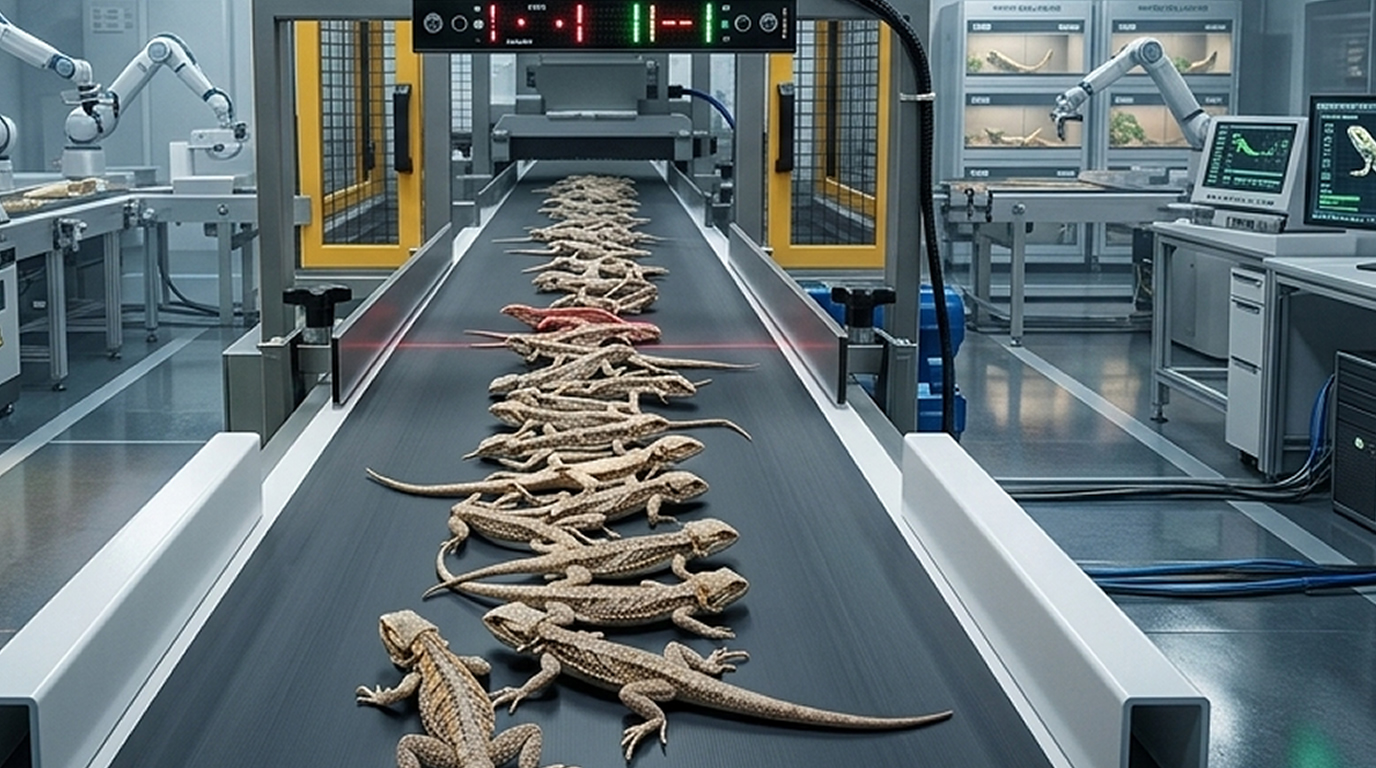

A video claiming that dried gecko lizards are being turned into noodles has caused disgust and anger online, with some viewers saying they vomited after watching it and others declaring that they would never eat instant noodles again.
The footage appears to show tonnes of geckos being removed from sacks and sorted along an assembly line. In the next scenes, the animals are placed in an oven, dried and ground into a powder. The powder is then shown being mixed with other ingredients before the video claims it is processed into noodles.
The disturbing images have spread rapidly through Facebook, WhatsApp and other social media platforms. But the video is not evidence of a real noodle factory. It was generated using artificial intelligence, and the scenes do not show a genuine food-production process.
Busisa Moyo, the United Refineries chief executive, dismissed the clip as fake. “The video is obviously fake. We used to make noodles at United Refineries.
“The major ingredients are wheat or flour,” he said.
A food inspector in Bulawayo said instant and packaged noodles are generally made from familiar food ingredients, including wheat flour, water, salt and oil. Depending on the product, manufacturers may also use starch, seasonings and alkaline salts to give the noodles their texture and colour.
The inspector said the gecko video contains several clues that expose it as artificial material. “Viral videos claiming geckos are being processed into noodles are AI-generated rage-bait, with obvious signs including morphing animals, objects clipping through conveyor belts and impossible factory physics.
“In reality, sourcing millions of wild geckos for industrial food production would be impractical and assuming they can be found in abundance, the cost of processing them would be prohibitive. “Besides, using them would violate basic food safety standards,” said the inspector, who declined to be named.
Ntando Moyo, an IT expert, pointed to another flaw in the footage. The lizards appear to be almost identical in size and shape, with an unnatural level of symmetry. Real animals would vary in size, colour and condition. In AI-generated footage, however, objects can be repeated with only minor changes, creating a scene that looks convincing at first glance but breaks down when watched closely.
The video’s emotional impact has been immediate. Desmond Mthembu wrote in response to a WhatsApp status: “I’ll never eat that s*** again!” After he was told that the footage was fake, he replied: “I can’t unsee what I saw. In my mind it will always be lizards…”
“Ngaze nganyanya,” wrote Trisa-Ray Sibanda on Facebook.
“Good thing i long stopped eating them,” wrote Samantha Mahlangu.
Jacky Mutarah took a lighter view of the claim, joking: “Oh that’s where the flavour comes from, protein overload kkkk.” Mpokuhle Mabhena Lunga appeared equally unmoved, writing: “Yikho emnandi phambili ngama noodles phambili. (That’s why they are delicious, forward with noodles).”
Softie Nontie rejected the clip outright, writing: “Themba we all know that that’s not true.” Other viewers said they wished they had never seen it. “Wish had not seen this,” wrote Raisedon Baya, while Whitney Shelma Sibanda said: “I wish I never saw this, if it’s true I no longer buy them.”
The gecko claim has also revived older online scares about what goes into instant noodles. For years, posts have falsely claimed that noodles are coated in wax or contain plastic to stop them sticking together. Some versions have warned that the supposed wax remains in the body for days and can cause cancer. The claim has repeatedly been rejected: noodle strands are cut, steamed and dried or fried in cooking oil, rather than coated in wax or plastic.
Another widely shared video in 2024 appeared to show tiny bugs crawling over dry ramen under a microscope. The footage attracted tens of millions of views, but it did not establish that packaged noodles routinely contain insects. Questions were raised about how the sample had been handled before it was placed under the microscope, and a separate test of another packet did not find the same creatures. The clip therefore became another example of shocking food content spreading faster than the facts needed to check it.
The latest gecko video follows the same pattern but uses more advanced tools. Artificial intelligence can now generate apparently realistic factory floors, workers, conveyor belts, ovens and food products. It can also alter the shape of an animal between frames, make objects pass through machinery and create movements that look plausible during a quick viewing. Such errors are often missed when users watch short clips on a phone and immediately forward them to family groups.
Moyo, the IT expert, said the noodle clip is part of a wider growth in AI-generated videos designed to provoke strong reactions. She said deepfakes are videos, pictures or audio created or manipulated using artificial intelligence to make people appear to say or do things that never happened. The same tools can be used to invent factory scenes, health scares and supposed demonstrations of unsafe food handling.
The purpose is often to attract attention. “The danger, she explained, is that many people believe “what they see before checking where it came from,” said Moyo. She said content creators are going to incredible lengths to attract clicks and follows and various AI tools are helping them. “The more shocking the video, the more likely people are to comment, share and argue about it, helping it spread across social media,” said Moyo.
A real instant-noodle production line is far less dramatic. Flour and other dry ingredients are mixed with water to form dough. The dough is kneaded, rolled into sheets and cut into strands. The strands are steamed so that the starch is cooked and the shape becomes stable. Manufacturers then dry the noodles, commonly by frying them briefly in cooking oil or by using hot air. The dried noodle block is cooled, combined with seasoning and sealed in a packet or cup.
Some products use wheat flour as the main ingredient, while others include rice flour, starch or a mixture of grains. The exact recipe differs between brands and countries, but the ingredients are listed on the packaging. Production lines also use controlled heating, weighing, packaging and hygiene procedures rather than the chaotic process shown in the gecko clip.
That ordinary process is important because it gives consumers a way to test extraordinary claims. A video showing millions of wild lizards entering a food factory should be compared with the ingredients printed on the packet, the manufacturing information supplied by the producer and credible information from food-safety authorities. Strange shapes, repeated animals, disappearing objects and machinery that does not behave like real machinery are warning signs.
Moyo urged social-media users to pause before forwarding shocking footage. “Before forwarding that shocking video to the family WhatsApp group, netizens should check its source, look for credible reports and watch carefully for signs that the footage has been digitally manipulated.
“Because once a fake video goes viral, the truth can struggle to catch up.”
For now, the geckos in the viral clip belong to a computer-generated story, not a noodle factory. The real ingredients remain the ones found on the packet: flour or another starch, water, salt, oil and seasoning. But the reaction to the video shows how quickly a fabricated image can turn an everyday meal into the centre of a public scare.