


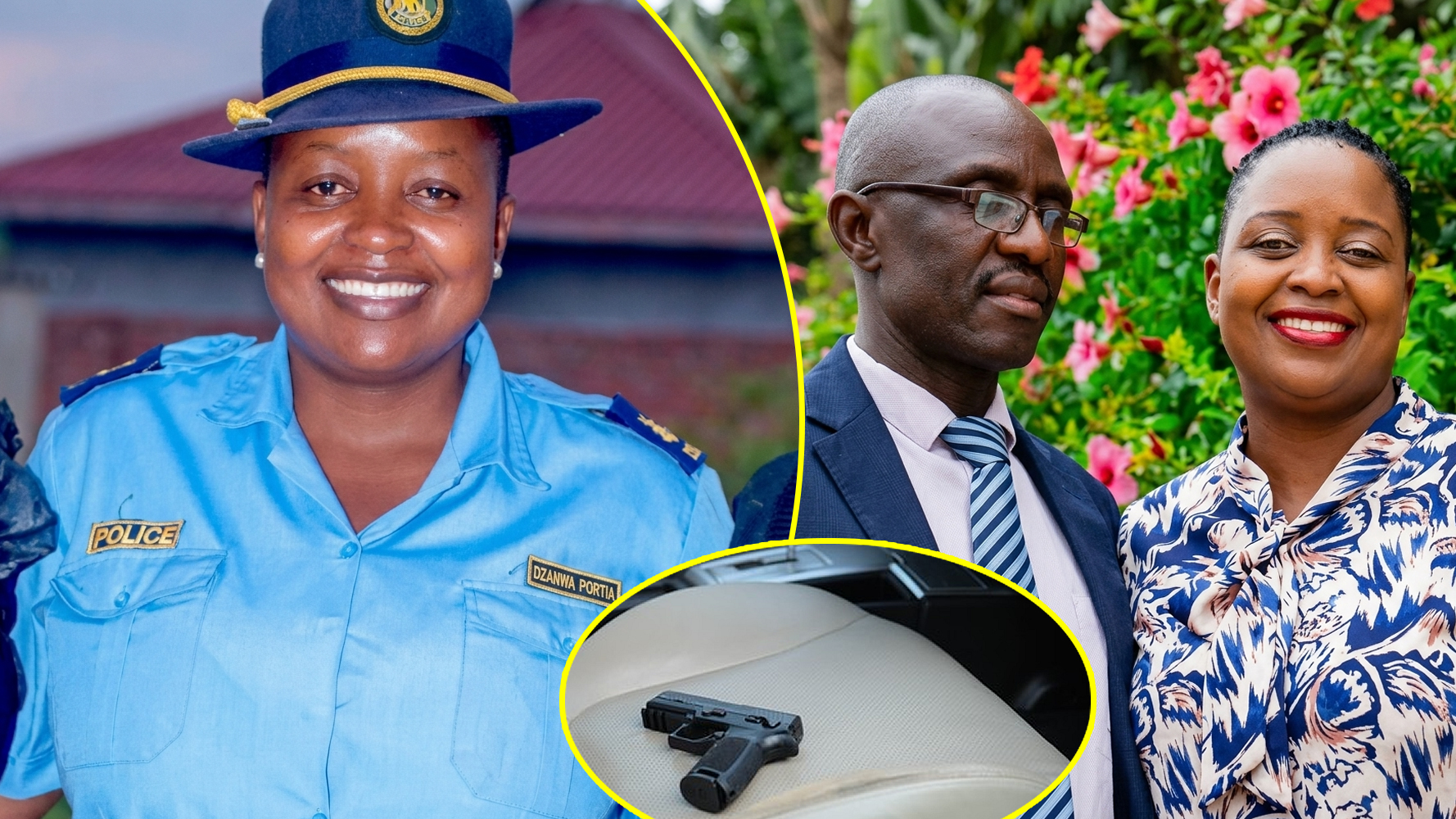
CHIHOTA — Sergeant Portia Dzanwa was finally laid to rest in Chihota last Sunday after her body remained at a funeral parlour for 26 days while her family and her husband’s relatives argued over compensation, funeral costs and the circumstances of her death.
The 36-year-old traffic police officer was buried at Gotora Village after a funeral procession that began in Harare and passed through Southlea Park, the area where she lived and where she confronted her husband shortly before she was shot dead. Her four children, aged 16, 13, 12 and three, were present during the proceedings.
Mourners were not permitted to view the body at the funeral parlour on Saturday, September 12. The restriction was linked to the severe gunshot injury to Dzanwa’s head. Relatives, friends and police officers gathered for a memorial service before the body was taken briefly to Southlea Park and then transported to Chihota in Mashonaland East.
The funeral brought an end to a dispute that had prevented Dzanwa’s burial since her death on August 16. Her family had demanded at least US$2,400 from the Dombodzvuku family to help meet the burial expenses and to address what they described as the financial and cultural consequences of the killing.
The Dombodzvuku family initially offered three cattle and US$500. It later said it could raise US$1,000, but the offer still fell short of the amount demanded by Dzanwa’s relatives. The deadlock continued until both sides agreed that the burial could proceed and that the outstanding balance and cultural compensation would be settled after the interment.
Relatives said the agreement was necessary to prevent the dispute from delaying the funeral indefinitely. They also said settling the outstanding obligations remained important for the family and for Dzanwa’s surviving children.
A close relative previously described the family’s pain in unusually direct terms.
“We are still in pain, Sergeant Dzanwa is yet to buried. In-laws are demanding money, hanzi tinoda mhere. Kwakaendwa nemombe nhatu nemari US$500, vakuwasha vakamhanyiswa saka mweya waDzanwa woti kurwadziswa nekubatirwa mwanasikana wake hama dzake hadzisikuda azororezve. They tried to engage the police but the in-laws are sticking to their guns,” the relative said.
The dispute followed a shooting in a parked vehicle in Hopley Zone 5, Harare, after a family confrontation involving Dzanwa’s eldest child. Police said the teenager told her mother that she had been sexually abused by her stepfather, Pharaoh Dombodzvuku, 52.
The 16-yer-old girl reportedly told Dzanwa that Dombodzvuku had collected her from school on one occasion and taken her to a lodge in Waterfalls, where the two had sexual intercourse. The disclosure prompted Dzanwa to confront her husband and set out with him and the teenager to report the matter at Southlea Park Police Station.
They did not reach the station. Police said Dombodzvuku drove past it and went instead to the home of his older brother, Trymore Dombodzvuku, in Hopley. He told the family that he wanted to discuss the matter before they went to the police.
The three arrived at the house shortly after 9pm. Dombodzvuku asked Trymore to take the teenager inside while he remained in the vehicle with Dzanwa. The arrangement was presented as an attempt to deal with the disclosure through a family discussion or counselling session.
A short time later, Trymore heard two gunshots. He rushed to the parked car and found Dzanwa dead inside. Dombodzvuku was unconscious in the driver’s seat with a gunshot wound to the head.
Trymore reported the shooting at ZRP Southlea Park. A night patrol attended the scene, followed by detectives from the Criminal Investigations Department’s Homicide section.
Police recovered a CZ pistol from Dombodzvuku’s lap. The magazine contained 12 rounds. Investigators said Dzanwa had been shot once in the head and that Dombodzvuku had then turned the firearm on himself.
Dombodzvuku survived and was taken to Sally Mugabe Central Hospital in Harare. He remained in critical condition after the shooting and continued to receive treatment under strict armed police guard. He was arrested in connection with the murder, while the investigation continued around the shooting and the alleged abuse of the teenager.
Dzanwa was stationed at ZRP Hatfield Traffic. Her colleagues attended the funeral and joined relatives in giving her a final send-off. The service brought together officers who had worked with her on the roads and family members who had spent nearly four weeks waiting for the burial to go ahead.
The teenager’s position in the funeral was especially painful for relatives. She lost her mother after disclosing what police said was sexual abuse by her stepfather. Her three younger siblings also attended the proceedings, including the youngest child, who is three years old.
The children were left without their mother while Dombodzvuku remained in hospital under arrest. The family’s decision to delay the burial was tied not only to the cost of the funeral but also to the belief that Dzanwa had died while trying to protect her daughter and report what had happened.
The final agreement allowed the funeral to proceed while leaving the remaining financial and cultural obligations unresolved. Dzanwa’s relatives made it clear that the post-burial settlement was still expected.
The case unfolded amid a series of violent domestic incidents reported in Zimbabwe this month. In Shamva, police were investigating the killing of Everjoy Amos, 32, a woman who was four months pregnant and had three young daughters. Police said she was attacked at home after her husband accused her of having an affair. Her body was found with severe head injuries, and a five-pound hammer was recovered near the bed.
Police were also investigating the deaths of a woman and her two children at Shirleigh Farm in Darwendale. The victims were identified as Abigail Mwale, 26, Johanne Maiswa, five, and Jayden Mwale, seven months. Police said the bodies were dragged into a hut, which was locked and set alight. An adze, a blood-stained white cloth, a white sack and a pair of socks were recovered at the scene.
Those cases have added to the public record of families being destroyed by violence inside homes, but Dzanwa’s case has carried a particular impact because she was a police officer and because the shooting followed a child’s disclosure to her mother.
At Gotora Village, attention returned to the officer herself. Her coffin was taken to the graveside after the long journey from Harare. Police colleagues stood alongside relatives and mourners as the family completed the burial that had been postponed for nearly a month.
The prohibition on body viewing meant that many mourners had to say goodbye without seeing Dzanwa’s face one last time. The restriction was imposed because of the head wound she suffered in the shooting, but it also reflected the severity of the violence that had kept her body at the centre of the dispute.
By the time the grave was closed, the funeral had marked several endings: the 26-day wait for burial, the public mourning of a serving officer and the first stage of a family settlement that remains incomplete. The criminal investigation and Dombodzvuku’s treatment continued after Dzanwa was laid to rest.
For her children and relatives, however, the immediate task was to bury a mother and daughter whose final journey began with an attempt to confront a family crisis and ended with gunfire inside a parked car.
The family now expects the Dombodzvuku relatives to honour the agreement reached before the funeral and settle the remaining balance and cultural compensation. Dzanwa’s burial has ended the delay, but it has not ended the questions surrounding the shooting or the obligations created by her death.
Dzanwa was buried on September 13, 2026, at Gotora Village, Chihota, surrounded by her children, relatives, friends and fellow Zimbabwe Republic Police officers.
Pharaoh Dombodzvuku has not appeared in court to present an armed robbery defense or any other plea. According to official updates from the Zimbabwe Republic Police and hospital tracking, he has remained admitted at Sally Mugabe Central Hospital under strict armed police guard due to the critical head injuries he sustained from his self-inflicted gunshot wound following the shooting of Sergeant Portia Dzanwa. Formal judicial proceedings and trial hearings have been on hold pending his medical recovery and clearance by doctors.