


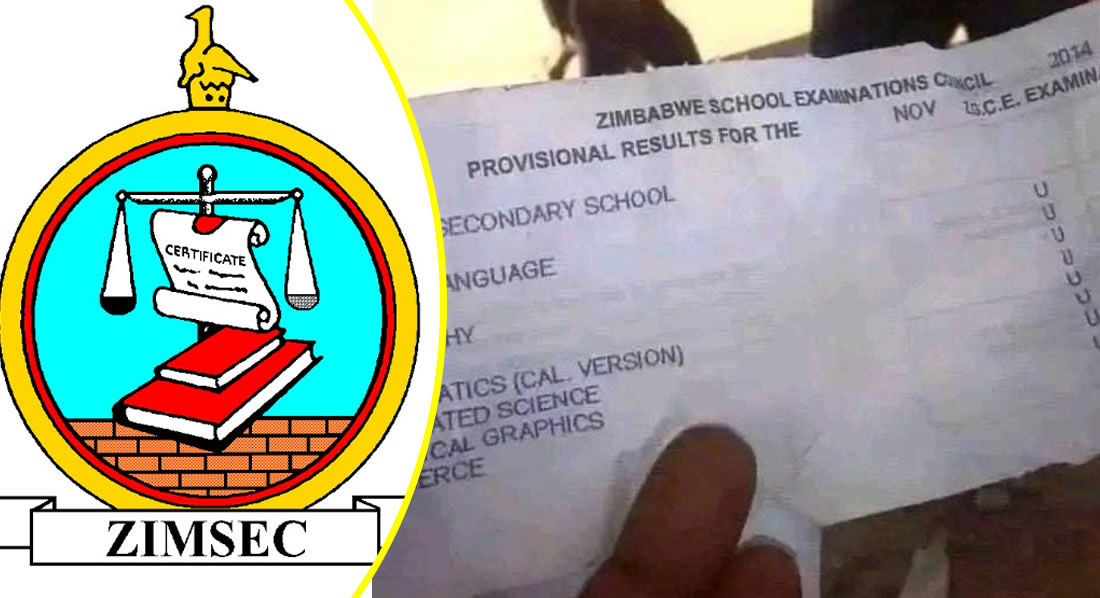
Most parents whose children sit Zimbabwe School Examinations Council (ZIMSEC) examinations will lose access to the Government’s examination fee subsidy under a new plan approved by Cabinet, with support to be narrowed in stages before it is reserved for pupils on the Basic Education Assistance Module (BEAM) from 2028.
The first major change takes effect in 2027. Government support will continue for pupils at rural primary schools classified as P3, rural secondary schools classified as S3, satellite schools and learners benefiting from BEAM. Pupils outside those categories will not be included in the listed groups for that year. From 2028, BEAM beneficiaries will be the only pupils eligible for the subsidy.
The proposal was presented by Finance Minister Professor Mthuli Ncube as chairman of the Cabinet Committee on National Development Planning. Information Minister Dr Zhemu Soda announced Cabinet’s approval of the revised ZIMSEC Examination Fee Subsidy Framework and Examination Financing Model at a post-Cabinet briefing.
Soda said the assistance had been intended to make national examinations more accessible and ease financial pressure on households. “Government has, over the years, consistently demonstrated its commitment to promoting equitable access to education and mitigating socio-economic challenges faced by households through the provision of examination fee subsidies for pupils sitting national examinations administered by the Zimbabwe School Examinations Council (ZIMSEC),” he said.
The new framework changes the reach of a programme that was introduced in 2020. At the time, Government covered 53 per cent of examination fees and parents or guardians paid the remaining 47 per cent. The State’s share rose to 55 per cent in 2021, leaving families to meet 45 per cent of the cost.
The review will not end support for every pupil at once. In 2027, learners in the specified rural and satellite schools and those covered by BEAM will remain eligible. But the change means the broader assistance available to other candidates is set to fall away before the final step in 2028, when the programme will be limited to BEAM beneficiaries.
The 2027 categories include rural primary schools classed as P3 and rural secondary schools classed as S3. Satellite schools are also listed, alongside pupils receiving BEAM assistance. The Cabinet announcement did not give a new subsidy percentage or a revised schedule of charges for the next examination cycle, so the amount of Government support for eligible candidates in 2027 has not been stated in the announcement.
Current fees offer a measure of the costs families already face. In January, ZIMSEC said the 2026 Ordinary Level fee was US$24 per subject and the Advanced Level fee was US$48 per subject after the Government subsidy was factored in. Candidates taking the June examinations to rewrite or supplement subjects were not eligible for the 55 per cent subsidy and had to pay the full fee. The 2026 rates do not establish what parents will be charged in 2027 or 2028.
ZIMSEC’s published examination registration guidance says candidates must register through schools or approved examination centres and pay examination fees in full. Families will therefore need to confirm how the revised support applies to their child’s school and examination sitting when the 2027 fees and registration arrangements are issued.
Government has said the existing model did not sufficiently separate households that needed assistance from those able to meet examination costs. Soda also cited fiscal constraints and competing national priorities, saying the review was intended to concentrate available funds on the most vulnerable learners while protecting the operation and security of national examinations.
Ncube has separately described the Government’s approach to identifying BEAM beneficiaries as part of a wider effort to direct limited resources towards learners in need. Speaking at a pre-budget seminar in Bulawayo, he said: “The idea is to weed out those who don’t deserve to be supported but have been benefiting. We will start clearing the areas, supporting the real vulnerable schools. There was a recent release of about US$100 million two weeks ago to clear some arrears.”
The BEAM programme, which will become the sole route to ZIMSEC fee assistance in 2028, has itself faced substantial payment arrears. Deputy Minister of Public Service, Labour and Social Welfare Mercy Dinha told Parliament that outstanding BEAM obligations accumulated to US$292,492,316.46 between 2023 and 2025.
The figures presented to Parliament showed 1,856,996 beneficiaries in 2023, with US$62.6 million left unpaid. In 2024, 1,261,140 learners received assistance and arrears grew by US$117.8 million. A further 950,192 beneficiaries were supported in 2025, when US$112.1 million in fees, levies and examination charges remained outstanding. Dinha attributed the backlog to limited fiscal space.
The payment delays have also been raised by lawmakers concerned about the effect on schools and pupils. During a pre-budget seminar, Gokwe-Kabuyuni legislator Spencer Tshuma said schools were carrying the cost of educating children covered by BEAM while waiting for Government payments. He said that some schools in his constituency were owed tens of thousands of US dollars.
The revised exam subsidy comes amid wider concerns about the affordability of education. The Ministry of Primary and Secondary Education’s 2025 statistics recorded 39,736 learners leaving primary and secondary school: 13,032 at primary level and 26,704 at secondary level. Financial constraints were recorded as the leading reason for leaving school, affecting 5,548 primary pupils and 9,974 secondary pupils.
Those figures cover school dropouts overall, while the Cabinet decision concerns examination fees. They show the financial pressures reported by families and schools as Government changes who qualifies for help with the cost of national examinations.
For parents, the practical question is now whether their child’s school and BEAM status place them within the 2027 categories. Rural P3 primary schools, rural S3 secondary schools, satellite schools and BEAM beneficiaries are included for that year. From 2028, the qualifying group contracts to BEAM beneficiaries alone, leaving other families to meet the examination fees without this Government subsidy.