


CHIVHU — In the dusty, unpaved streets of Chivhu, a town that seems to have been forgotten by the hands of time, a haunting question lingers in the air: who truly decides when a politician’s time is up? Is it the natural progression of age, the collective will of the voters, the rigid machinery of party structures, or perhaps a cynical political game that keeps recycling the same familiar players while entire communities languish in a perpetual state of waiting?
In Chikomba, specifically within the confines of Chivhu Ward 12, this existential political question has resurfaced with the startling return of Pardon Mudzimu. At seventy years old, the former Zimbabwe African National Union-Patriotic Front (Zanu PF) councillor is a man whose name is synonymous with the local seat, having held it for twenty-seven uninterrupted years. His tenure was only broken in 2018 when he was booted out after losing to an opposition candidate. After spending two terms on the sidelines, watching the world move on, Mudzimu has bounced back, appearing on the ballot once more with a confidence that he claims is unbothered by sceptics or critics.
The upcoming by-election for Ward 12, scheduled for February 21, was not triggered by a routine vacancy. Instead, it follows the disgraceful exit of the Citizens Coalition for Change (CCC) councillor, Ishmael Maukazuva. Maukazuva is currently serving a three-year jail term—specifically an effective thirty-month sentence—after being found guilty of having sexual intercourse with a minor. The conviction of the opposition figure has left a vacuum that Mudzimu is eager to fill, though he faces competition from Fadzai Chimanikire and HopeDay Madzura, both of whom are running as independent candidates.
On the same day, another by-election will take place in Ward 7, where the seat fell vacant following the death of councillor Florence Mudzamiri. In that race, the Zanu PF candidate Fortunate Chakwanda will square off against an independent, Ignatius Maya. However, it is the return of the “old guard” in Ward 12 that has ignited the most intense debate about the recycling of leadership in a nation desperate for fresh perspectives.
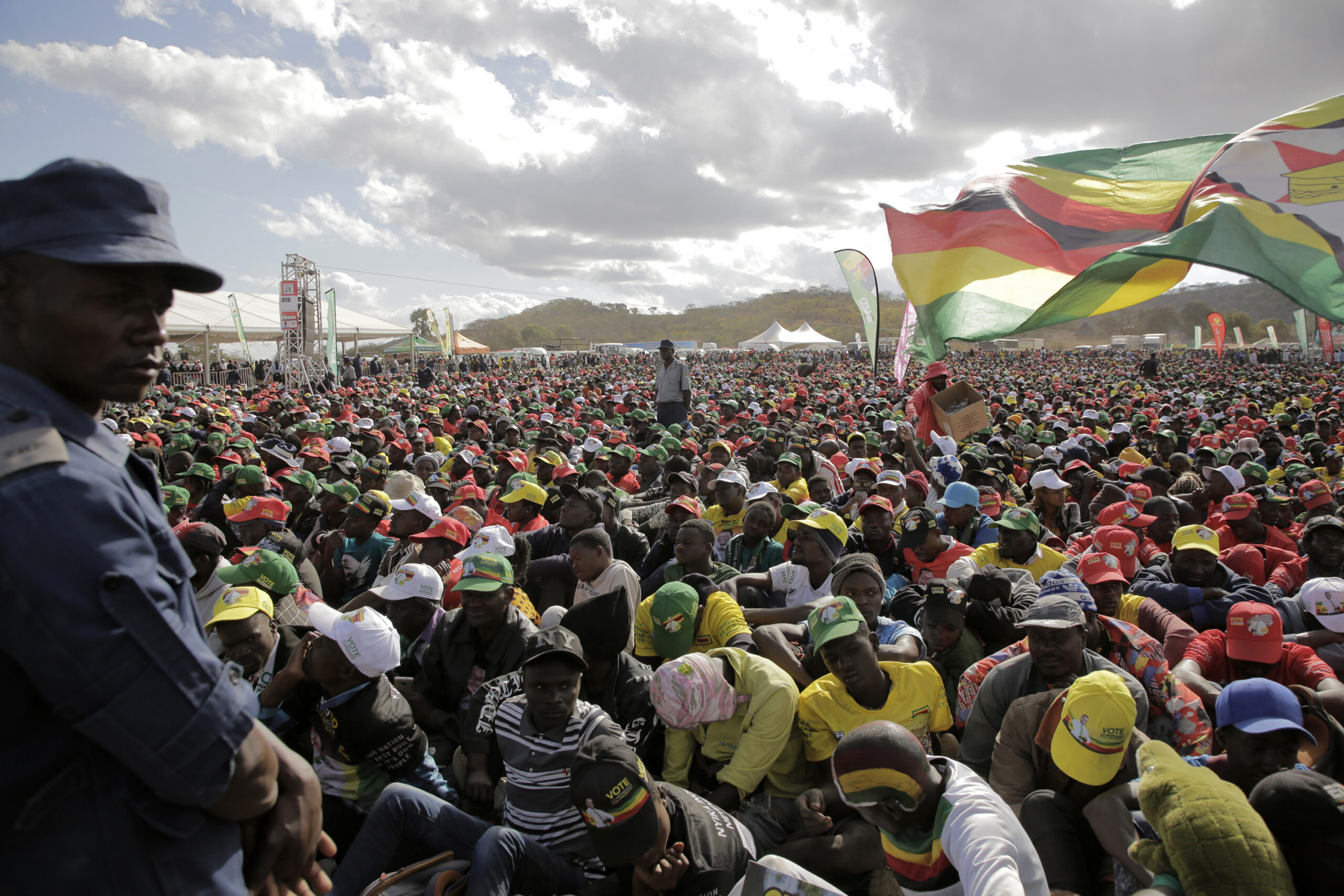
Mudzimu’s path back to the ballot was anything but smooth. Last week, he emerged victorious in a fiercely contested party primary election, a process that insiders within Zanu PF described as “dog-eat-dog.” The primaries were reportedly marked by the deep-seated and increasingly public rivalry between President Emmerson Mnangagwa and his deputy, Constantino Chiwenga. This factionalism, which has seen accusations of treason and looting at the highest levels of government, has trickled down to the grassroots structures.
In Chivhu, the Mnangagwa–Chiwenga rivalry manifested in allegations of voter manipulation. NewsDay Weekender heard reports that some voters were enticed with as little as US$3 to influence their choice, while others were allegedly intimidated during the process. Despite these internal protests from some Zanu PF members, Mudzimu remains steadfast. He dismisses any suggestion that his return is driven by personal ambition or a thirst for power.
In an interview, Mudzimu claimed he had already retired from active politics but felt a moral obligation to return after being pressured by residents. “I had retired,” he stated. “But the people came to me. They said, ‘Come back, we still need you.’ I could not turn them down. Being a councillor is not a profession. If there are young people who wish to be elected, they will not get that role on a silver platter. They have to observe what their elders are doing and start working.”
Mudzimu first entered public office as a councillor in 1992, during his youth, while he was an employee at Chivhu General Hospital. He insists that his appeal lies not in empty promises, but in what he calls “unfinished work.” He argues that the people want him back because they are desperate for service delivery. “They are worried about bad roads and poor services,” he said. “They want me to continue doing good for them and to finish unfinished business. I will fix that.”
Yet, for the residents of Chivhu, the word “fix” has a hollow ring to it. For decades, they have been fed a steady diet of promises regarding better roads, improved services, and job creation. Despite being one of Zimbabwe’s oldest towns, tracing its origins back to the colonial era, Chivhu’s central business district has never had a single fully tarred street. The infrastructure is a relic of a bygone age, crumbling under the weight of neglect.
The residential areas tell an even more harrowing story. In Northwood, one of the town’s oldest suburbs, the roads remain unserviced and rugged. More alarmingly, households in this urban setting still rely on Blair toilets—a type of pit latrine—which residents say pose serious health risks. The lack of proper access roads means that garbage collection is non-existent, leading to a buildup of waste that further endangers the community’s health. This is not an isolated issue; across Chivhu’s residential areas, not a single street is tarred.
This stagnation occurs against a backdrop of broader national failure. Recent reports from Human Rights Watch and Freedom House highlight that in 2024 and 2025, Zimbabwean authorities have continued to undermine democratic processes and restrict political pluralism. Corruption remains endemic, and a vast patronage system ensures that those in power remain there, often at the expense of basic human rights and service delivery.
Last year, the local council finally began work on a long-awaited tarred road project linking Chivhu town to the high-density suburb of Charuma. While some see this as progress, many residents view it as a development that came far too late, following years of unfulfilled pledges. Mudzimu, however, uses his long tenure to defend his record. “During my time, we established schools like Runyararo Primary School,” he boasted. “We serviced stands in places like Northwood, Buckenhill, and Charuma. And remember, all that was done when there was no devolution. Imagine what we can do now that we have devolution money.”
The mention of “devolution money” is a reference to the government’s policy of decentralising funds to local authorities, a process that has been fraught with allegations of mismanagement and political interference across the country. In Harare, for instance, the City Council recently made headlines for being crippled by a ZWG8 billion debt, leading to a total collapse of service delivery and a “blame game” between the council and the residents.
For many in Chivhu, the upcoming by-election is met with a sense of profound indifference. One resident, speaking on the condition of anonymity, expressed a sentiment shared by many: “Every time they come, they promise us roads and better services. After voting, we don’t see any meaningful change. That’s why people are asking if these elections are really about us, or just about politicians fighting for positions and hefty perks that they get once they get those positions.”
The cynicism is well-founded. The political landscape in Zimbabwe is currently dominated by the succession battle within Zanu PF. President Mnangagwa’s reported bid for an unconstitutional third term has fomented violence and deepened the schisms within the party. In October 2025, Vice-President Chiwenga reportedly accused Mnangagwa’s allies of looting US$3.2 billion from party coffers, leading to a public explosion of the succession crisis. When the giants of the party are locked in such a high-stakes struggle, the plight of a resident in Northwood using a Blair toilet seems like a distant, insignificant concern.
As the February 21 by-election approaches, the people of Chivhu Ward 12 find themselves at a crossroads. They can return to the familiar embrace of a man who has already spent nearly three decades in office, or they can gamble on independent candidates in a system that rarely rewards those outside the major party machineries.
Pardon Mudzimu remains confident that his “unfinished business” will carry him to victory. But as the sun sets over the unpaved streets of Chivhu, casting long shadows over the crumbling infrastructure, one cannot help but wonder if the only thing truly being “finished” is the patience of the electorate. Twenty-seven years is a lifetime in politics, yet in Chivhu, it seems that time has simply stood still, leaving change as a distant, unreachable horizon.
The story of Chivhu is a microcosm of the broader Zimbabwean struggle—a cycle of recycled leaders, broken promises, and a community left to navigate the wreckage of a dream deferred. Whether Mudzimu wins or loses, the roads will likely remain dusty, the Blair toilets will remain in use, and the people will continue to wait for a change that always seems to be just out of reach.