


HARARE – A recent declaration by Minister Tino Machakaire, the Minister of Youth Empowerment, Development and Vocational Training, has ignited a fervent debate across Zimbabwe. His assertion that university and college graduates without a National Youth Service (NYS) certificate may soon find it impossible to secure employment has cast a long shadow over the aspirations of thousands of young people and their families. This pronouncement, made on 19 February 2026, signals a significant shift in the country’s employment landscape, raising critical questions about the true intentions behind the revival of the controversial NYS programme.
Minister Machakaire’s statement was unequivocal. He stressed that completing the youth service programme is now considered a fundamental requirement for young people seeking jobs within the country. In his own words, as reported by Pindula News, he stated: “We cannot have people out there who have done nothing and think they can be university graduates… You can go to university, but without a National Youth Service certificate, you may struggle to get a job, and I want to assure you that they will suffer. This is the procedure, this is the way to go.” This stern warning leaves little room for misinterpretation, suggesting a future where academic qualifications alone may no longer suffice in the competitive Zimbabwean job market.
The National Youth Service programme is not a new concept in Zimbabwe. Its origins trace back to the early 2000s, when it was initially launched under the government of former President Robert Mugabe. The late Border Gezi, then Minister of Youth, Gender and Employment Creation, spearheaded the initiative, leading to the trainees being colloquially known as “Green Bombers” due to their distinctive uniforms. However, this initial iteration of the NYS quickly became synonymous with controversy, attracting widespread criticism for its alleged involvement in political violence, the torture of opposition supporters, and intimidation tactics during election periods. The programme was eventually suspended in 2007, primarily due to funding and resource challenges, leaving behind a legacy of fear and division.
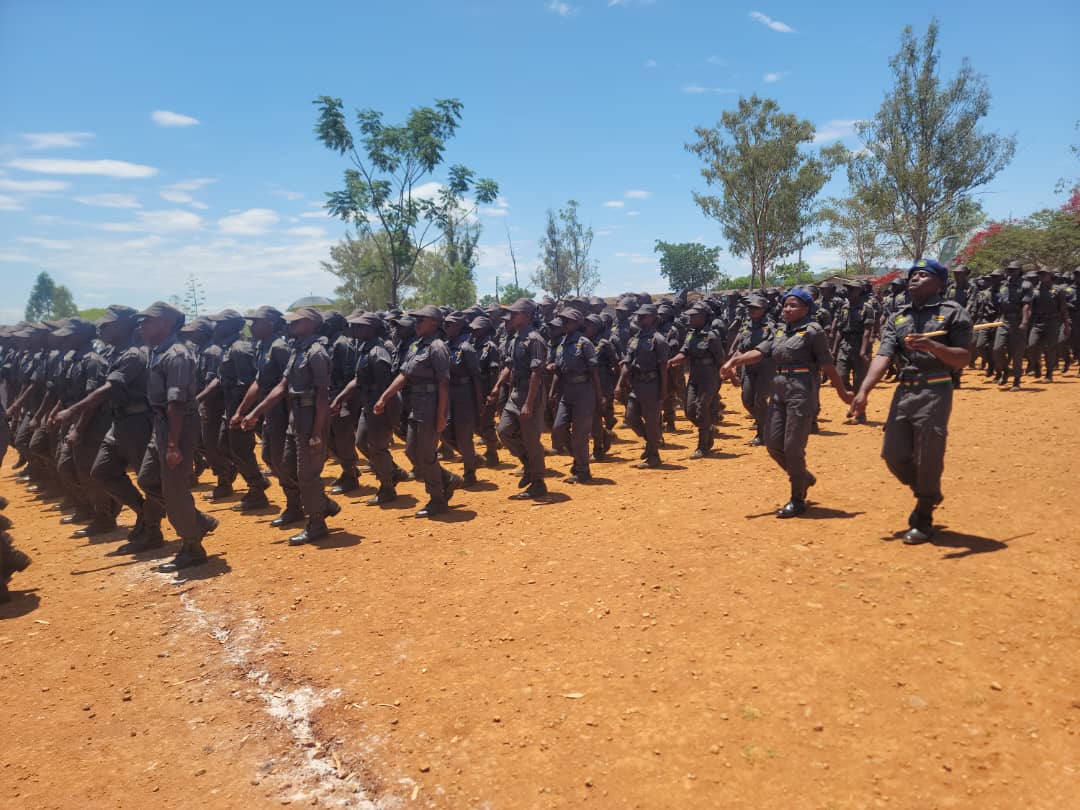
The current revival of the NYS programme, spearheaded by President Emmerson Mnangagwa in May 2024, aims to train 100,000 young people over a five-year period. This renewed focus on youth service has been further solidified by a 2025 Cabinet Directive, which has strengthened the requirement for participation. Official figures indicate that over 2,100 youths underwent training in 2025, with a significant number — 1,077 graduates — reportedly absorbed into government institutions and the security sector by April 2025, as confirmed by then Minister of Information, Publicity and Broadcasting Services, Jenfan Muswere. Furthermore, the ZANU-PF-led government has linked vocational certificates from the NYS to priority access for empowerment loans and entrepreneurial start-ups through the Empower Bank, effectively creating a tangible incentive for participation.
However, the reintroduction of the NYS has not been without its critics. Many observers and civil society organisations have voiced concerns that the programme is being exploited to further the political interests of the ruling ZANU-PF party. These critics argue that the NYS certificate is rapidly transforming into a “political passport” for employment, particularly within the civil service, where loyalty to the ruling party may be prioritised over merit and academic qualifications. The fear is that the programme’s true objective extends beyond national building and patriotism, veering into the realm of political indoctrination.
Sources within the Ministry of Youth, who spoke on condition of anonymity, hinted at a “hidden curriculum” being prepared for these camps. This hidden curriculum, they suggest, focuses on instilling a specific ideology and unwavering loyalty to the governing party, rather than solely on civic duty or vocational skills. This subtle yet pervasive form of indoctrination, often unstated but deeply embedded in the training modules, aims to shape the political consciousness of young participants. The goal, according to these sources, is to ensure that only those deemed politically reliable gain access to crucial employment opportunities, particularly in a country grappling with alarmingly high unemployment rates.
The economic implications of this policy are profound. In a nation where job scarcity is a pervasive issue, the mandatory NYS certificate could exacerbate existing inequalities. Graduates who, for various reasons, choose not to or are unable to participate in the programme, may find themselves at a significant disadvantage in the job market, regardless of their academic achievements. This creates a two-tiered system where access to employment is contingent not just on education and skills, but also on political alignment, or at least the appearance of it. The policy effectively transforms a national service initiative into a gatekeeper for economic opportunity, with potentially far-reaching consequences for social mobility and national development.
Recent incidents further underscore these concerns. A viral video, which emerged recently, depicted a group of NYS graduates actively urging citizens to support the ruling party. This incident prompted a police investigation, highlighting the blurred lines between national service and partisan political activism. Such occurrences fuel the narrative that the NYS is being weaponised for political gain, rather than serving as a neutral platform for youth development. The upcoming National Youth Day celebrations on 21 February 2026, at the Igava Training Centre in Marondera, are expected to feature NYS graduates showcasing their training, with a job fair also planned. While ostensibly an opportunity for employment, critics fear these events will further entrench the perception of the NYS as a pathway to politically-sanctioned jobs.
The implications for parents and students currently enrolled in universities are stark. The prospect of investing years and significant financial resources into higher education, only to find that a lack of an NYS certificate bars them from employment, is a daunting one. This policy introduces an element of compulsory patriotism, where national service becomes a prerequisite for professional advancement. The high stakes involved in this new paradigm mean that every parent and student must now contend with the reality that their educational journey may be incomplete without this additional, politically charged, qualification.
The debate surrounding the NYS is multifaceted, touching upon issues of national identity, economic opportunity, and political freedom. While proponents argue that the programme fosters patriotism and discipline, critics contend that it risks undermining democratic principles and creating a generation of politically compliant citizens. The future of Zimbabwe’s graduates, and indeed the nation’s trajectory, may well hinge on how this delicate balance is navigated.