


JUSTICE DELAYED: The grizzly murder of Akundaishe Chipomho and the shadows of child abuse
WINDHOEK – Six years have passed since the small, broken body of nine-year-old Akundaishe Natalie Chipomho was found amongst the charred remains of a municipal skip in Windhoek North. For over half a decade, the wheels of justice have turned with agonising slowness, as a trio of Zimbabwean nationals—including the girl’s own mother—continue to face a litany of charges in the High Court of Namibia. The case, which first surfaced in January 2020, remains one of the most harrowing accounts of domestic brutality in the country’s recent memory, highlighting a dark undercurrent of child abuse that continues to plague the region.
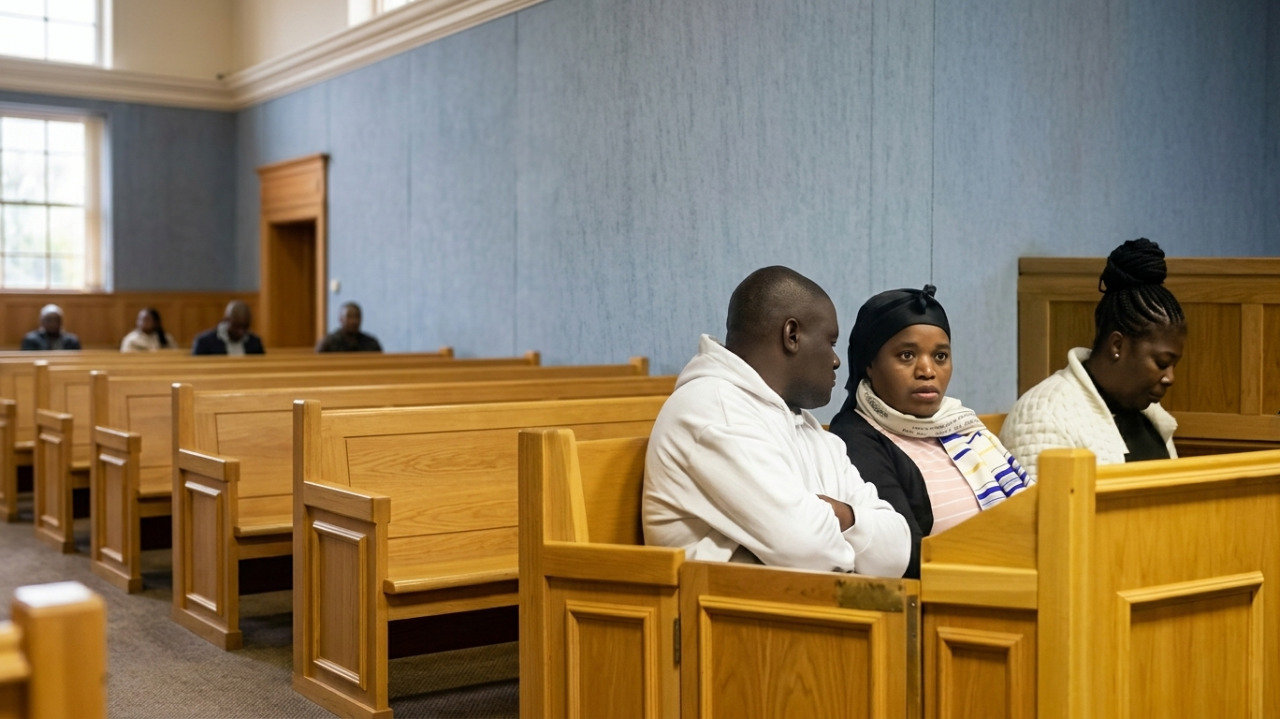
The accused, Edward Nkata (39), his wife Caroline Nkata (38), and Rachel Kureva (40), the biological mother of the deceased, were back in the dock this past Friday. They face a daunting array of charges: murder, violating a dead body, defeating or attempting to defeat the course of justice, fraud, forgery, and contravening the Immigration Control Act. The prosecution’s case paints a picture of a savage, prolonged assault that culminated in a desperate and macabre attempt to erase all evidence of the crime.
According to the state’s allegations, the horror began between 23 and 25 January 2020. Akundaishe was reportedly subjected to a vicious beating, kicked and struck with unknown objects all over her body and head until she slipped into a state of unconsciousness. What followed was not a frantic call for medical help, but a cold, calculated wait for death. Prosecutors claim the child was placed into a plastic bucket as her assailants waited for her to draw her last breath.
The details of the assault are laid bare in a confession allegedly made by Caroline Nkata. In her statement, she described witnessing her husband, Edward, beating the young girl with his bare hands. When she attempted to intervene, she claims he violently pushed her away and threatened her with similar treatment. Caroline further alleged that Edward called her to bring water into the room where the child lay unresponsive. She provided a glass of water, which he then poured over Akundaishe in a futile attempt to “wake her up” from her unconscious state.
“I saw foam coming out of the girl’s mouth,” Caroline reportedly told the court. Despite her plea to take the child to a hospital, she claims Edward again threatened her into silence. The girl’s body was then moved to a garage, where it remained throughout the night. Caroline admitted to checking on the child periodically, only to find her increasingly unresponsive until she finally perished.
The aftermath of the killing was as chilling as the act itself. The prosecution alleges that Akundaishe’s body was transported in a wheelie bin to a municipal skip located some distance from the accused’s flat. There, it was dumped and set ablaze. The Nkatas allegedly purchased paraffin and matches from a nearby service station specifically for this purpose. Their movements were caught on surveillance cameras in the Rhino Park area, and a witness reported seeing them dragging the bin at approximately 21:00—a suspicious activity that ultimately led to their undoing.
As the case rumbles on, the accused have launched several legal challenges. Both Edward and Caroline Nkata have contested the validity of their warned-and-cautioned statements, claiming they were obtained in violation of their constitutional rights. Edward, who was in hospital at the time of his arrest, argued that he was in no stable state of mind to provide a statement due to pain and medication. He further claimed his rights were never read to him and that he neither gave nor signed any statement.
Rachel Kureva’s involvement has been a point of significant legal contention. Initially, the Prosecutor-General declined to prosecute her in January 2022. However, a dramatic U-turn occurred after the Nkatas’ 14-year-old son provided a statement to the police that directly implicated Kureva in the events leading to her daughter’s death. She was re-arrested in early 2023 and now faces the same primary charges as the Nkatas. Her legal representative, Jermaine Muchali, has sought a review of this decision, arguing that if the review is successful, there would be no need for a defence.
The trial has also shed light on other alleged crimes committed by the trio. The Nkatas are accused of defrauding Progress Private School of N$6,000. Caroline, who was employed there as a teacher, allegedly claimed that Akundaishe and another 11-year-old boy were her biological children to exempt them from paying school fees. Furthermore, the couple is charged with forging school reports and overstaying in Namibia for seven months after their employment permits had expired.
Perhaps most damning is the testimony regarding the atmosphere of fear within the household. A former neighbour, Bonita Minnies, testified to hearing the screams of children emanating from the Nkata residence. She described seeing Edward beating a young boy with a belt in a “very aggressive and powerful manner.” Minnies recalled her late husband calling for a social worker after hearing screams that sounded like “screams of fear,” as if the children were terrified for their lives.
The Akundaishe case is not an isolated incident but part of a troubling pattern of child abuse and domestic violence in Namibia. Just this past month, the Walvis Bay community was left reeling after a stepfather was sentenced to 30 years for the “merciless” murder of five-year-old Dantali Eiseb. In another recent case, a 31-year-old woman, Hilma Hiskia, was remanded in custody for the alleged killing of her boyfriend’s child in Ohalumbebe. These incidents, occurring years after Akundaishe’s death, suggest that the systemic issues allowing such brutality to occur remain unresolved.
Statistics from the Namibia Violence Against Children and Youth Survey indicate that physical violence remains a pervasive threat, with little difference in prevalence between boys and girls. The Akundaishe case, however, stands out for its sheer level of calculated cruelty—the waiting for death, the use of a rubbish bin for transport, and the attempt to incinerate the remains.
The biological mother, Rachel Kureva, had previously misled police officers by claiming that Akundaishe was in Zimbabwe with her father when they first enquired about the girl’s whereabouts. This layer of deception has only added to the complexity of the case, which has seen numerous postponements and procedural hurdles. The state continues to be represented by Ethel Ndlovu, while the accused have various legal aid-instructed representatives.
As the court proceedings continue, the memory of the nine-year-old girl who never got to grow up hangs heavy over the courtroom. The case of Akundaishe Natalie Chipomho is a grim reminder of the vulnerability of children and the lengths to which some will go to conceal their crimes. For the people of Windhoek, and for the Zimbabwean community in Namibia, the hope remains that the conclusion of this six-year legal battle will finally bring a semblance of justice for a life so cruelly extinguished.
The trial is set to continue as the court weighs the admissibility of the contested statements and hears further testimony from those who lived in the shadow of the Nkata household. Until then, the skip in Windhoek North remains a silent monument to a tragedy that the city—and the courts—cannot yet put to rest. The prosecution remains firm in its pursuit of the truth, seeking to hold all three individuals accountable for the roles they allegedly played in the girl’s final, agonizing hours.