


On the morning of 31 July 2026, the streets of Harare did not look like the bustling heart of a nation at peace. Instead, the Zimbabwean capital resembled a fortress under siege. Thousands of soldiers and police officers, clad in riot gear and armed with automatic rifles, were moved into the city in the early hours of the morning. They blocked major arterial roads, established checkpoints at every entry point, and conducted aggressive searches of private vehicles and public transport alike. To any outsider, it looked like a war zone, yet there was no war — only a government that was deeply terrified of its own citizens.
The official narrative from the authorities was that everything was “normal.” However, the sheer scale of the security deployment told a very different story. Why was the ruling party, ZANU-PF, so visibly shaken by a protest that they publicly claimed would not even happen? Events surrounding the July 31 lockdown reveal a regime gripped by a profound sense of panic, driven by secret intelligence reports and a growing realisation that the public’s patience has finally reached a breaking point.
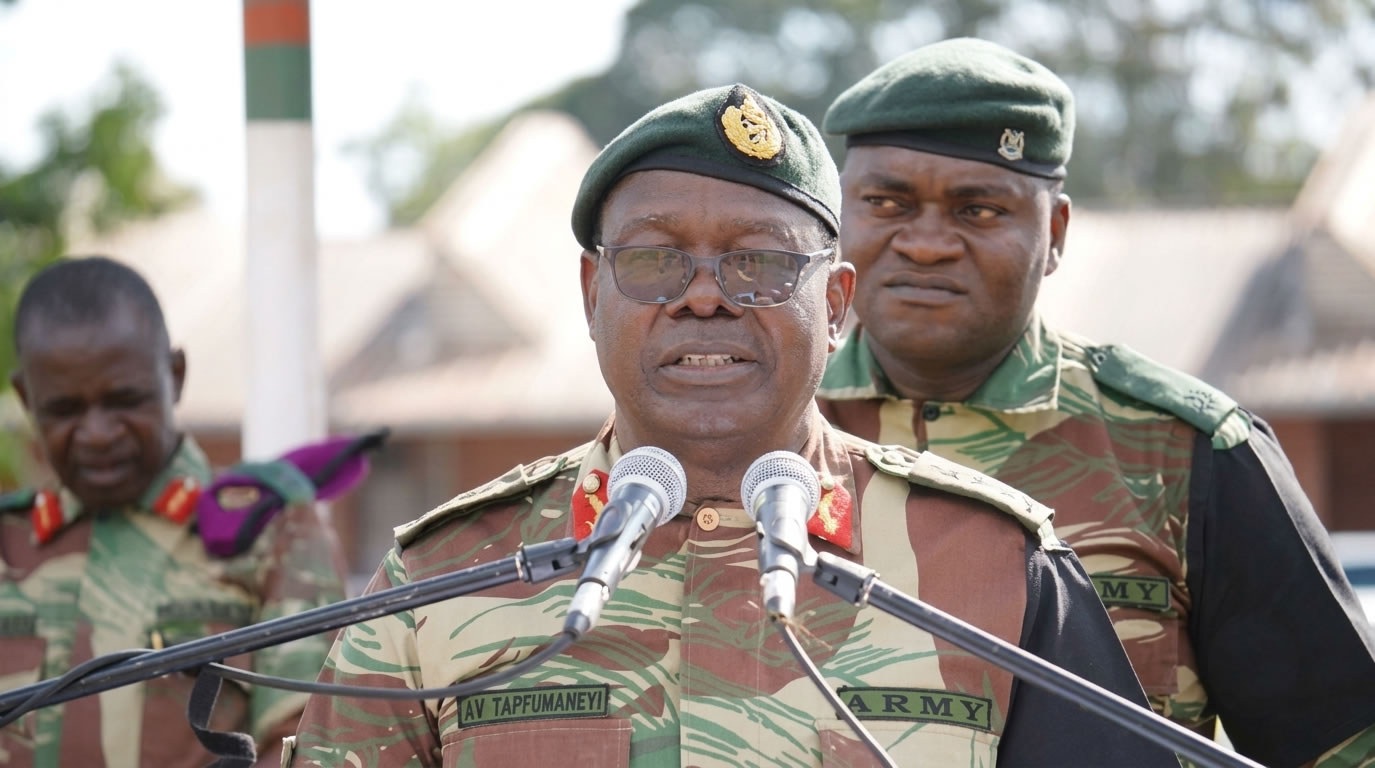
Zimbabwe National Army commander Lieutenant-General Walter Asher Tapfumaneyi made a rare public intervention on Thursday, warning against planned protests over constitutional amendments that extended President Emmerson Mnangagwa’s term of office and scrapped direct presidential elections.
A video of the army chiefs comments was shared by presidential spokesman George Charamba on X (formerly Twitter).
Tapfumaneyi, who was a CIO boss before being promoted to head the ZNA late last year, joined a chorus of government ministers who have issued warnings to would-be protesters, saying: “Isn’t tomorrow almost upon us? We want people to go to work peacefully, we want the shops to function, we want the borders to function, we want every aspect of Zimbabwean society to function without disruption. And in peace we grow, we grow when there is peace.
“We don’t want silly disruptions by adults who want to make a living out of disorder.”
Army chiefs rarely comment so directly on current affairs, a departure that may signal growing unease within the Zanu PF government over the scale of public anger.
The Choreography of Fear
The lead-up to July 31 was marked by a series of choreographed press conferences that exposed the government’s anxiety. Provincial ministers were wheeled out across the country, flanked by top military and police chiefs, to issue stern warnings to the public. In Mashonaland West, Minister Marian Chombo stood before the cameras, flanked by a military officer and a senior police official. She claimed that authorities had taken note of attempts by “detractors of peace and development to mislead and incite members of the public into acts of violence, destruction of property and also disruption of businesses, schools and farming activity.”
Her words were echoed in the Midlands by Minister Owen Ncube, who appeared with an Air Force chief by his side. “The public is advised to ignore these sponsored and illegal machinations,” Ncube stated. “Security forces are on high alert to ensure peace and tranquility prevail and to allow normal business operations.” These warnings were not merely about maintaining order; they were a deliberate show of force intended to scare anyone who was even thinking about complaining about the high cost of living or the controversial new constitutional changes.
The “2030 Agenda” and the Constitutional Crisis
At the heart of the unrest is the Constitutional Amendment Act No. 3 (CAA3), a piece of legislation that has become the lightning rod for national anger. The amendment effectively extends President Emmerson Mnangagwa’s term by two years, from 2028 to 2030, and scraps direct presidential elections in favour of a vote by parliament. To many Zimbabweans, this is a clear attempt to entrench a life presidency and dismantle the remains of the country’s democracy.
ZAPU, one of the opposition groups that notified the police of their intention to hold a peaceful gathering, argued that such a fundamental change to the law “ought to have first been submitted to a referendum in terms of section 328 of the constitution.” They maintained that the amendments “undermine rights enshrined in the constitution … including political rights.” The People’s Coalition, known as Sungano yeVanhu, also challenged the Act in the Constitutional Court, arguing that the entire process was unconstitutional.
Despite these legal challenges, the government chose to respond with boots on the ground rather than dialogue. National Constitutional Assembly leader Professor Lovemore Madhuku captured the mood of the opposition when he wrote on social media: “From what I have witnessed in recent days, Zimbabweans, by an overwhelming majority, are determined to defeat the 2030 agenda. July 31, 2026, is the first of many days ahead, when the people will say, PEACEFULLY: NO TO 2030. We will win.”
The Hidden Hand and the Secret Reports
While the government publicly dismissed the protests as the work of “a few individuals with selfish agendas,” insiders within the security apparatus tell a different story. Sources close to the Central Intelligence Organisation (CIO) have revealed that the government received secret reports indicating that the level of anger among the general population is much higher than they are willing to admit. These reports suggested that the planned “stay-away” had the potential to transform into a massive, uncontrollable wave of civil disobedience.
The lockdown was not just about stopping a few people from marching; it was a pre-emptive strike to prevent the spark of dissent from becoming a wildfire. By locking down the capital, the authorities showed the world that they are not as confident as they pretend to be. The regime is aware that the “2030 agenda” is deeply unpopular, even within its own ranks, and the massive deployment was as much a message to internal rivals as it was to the opposition.
The Economic Toll: Who Pays the Price?
As the country continues to grapple with a biting economic crisis, the cost of this massive security operation has raised serious questions. Moving thousands of soldiers, providing them with fuel, food, and daily allowances, is an incredibly expensive exercise. While the rest of the country suffers from a lack of basic services, the government seems to have an unlimited budget for repression.
The irony is not lost on the citizens who are struggling to survive. While official figures suggest that inflation has slowed to 3.2 per cent in July 2026, the reality on the ground is far bleaker. Prices for basic commodities continue to rise, and the gap between the official exchange rate and the black market remains a chasm that swallows the earnings of the poor.
“We cannot allow a few individuals with selfish agendas to reverse the gains we have made in dam construction, road rehabilitation, rural electrification and investment attraction,” Minister Chombo had claimed. Yet, for many, those “gains” are invisible. The real question being asked in the queues for bread and transport is: who is paying for the fuel in those army trucks while our hospitals have no medicine?
A Trail of Arrests and Intimidation
The crackdown was not limited to roadblocks. In the days leading up to and during July 31, a wave of arrests targeted activists and ordinary citizens alike. Bhekimpilo Mbedzi, a 41-year-old man from Beitbridge, was arrested for allegedly inciting an unlawful gathering after posting a video on Facebook urging people to join the protests. In Harare, former ZINASU president Emmanuel Sitima and activist Takunda Mhuka were detained on charges linked to anti-amendment materials.
Even the simple act of wearing a t-shirt became a criminal offence. Two individuals, Marumisa and Maviri, were arrested for distributing and wearing clothing that expressed opposition to the Constitutional Amendment Bill. According to police reports, at least 95 demonstrators were arrested nationwide on charges of promoting “public violence” and “breaches of peace.”
These arrests serve a dual purpose: to remove key organisers from the streets and to create a climate of fear that discourages others from speaking out. The Zimbabwe Republic Police (ZRP), through spokesperson Commissioner Paul Nyathi, maintained that the deployments were for the “effective maintenance of law and order.” He urged Zimbabweans to “feel free to engage in normal day-to-day activities without hindrance,” a statement that rang hollow as citizens were stopped and searched at every corner.
The Global Perception and the Reality of Power
By turning Harare into a fortress, the Mnangagwa administration has inadvertently sent a powerful message to the international community. A government that enjoys the genuine support of its people does not need to deploy the army to stop a peaceful protest.
The Zimbabwe Catholic Bishops’ Conference has been one of the few institutional voices to speak out clearly, warning that the constitutional amendments could undermine democratic governance. They have urged for national dialogue and a return to constitutionalism, but their calls have so far fallen on deaf ears. The regime appears convinced that power is kept through fear and force, rather than through the consent of the governed.
As the sun set on July 31, the streets of Harare remained quiet, but it was the quiet of a graveyard rather than the peace of a thriving city. The shops were open, and the commuters moved, but they did so under the watchful eyes of men with guns. The government may have succeeded in stopping a march, but they have failed to address the underlying causes of the people’s anger.
The “hidden hand” of the security deployment may have kept the lid on the pot for now, but the pressure underneath continues to build. The events of July 31, 2026, will be remembered not as a victory for law and order, but as the day the regime showed the world just how much it fears its own people. In the end, a fortress can protect a leader, but it also becomes his prison, cutting him off from the very people he claims to lead.
Recent Incidents of Concern
To understand the gravity of the current situation, one must look at the pattern of repression that has intensified over the last year. The arrest of student leaders like Emmanuel Sitima is not an isolated incident; it is part of a broader strategy to silence the youth, who are the most affected by the lack of jobs and the rising cost of living.
Furthermore, the use of social media monitoring to track and arrest individuals like Bhekimpilo Mbedzi shows that the state’s reach now extends into the digital lives of its citizens. The message is clear: whether you are on the streets or on your phone, the eyes of the state are upon you.
The constitutional changes, particularly the removal of direct presidential elections, represent a fundamental shift away from the promises of the “New Dispensation” that followed the 2017 coup. The hope that once existed for a more open and democratic Zimbabwe has been replaced by a grim reality where the law is used as a weapon against the people, and the army is the ultimate arbiter of political disputes.