


The Burning Man Mystery: Why a Son-in-Law Set Himself Aflame at a Funeral in a Horrific Protest
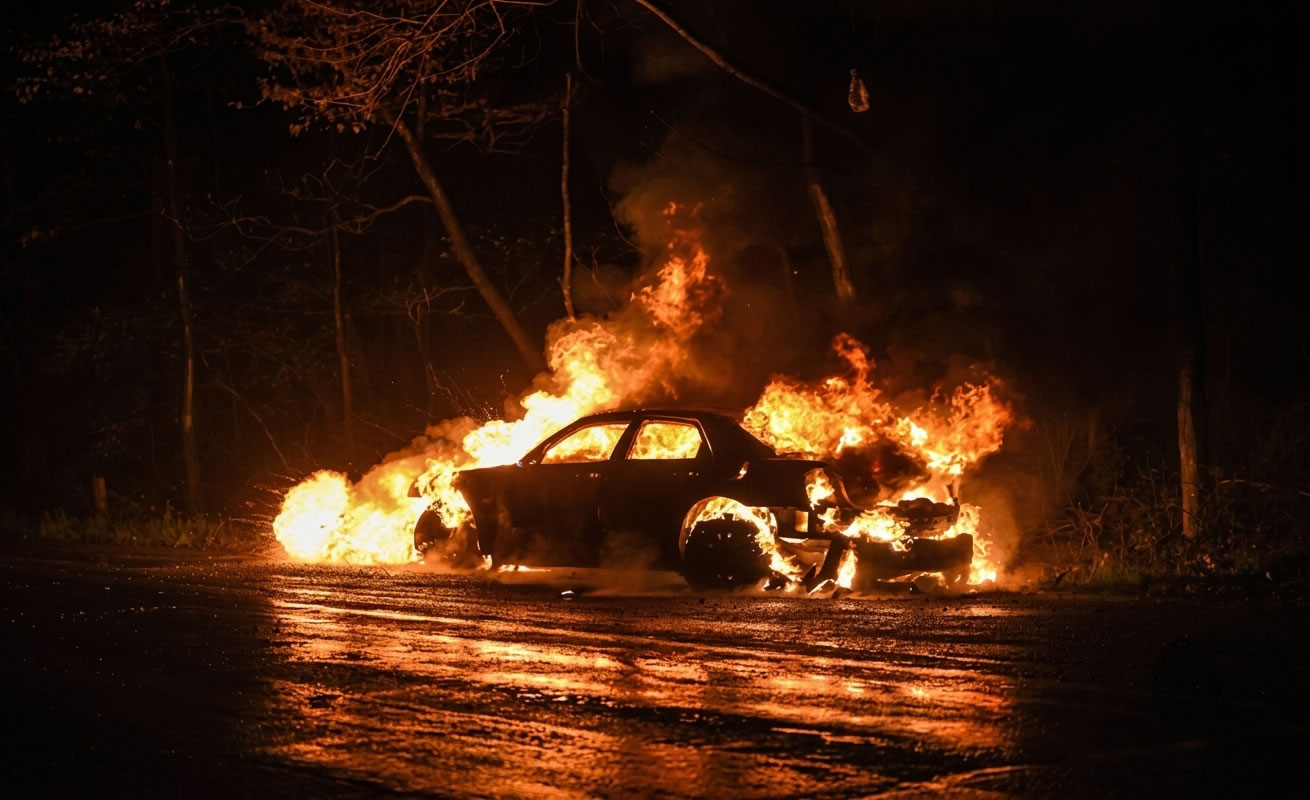
HARARE – The early morning stillness of Glen View was shattered not by the usual sounds of a waking suburb, but by a sound that witnesses could only describe as a “boom”—a violent, metallic explosion that signalled the beginning of a nightmare. In the heart of this high-density suburb, a ball of fire was seen moving down the road, a spectral and terrifying sight that has left the local community grappling with questions that have no easy answers. At the centre of this tragedy is a man identified only as Christopher, a son-in-law whose final act of desperation was as public as it was painful.
The incident occurred at the home of Christopher’s father-in-law, a place that should have been a sanctuary of mourning, as the family was already gathered for a funeral. Instead, it became the stage for a horrific protest that has laid bare the raw nerves of a society under immense pressure. According to witnesses and preliminary reports, Christopher drove his vehicle to the residence in the early hours, between 2:00 AM and 3:00 AM, and ignited a blaze that would claim his life and leave a permanent scar on those who watched helplessly from the sidelines.
“We just heard a loud ‘boom’ sound,” recalled one witness, a woman who stood shivering in a pink sweater as she recounted the ordeal to investigators. “We went outside and saw a car burning. A child looked and said, ‘Mama, Uncle Christopher is burning in the car!'”
The visual of a man consumed by flames inside his own vehicle, with his charred remains later found slumped in the driver’s seat, is an image that Glen View will not soon forget.
A Deeper Crisis Beneath the Surface
While the immediate catalyst for this horrific act appears to be a violent domestic dispute—reports suggest Christopher had a severe “misunderstanding” with his wife and allegedly stabbed her before setting himself ablaze—investigators and social experts argue that this is not merely a case of individual madness. It is, they suggest, an extreme manifestation of a mental health crisis sweeping through Zimbabwe, particularly among men who find themselves trapped between traditional expectations and modern economic realities.
In Zimbabwe today, the figure of the “son-in-law” or mukwasha carries significant weight. Traditionally, he is the protector and provider, the one who bridges two families. However, as the country grapples with a relentless cost-of-living crisis and staggering unemployment, these traditional roles are becoming increasingly difficult to maintain. The pressure to provide, to pay lobola, and to keep a family together in the face of hyperinflation is a burden that many men carry in a conspiracy of silence.
“Male silence on mental health is a significant reason behind the high suicide rates in Zimbabwe,” notes a recent research paper on the phenomena. “Cultural expectations dictate that men should be strong, that they should not cry, and that their problems should remain behind closed doors.” This incident in Glen View is a loud, fiery rupture of that silence—a cry for help from a man who had lost all hope.
The Failure of the Safety Net
The tragedy was compounded by a systemic failure that has become all too common in the capital. As Christopher’s car turned into a furnace, neighbours scrambled to help. They used buckets of water and sand, desperate to dampen the inferno, but their efforts were no match for the petrol-fuelled flames.
“The fire brigade didn’t even arrive,” the witness in the pink sweater stated flatly. “People tried to call them but they didn’t come.” It was only after the fire had spent itself and Christopher had passed away that an ambulance finally arrived on the scene. This delay highlights the crumbling infrastructure and the lack of emergency services that leave citizens to fend for themselves in their darkest moments.
The absence of a functioning safety net—both in terms of emergency response and mental health support—is a recurring theme in recent Zimbabwean tragedies. In Mutare’s Riverside area recently, a waste-burning fire spiralled out of control, destroying over 50 cars, while in Eastview, a father allegedly set his own house on fire, killing two young children. These are not isolated incidents; they are symptoms of a society where the social fabric is fraying at the edges.
The Economic Toll of Despair
Zimbabwe’s suicide rate has seen a worrying upward trend, with data from 2021 showing a 17.34 per 100,000 rate—an 11.8% increase from the previous year. For men, the rate is nearly four times higher than for women. Behind these numbers are stories of job insecurity, rising debt, and the sheer exhaustion of trying to survive in a volatile economy.
Economists and mental health professionals are beginning to draw a direct line between the country’s financial instability and the rising levels of self-harm. “The ongoing cost-of-living pressures, housing stress, and job insecurity are placing unprecedented strain on mental health,” says one expert who spoke at a recent men’s symposium in the region. For a man like Christopher, the “misunderstanding” with his wife may have been the final straw in a long series of unseen weights.
The choice of a funeral as the location for his death is particularly poignant. In Zimbabwean culture, a funeral is a time of communal support and the ultimate respect for the deceased. By bringing his own death to this setting, Christopher effectively hijacked the mourning process, turning a private domestic dispute into a public spectacle of pain. It was a protest not just against his wife or his father-in-law, but against a world that he felt had no place for him.
The Conspiracy of Silence
Domestic problems in Zimbabwe are often shrouded in a “conspiracy of silence.” The Shona proverb “chakafukidza dzimba matenga” (what covers the house are the roofs) suggests that the secrets and struggles within a home should remain hidden. But when those struggles lead to a man setting himself on fire in the middle of a street, the roof has clearly been blown off.
“This was not just one man’s madness,” says a social commentator. “It was a cry for help from a society that is under too much pressure. We need to ask ourselves why a man would choose such a public and painful way to die. What was he trying to tell his family? What was he trying to tell the world?”