


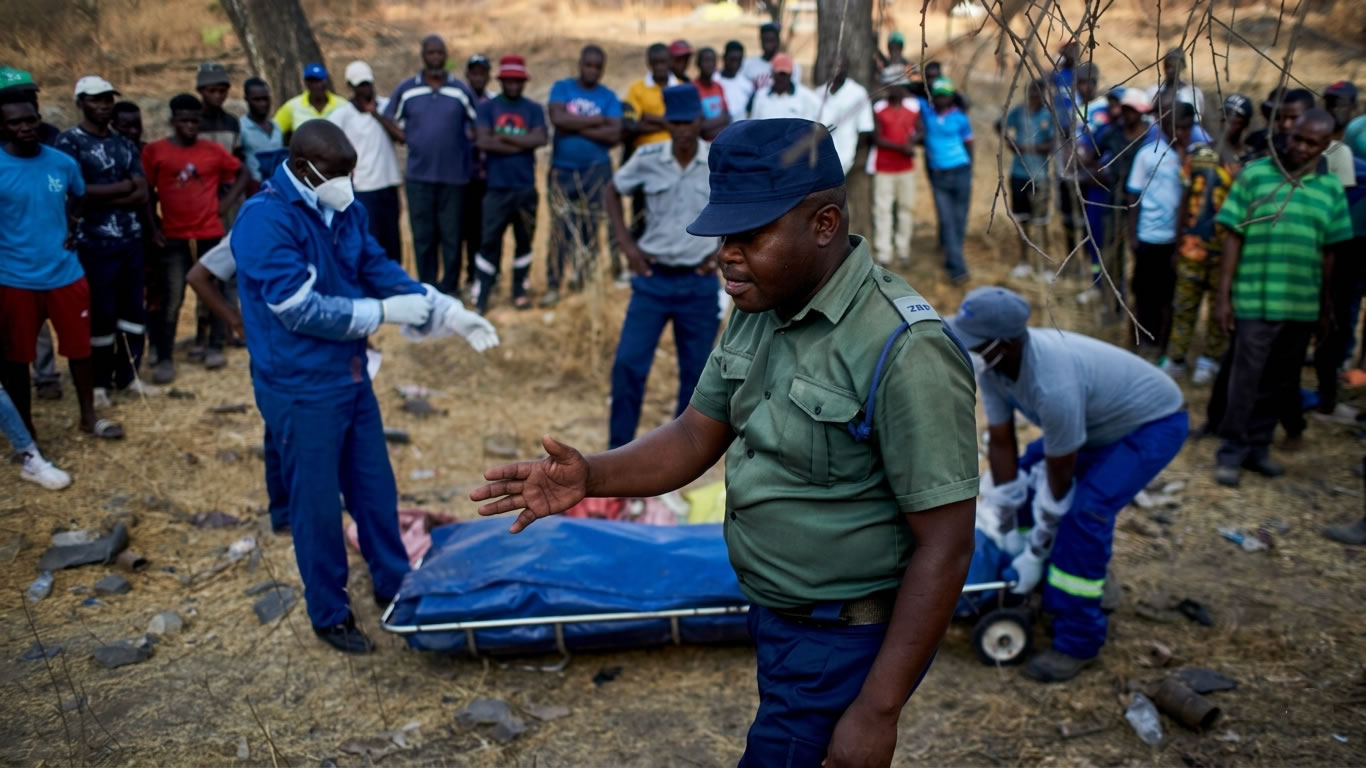
A partially burnt human leg wrapped in bandages has been found at a dumping site in Chitungwiza, where police have opened an investigation and placed the body part under guard.
The leg, believed to belong to an adult, was discovered on Tuesday after a woman searching for recyclable plastics came across it among rubbish at the municipal site. Used syringes, gloves, bandages and other medical waste were scattered nearby, raising suspicions that the limb may have been discarded after an amputation procedure instead of being taken for proper clinical disposal.
The woman alerted an attendant working at the Chitungwiza Municipality dumping site. Authorities were then called to the scene, where officers found the bandaged leg and signs that someone had attempted to burn it.
Harare provincial police spokesperson Inspector Luckmore Chakanza confirmed the discovery and said investigations were under way.
“Police are investigating a case involving a human body part dumped at a dumping site in Chitungwiza,” he said.
“On the scene, police found a human leg wrapped with bandages.”
Inspector Chakanza said the limb appeared to have been partially burnt. He added that the presence of syringes, gloves, bandages and other medical waste indicated that the incident may be linked to the disposal of clinical residue.
“The observations indicate that someone responsible for disposing clinical residue decided to dump and burn it at the dumping site. The human leg is under police guard as investigations continue.”
People who were at the site said the discovery had unsettled waste pickers who work among discarded household and commercial refuse. The scavengers often sort through rubbish by hand in search of plastics, metal and other material that can be sold.
“When we came to pick plastics for sale today, we found the body part at the site,” said one man at the scene.
“We strongly suspect one of the private hospitals is behind this. It is not only unhealthy but unprofessional to dispose clinical residues this way.”
Police have not named any hospital in connection with the discovery. The limb was found in an area where waste pickers and municipal workers could come into contact with sharp objects and other hazardous material. The discarded syringes added to the danger because they can cause puncture injuries and expose people to infection when handled without protective equipment.
The incident has also drawn attention to the wider problem of medical waste disposal in Zimbabwe. Medical waste includes used needles and syringes, bandages, gloves, pathological material, medicines and other items generated during treatment. It is meant to be separated from ordinary household rubbish and handled through controlled collection, treatment and disposal systems.
Research into medical solid waste management in Zimbabwe has found that open dumping, open burning, burying and the use of ordinary landfills remain part of the waste-disposal practices seen in the country. The same research identified infectious disease, respiratory illness, stomach-related disease and injuries as risks linked to poor handling of medical waste. Delays in collection, shortages of transport and fuel, limited funding and weak enforcement have all been identified as factors that allow waste to accumulate or reach places where it should not be found.
Those risks are particularly serious at sites used by waste pickers. Rubbish is often searched without gloves, boots or other protective clothing, leaving workers exposed to needles, contaminated dressings and decomposing material. Animals can also tear open bags and spread waste beyond the area where it was first dumped.
The Chitungwiza discovery is not the first time human remains have been found in an open or unofficial disposal area in Zimbabwe. In October 2023, two human legs were discovered inside a grey sack beneath a small bushy tree near Good Hope Secondary School in Pumula South, Bulawayo. The remains were in an advanced state of decomposition and police appealed for information from families with missing relatives.
Police said the legs appeared to belong to an adult and estimated that the person had worn a shoe of about size six or seven. The remains were concealed close to a school, adding to concerns about the places where unidentified body parts and other dangerous material can be left without being immediately detected.
A separate discovery was reported in the Sakubva River in Mutare in August this year. Two human leg bones were found inside a pair of grey trousers that had become trapped against a stone in the river. The discovery was made after a man received a phone call from another resident who had seen the trousers containing suspected human remains floating in the water.
The man went to the river and confirmed what he had been told before reporting the matter to police at ZRP Dangamvura. Officers recovered the two bones and took them to Victoria Chitepo Provincial Hospital mortuary. The rest of the body was not found, and investigations began to establish the identity of the deceased and how the remains had entered the river.
The cases in Bulawayo and Mutare involved unidentified remains whose origins were not immediately known. In Chitungwiza, however, the bandages and medical waste found around the leg have directed attention towards the possibility that it came from a medical procedure. Investigators are expected to examine the scene, identify the body part and establish where it was discarded before the attempted burning.
The police guard at the dumping site is intended to preserve the leg while those inquiries continue. Investigators may also examine the bandages, packaging, syringes and other items found nearby for information that could link them to a particular facility or disposal route.
For waste pickers, the discovery has brought the dangers of working at the site into sharp focus. They were looking for recyclable material when they came across a human body part mixed with ordinary rubbish. The presence of clinical waste means that other dangerous items may still be scattered around the site, even after the leg has been removed.
Police have urged anyone with information about the dumping of the limb to assist with the investigation. Until the source of the body part is established, it remains under police guard as officers work to determine whether it was unlawfully discarded after an amputation and who was responsible for taking it to the Chitungwiza site.
The investigation is continuing.