


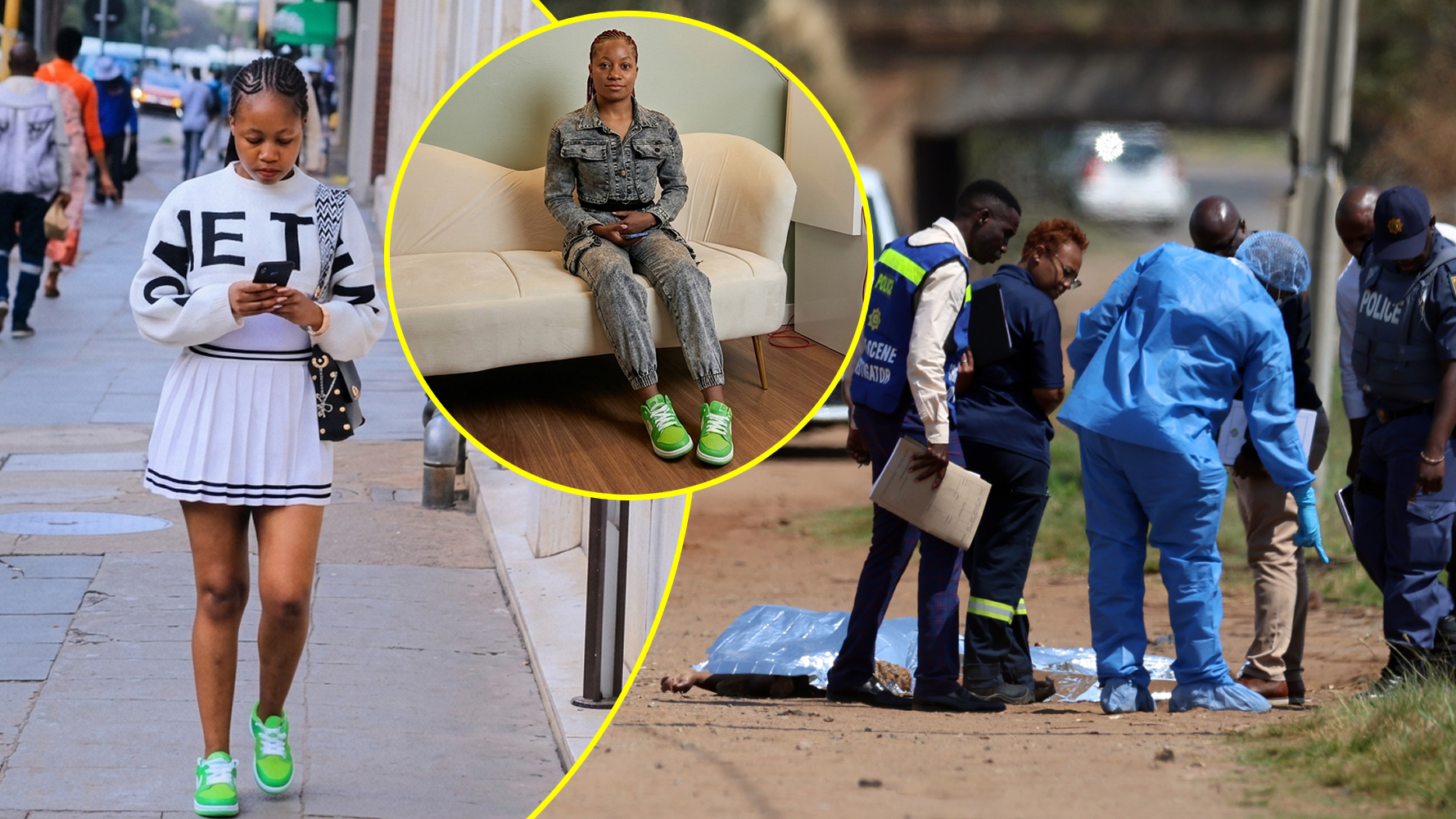
Gracious Nkomo’s name has been returned to her family after days of uncertainty. The 28-year-old Zimbabwean woman was identified at a mortuary in Gauteng as one of nine women whose bodies have been found across Ekurhuleni, east of Johannesburg, since July.
Nkomo was the third woman discovered in the Kempton Park area on 10 September. Her body was found along the R21, partially clothed. Her family positively identified her at the Germiston Mortuary on 17 September, as the investigation widened to include a ninth death in the nearby area of Dawn Park, Boksburg.
For relatives, the identification ended the agonising wait but brought the full weight of the loss. Nkomo had made her home in Pretoria and worked at a lodge in Kempton Park. A relative remembered her as a woman whose beauty drew attention, but whose character was marked by calmness rather than noise.
“She was a happy person, she was usually quiet,” the relative said.
The same relative described the condition in which Nkomo was found. “Her face was swollen,” the relative added. The family is still waiting for a complete account of what happened to her.
“We don’t have all the information about what happened to her, the police are investigating,” the relative said.
Nkomo’s first name is associated with warmth, kindness, charm, respect and compassion. Those qualities have become part of the way she is being remembered by people who knew her. In the days since her identity became known, attention has also focused on the life she might have led. With her striking appearance, she could have pursued modelling or entered the Miss Zimbabwe pageant. Instead, she built a life and earned a living in South Africa.
Her death is now part of a case that has unsettled communities across Ekurhuleni. The victims were found in different locations, including Kempton Park, Rhodesfield, Olifantsfontein, Springs, KwaThema and Dawn Park. Most were in their twenties or thirties. Several were discovered naked or partially clothed, while some showed injuries that raised concerns about sexual violence.
The first woman in the sequence was found near the R21 on 15 July. She was 37 and had been found naked and restrained with cable ties. A suspect was arrested in connection with that case and remains in custody. On 24 August, a 32-year-old woman was found partially clothed near the same route.
The number of deaths rose sharply in September. Three women, including Nkomo, were found in the Kempton Park area on 10 September. Elizabeth “Tsontso” Moselakgomo, 38, was found behind a hotel in Rhodesfield on 12 September after disappearing during a run. A fifth body was discovered in Olifantsfontein on 14 September. Other bodies were found in KwaThema and Springs before the ninth woman was discovered in Dawn Park on 17 September.
Police said the woman found in Dawn Park was believed to be about 30 years old. She was partially clothed and preliminary information indicated that her body may have been dumped there after her death. Officers and forensic specialists went to the scene to establish what had happened.
The South African Police Service has brought together investigators and specialists to work across the cases. Acting National Commissioner Lieutenant General Puleng Dimpane said the team was working around the clock to identify those responsible and establish the circumstances of each death.
“The family of 28-year-old Gracious Nkomo has positively identified her as one of the women whose bodies were discovered along the R21 in Kempton Park,” police said. “Nkomo was the third woman whose body was discovered in the Kempton Park area on 10 September. She was found partially clothed. She was identified by her family at the Germiston Mortuary.”
Police have said evidence from the different scenes is being compared. Investigators are examining the locations, timelines, victim profiles and forensic findings. Acting Gauteng police commissioner Major-General Fred Kekana said the team was considering whether the deaths were connected, while also examining the possibility that different people could be responsible.
“Investigators are considering all possibilities, including the possibility of multiple suspects or separate perpetrators,” Kekana said. “Police are comparing the evidence, timelines, locations, victim profiles and circumstances of each case before reaching conclusions.”
At least one suspect is in custody in connection with the first murder recorded in July. Police have also been pursuing another person of interest. A reward of 400,000 rand has been offered for information that leads to an arrest, and members of the public have been asked to contact Crime Stop on 08600 10111 or submit an anonymous tip through the MySapsApp.
More officers have been deployed in the affected areas to increase patrols and police visibility. The authorities have also urged people with information about the women or the circumstances of their deaths to come forward.
The deaths have prompted memorials and protests. On 19 September, runners gathered in Johannesburg to honour Moselakgomo, who had disappeared after going out for a run. Participants wore black, lit candles and carried a banner reading: “Enough. Stop Femicide.”
“We are here because we’ve lost a runner. But we are not safe anywhere,” said Lerato Lentsela, one of the people who attended the memorial run.
“We are not safe running, we are not safe at a post office, we are not safe on a date, we are not safe in our own homes, we are not safe in an Uber,” Lentsela said.
The anger has spread beyond the families directly affected. Women’s groups, runners, residents and campaigners have called for stronger action against gender-based violence and for men to challenge the behaviour that allows violence against women to continue. President Cyril Ramaphosa has urged men to take a greater role in preventing gender-based violence and femicide, while campaigners have called for public pledges and practical support for victims.
Nkomo’s relatives are now facing the private work of mourning while the wider investigation continues. Her family has a name to grieve, memories to protect and questions that investigators must answer. For them, Gracious is not only the third woman found along the R21 on 10 September or one of nine women in a police file. She was a daughter, a relative, a worker and a quiet, happy woman whose life ended violently in a place where she had gone to build a future.