


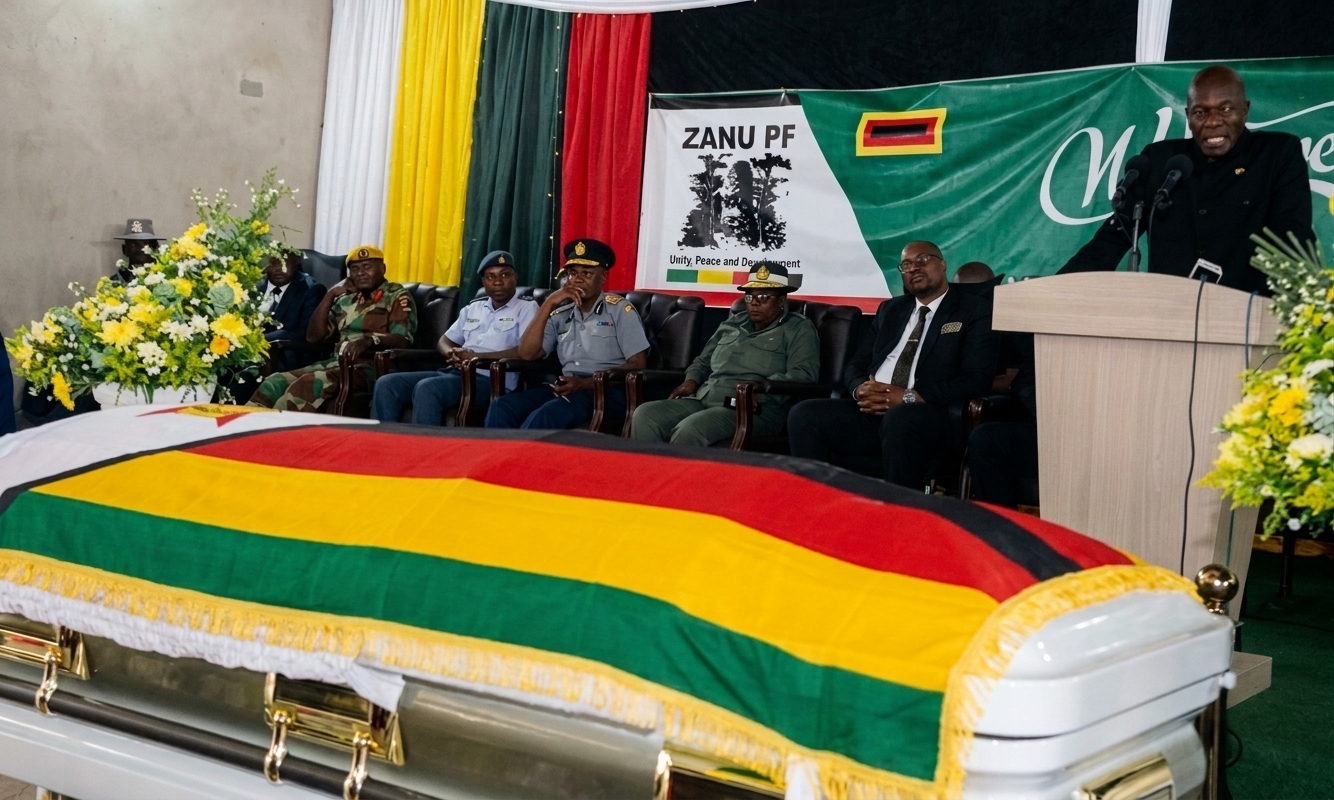
ZANU PF is mourning the death of Mabel Nkatazo, a senior Women’s League official and veteran cadre who collapsed and died on Friday evening. Reports say she collapsed at Highland Park Shopping Mall in Harare and died.
Nkatazo was serving as the party’s Women’s League Deputy Secretary for Mines and Energy Development. Her death was confirmed by Women’s League Secretary for External Affairs Betty Kaseke, who said funeral arrangements would be announced in due course.
“It is with deep sadness that we announce the passing of Cde Nkatazo. She collapsed and passed on yesterday (Friday) evening,” said Kaseke.
Nkatazo’s death adds to a series of bereavements involving long-serving ZANU PF members and liberation-era cadres in recent weeks. The latest deaths have affected party structures in Mashonaland East, Harare, Matabeleland South and Matabeleland North, with mourners paying tribute to members whose political lives stretched from the liberation struggle into the post-Independence era.
Nkatazo was a war collaborator during the liberation struggle between 1973 and 1975. After Independence, she took up a number of responsibilities within ZANU PF and its Women’s League, building a political career that spanned several decades.
She served as ZANU PF chairwoman for Juru District and later became vice secretary for administration in the Women’s League in Mashonaland East Province. She also held the post of secretary for economic affairs and served as a member of the party’s Mashonaland East Provincial Committee.
Her public responsibilities extended beyond party structures. She was a councillor for Ward 8 in Goromonzi Rural District Council and represented Murehwa in Parliament after becoming the first Women’s Quota Member of Parliament for the constituency in 2013.
At the time of her death, she remained active in the national Women’s League, where she was responsible for the mines and energy portfolio. Her sudden passing has left the party without one of its experienced organisers at a time when its provincial and district structures continue to rely heavily on cadres with long records of political work.
Nkatazo’s death follows the passing of Susan Vera Chirenje, who served as ZANU PF Director for Gender and Culture. Chirenje was also a former Central Committee member and a councillor in Budiriro.
Chirenje died suddenly a few weeks ago after more than three decades of service to ZANU PF. Party members described her as a veteran cadre who had worked both as a member of staff and as an active political organiser. She died on a Sunday morning, leaving behind a record that included work at the party headquarters and responsibilities in the Women’s League and wider party structures.
Her career placed her among the officials who helped maintain the party’s gender and cultural programmes. Colleagues remembered her for her loyalty, commitment and dedication to ZANU PF. Her death was received as another loss of an experienced woman leader who had remained involved in the organisation for many years.
The recent deaths have also been felt in Bulilima, where Neddie Ndlovu, a local ZANU PF stalwart and liberation war heroine, was buried at her rural homestead in Tjinjika village.
Ndlovu died on 10 September at the age of 71 after a long illness. She had played a role in the politics of Bulilima before Independence and later held a series of posts in the party’s Women’s League and provincial structures.
She joined the liberation struggle in 1976 and operated in Ndiweni Ward 21. During the war, she worked as a war collaborator and assisted freedom fighters. After Independence, she was elected Women’s League district chairlady for Ndiweni Ward 21 in 1997. In 2002, she became a member of the Provincial Coordinating Committee, serving as secretary for production.
Ndlovu later served on the ZANU PF Central Committee from 2008 until 2022. She subsequently joined the National Constitutional Assembly and remained a recognised figure in Bulilima until her death.
Her burial was attended by senior party and Government figures, including ZANU PF Politburo member Senator Richard Ndlovu, who was the chief mourner. Industry and Commerce Minister Nqobizitha Ndlovu, Environment, Climate and Wildlife Minister Evelyn Ndlovu, ICT Deputy Minister Dingumuzi Phuti and Central Committee member Elizabeth Ndiweni were among those who attended.
War veterans, ex-detainees, war collaborators, service chiefs, party supporters and members of the wider provincial community also gathered at the homestead to pay their respects.
Neddie Ndlovu had been accorded Liberation War Heroine status. Senator Ndlovu said the honour recognised her service to the country and her contribution to the liberation struggle.
“It is truly a sad moment for the Ndlovu family and Bulilima District at large. I am very grateful that the President of Zimbabwe, His Excellency Cde E.D Mnangagwa has conferred a Liberation War Heroine Status to the late Cde Neddie Ndlovu. Today we bury a War Heroine of our Liberation Struggle, who paid a supreme sacrifice so that we may enjoy our freedom, and national self-determination,” he said.
He described her as a powerful woman who stood firm in defending the gains of the liberation struggle. He said she had dedicated her life to serving her community and the country.
Another liberation-era figure to die in September was Rundofa Aaron, who passed away on 14 September. He was laid to rest at ZESA Cemetery in Hwange.
Rundofa was remembered as a liberation war hero and a dedicated cadre who served the nation during the struggle for independence and in the years that followed. His burial in Hwange brought party members and residents together to honour a man whose contribution was linked to the liberation and independence of Zimbabwe.
The tribute paid to Rundofa described his service as selfless and said his contribution would remain part of the country’s history. His burial came only days after Ndlovu’s death and added to the list of liberation-era figures being mourned by party structures across the country.
The deaths of Nkatazo, Chirenje, Ndlovu and Rundofa have brought renewed attention to the generation of ZANU PF members whose political work began during the liberation struggle or in the early years after Independence. They held responsibilities at national, provincial, district and local level, while also serving as councillors, legislators, Women’s League officials, war collaborators and community organisers.
For ZANU PF, Nkatazo’s death is the latest loss. She leaves behind a political record that included service in the liberation struggle, senior Women’s League responsibilities, local government work, provincial party leadership and representation in Parliament. Funeral arrangements are expected to be announced by the party in due course.