


GOVERNMENT has launched a nationwide speed-monitoring system as authorities intensify efforts to curb fatal road traffic accidents and restore discipline on Zimbabwe’s roads.
The National Speed Monitoring System (NSMS) was launched in Harare on Wednesday, bringing together senior officials from the transport, information technology, local government and law-enforcement sectors. The system is expected to strengthen the monitoring of speed limits, particularly on major highways and other routes where dangerous driving has repeatedly put motorists, passengers and pedestrians at risk.
The launch was attended by Transport and Infrastructure Development Minister Felix Mhona, Deputy Minister of Information Communication Technology, Postal and Courier Services Dingumuzi Phuti, Deputy Minister of Transport and Infrastructure Development Joshua Sacco and newly appointed Local Government and Public Works Permanent Secretary Engineer Tafadzwa Muguti.
Officials from the Zimbabwe Republic Police, the Vehicle Inspection Department and the Civil Aviation Authority of Zimbabwe, among other stakeholders, also attended the event.
The new monitoring system comes as police expand their traffic enforcement operations through modern speed-detection technology, additional patrol vehicles, increased highway patrols and strategic roadblocks. Police have also reintroduced speed traps on major highways and urban roads as part of an intensified nationwide campaign.
The operation is targeting speeding, dangerous overtaking, driving under the influence of alcohol, unroadworthy vehicles and other traffic violations blamed for crashes, deaths and the destruction of property.
National police spokesperson Commissioner Paul Nyathi said the renewed enforcement programme was intended to protect lives and improve compliance with road regulations. “We continue to witness accidents that are largely avoidable. Speeding, dangerous overtaking, driver fatigue, alcohol abuse and disregard for road rules remain among the leading causes of fatal crashes,” he said.
“These behaviours cannot be allowed to continue unchecked. The public should appreciate that these operations are not intended to inconvenience motorists or generate revenue. Their sole purpose is to protect human life,” said Comm Nyathi.
Police say the use of advanced equipment will allow officers to identify speeding offences more accurately, while the expanded fleet of patrol vehicles is expected to improve response times and police visibility on the country’s roads.
“The organisation has continued to modernise its traffic management systems through the acquisition of state-of-the-art technology that enables officers to detect speeding offences with greater accuracy and efficiency,” said Comm Nyathi.
“We have also strengthened our mobility through the deployment of additional patrol vehicles to ensure prompt responses and increased police visibility on the country’s highways and other strategic routes.
The police have warned that motorists who ignore traffic regulations will face enforcement action.
“There will be no room for lawlessness on our roads. Drivers who exceed prescribed speed limits, overtake dangerously, operate unroadworthy vehicles or disregard traffic regulations should expect the law to take its course. Our officers have been directed to enforce the law professionally, fairly and without fear or favour,” said Comm Nyathi.
Just three weeks ago, the Zimbabwe Republic Police also ordered a nationwide crackdown on motorists driving vehicles without registration plates or using illegal blue lights, sirens and other emergency-style fittings, with officers directed to arrest offenders and impound the vehicles involved.
The directive, issued by Commissioner-General of Police Stephen Mutamba, applies to police stations, districts and provinces across the country. It comes as police renew their campaign against motorists who are openly driving plateless vehicles and fitting private cars with equipment normally associated with authorised emergency and security services.
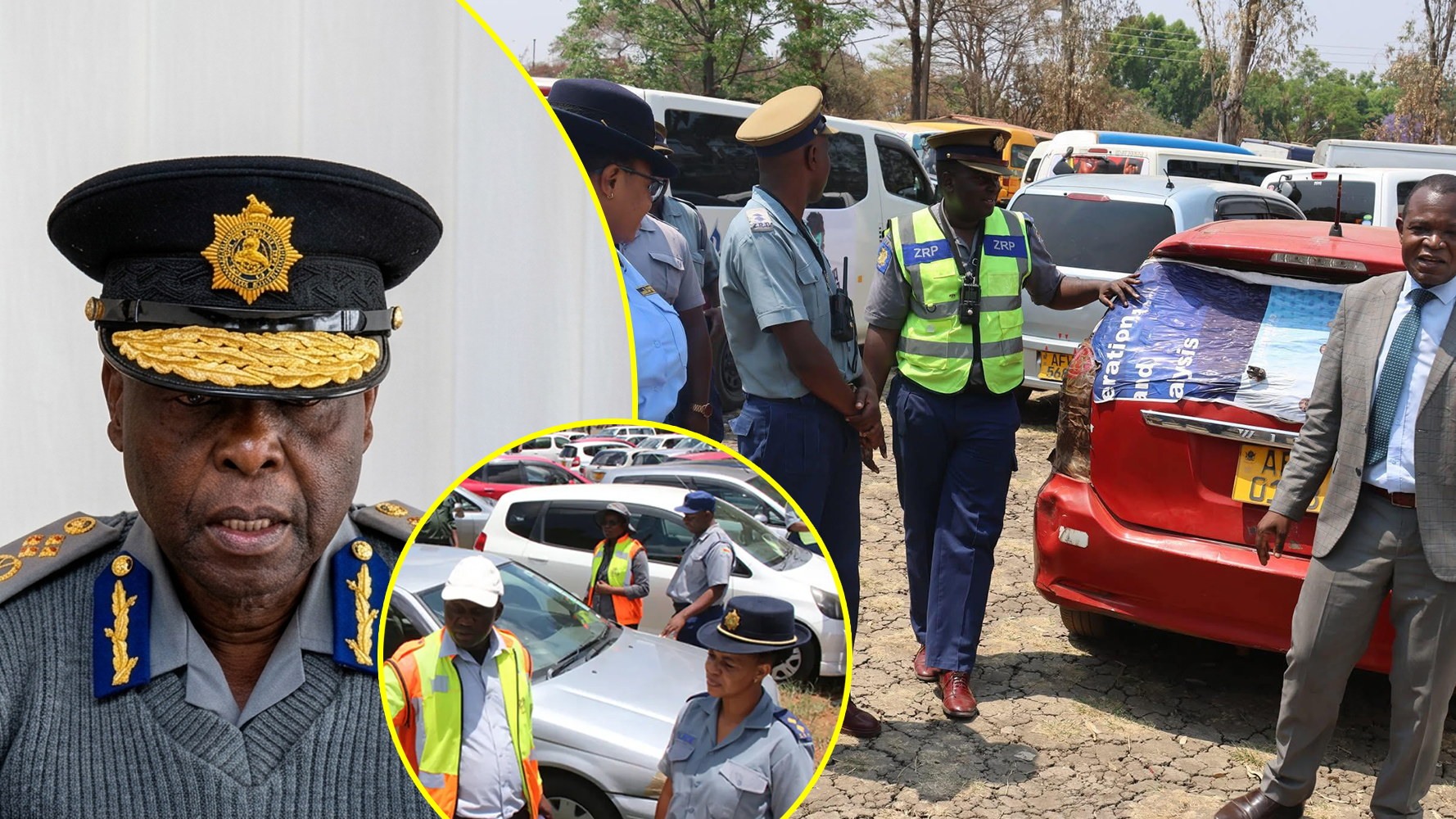
Meanwhile, a separate operation aimed at removing vehicles and road-use practices that create danger and congestion is also underway. Operation “Safe Corridor” began on 31 August and targets broken-down vehicles left on highways, major roads, central business districts and surrounding areas.
Some of the vehicles are reportedly being left unattended for long periods without red reflective triangles. Other drivers have been using tree branches, stones, boulders or other objects as substitutes for the required warning devices after their vehicles break down.
“The operation is targeting, among others, vehicles which are breaking down along highways, major roads and Central Business Districts, with some left unattended for extended periods while not displaying red reflective triangles. This poses a danger to other road users and increases the risk of road traffic accidents in the country. The objects are not even removed from the roads after vehicles have been moved,” Commissioner Nyathi said.
Police have also raised concern about broken-down vehicles causing congestion in central business districts and residential areas during peak hours. Motorists who park at undesignated points or stop to pick up passengers in busy areas are also being targeted because they obstruct traffic and increase the risk of collisions.
Operators of heavy transit vehicles have been warned against using unauthorised routes through central business districts and residential areas. Police say the practice causes congestion, disorder and road accidents.
Vehicles found violating the law may be impounded and released only after the required clearance procedures have been completed. Owners will also be required to meet the cost of removing broken-down vehicles from roads when the work is carried out by the police, government departments or local authorities.
“Vehicle owners will be made to meet the cost of any broken-down vehicle removed from the roads by the Police, Government Departments and local authorities,” he said.
Members of the public have been encouraged to report broken-down vehicles or other obstructions through the National Complaints Desk on (0242) 703631, via WhatsApp on 0712 800 197, or at the nearest police station.
Police have urged motorists to be patient, observe speed limits, avoid distractions, rest adequately before travelling and make sure their vehicles are mechanically sound before setting out.